

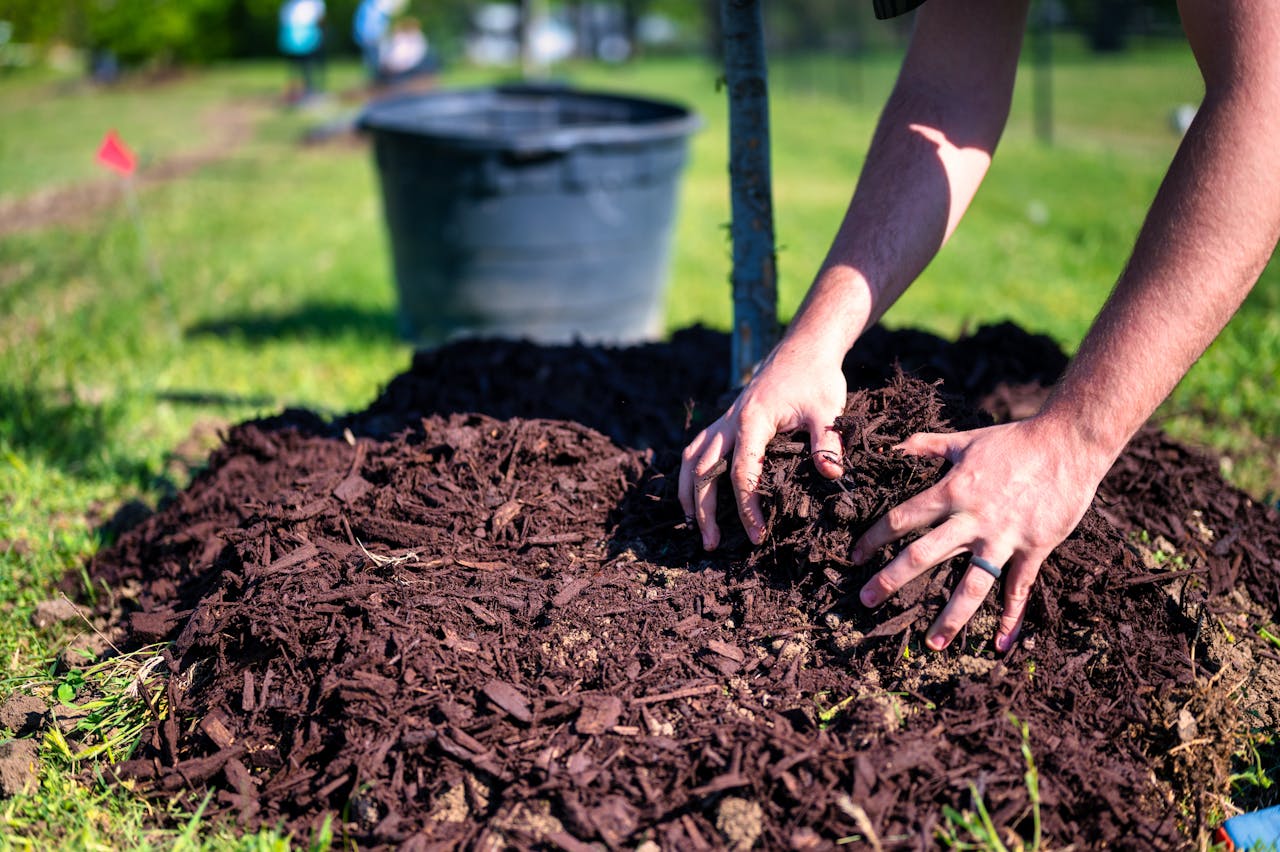
Mulch should be a quiet ally: it cools soil, softens heavy rain, and feeds life as it breaks down. Yet the same material can turn into a slow stress test when it is piled, packed, or treated like decoration.
Most failures start small: a ring that creeps up the bark, a layer that gets thicker every season, or a tidy mat that seals off air. After a wet spring or a hot Aug. those choices show up as sparse leaves, cankers near the base, and roots that never breathe. Trees rarely crash overnight. They decline by inches, and the fix is usually just as simple. Healthy mulching leaves the root flare visible and spreads in a wide, low halo.
Volcano Mulching That Smothers the Trunk
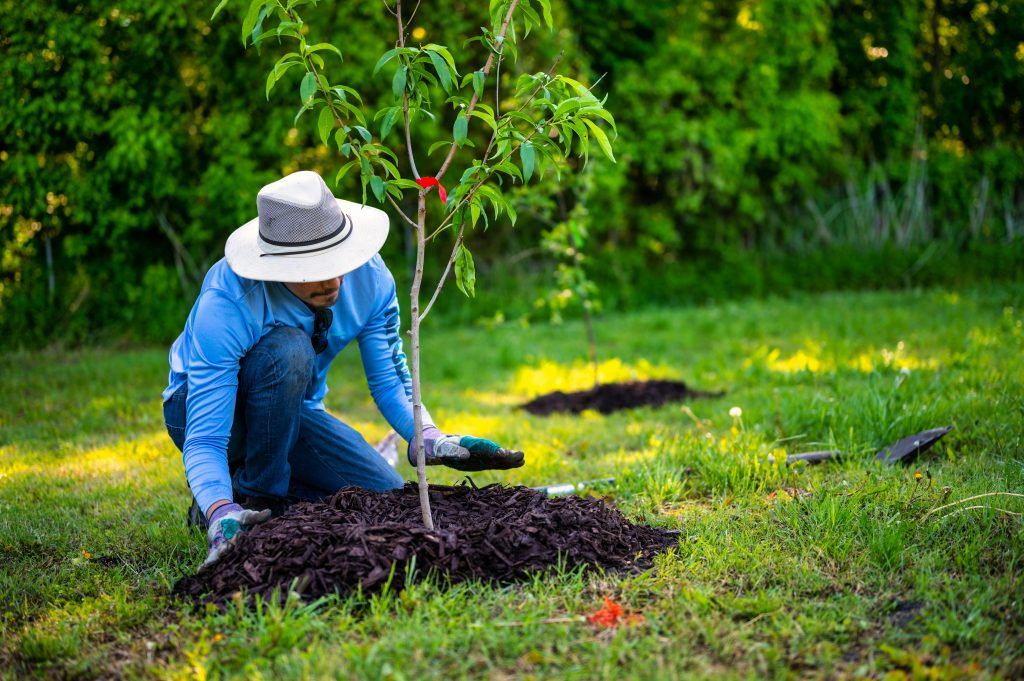
A mulch cone piled against bark looks neat, but it hides the root flare and keeps the trunk base damp. That wet collar starves tissues of oxygen, invites decay fungi, and attracts borers that prefer stressed trees. It also hides bark wounds and rodents until the canopy finally signals trouble.
As the mound settles, feeder roots grow upward into the mulch, where they dry fast in summer and freeze harder in winter. Some roots begin to circle the trunk, slowly tightening until water and sugars move less freely. A wide, flat ring is safer: keep mulch two to four in. deep, and pull it three to six in. off the bark. Each spring.
Letting Mulch Get Too Deep Over Time
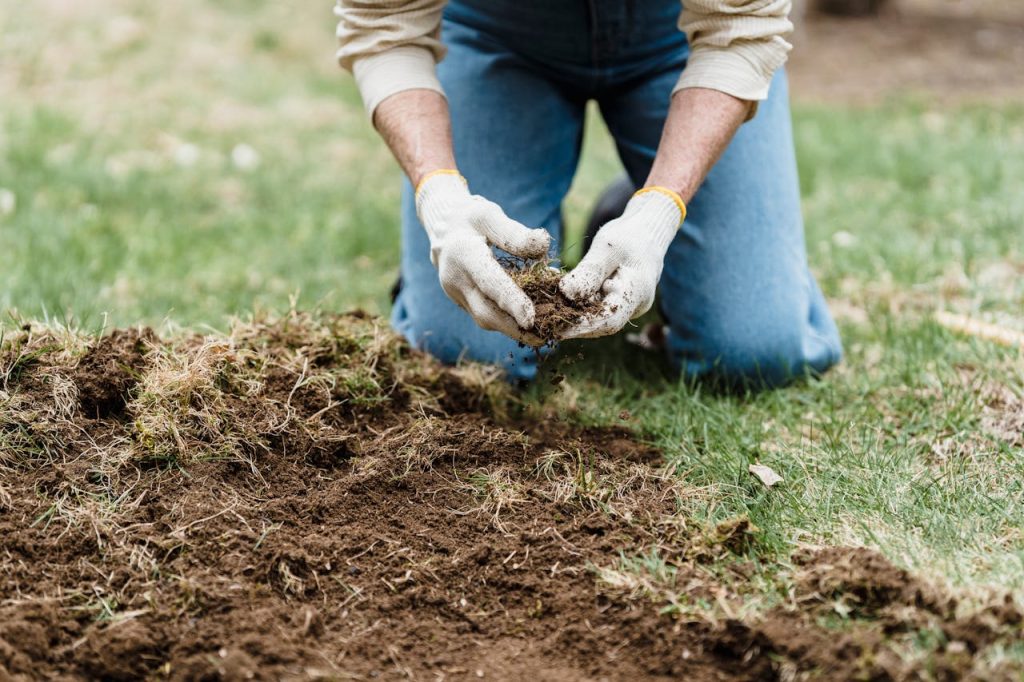
A thick blanket can feel protective, but mulch deeper than four in. traps water and blocks air from reaching fine roots. Oxygen-starved roots stop taking up nutrients, and the tree responds with weak growth, small leaves, and early drop. In low spots, the base can stay wet for days after a storm.
Depth creep is common after top-ups. Old mulch turns into a dense layer that sheds water at first, then stays soggy underneath. Roots may rise into that layer, then circle the trunk. The fix is unglamorous: fluff compacted mulch, scrape excess away, and reset the bed at two to three in. In heavy clay, even two in. can be enough.
Using Mulch to Raise Grade and Bury the Root Flare
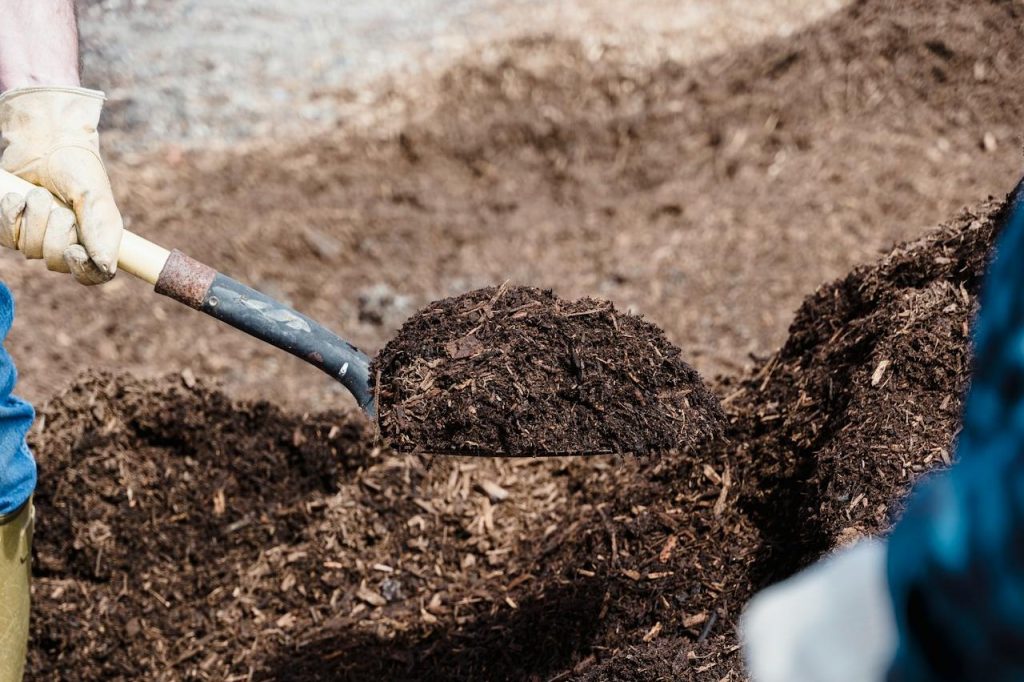
Mulch is not a harmless way to raise grade. When beds are built up around an existing tree, the original root zone ends up buried. Even one to two in. of added material can change oxygen levels in the top soil where feeder roots live. The trunk tissue that was meant to stay dry now sits under damp cover.
The first symptoms can look like drought stress even after rain, because buried roots are failing. Later, new roots form close to the surface, where heat swings are sharp, and girdling becomes more likely. A healthier plan keeps the root flare exposed and uses edging to hold a thin layer of mulch, not extra height. Year after year.
Packing Mulch Into a Watertight Mat
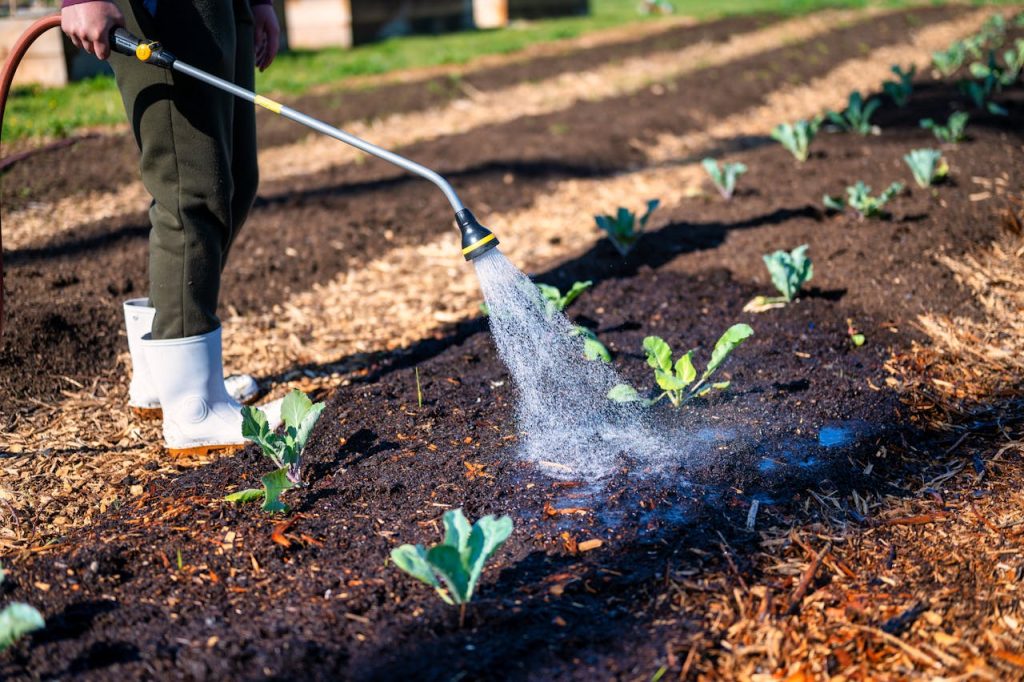
Mulch works best when it stays airy, but finely shredded piles often knit into a tight mat after repeated rain. Water beads on top, then runs off, leaving roots dry while the surface looks dark and damp. Irrigation can make it worse by wetting only the top half inch.
That matted layer can also turn anaerobic, producing sour odors and compounds that irritate fine roots. Fungal threads are normal, but a slimy, black layer under the crust is a warning sign. A quick poke test tells the story: if a hand trowel bounces, air is missing. Coarser chips, light raking, and a thin refresh keep moisture steady without sealing soil.
Trapping Soil Under Weed Fabric
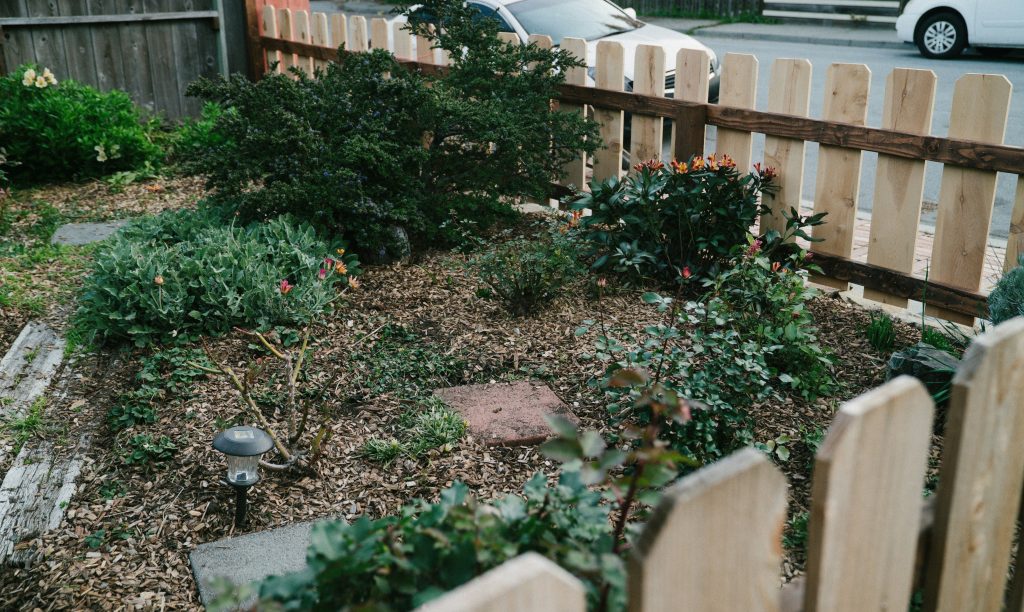
Weed barrier under mulch promises a clean bed, but it often creates a hidden stress layer. Fabric and plastic slow the natural mixing of mulch into soil, so the surface stays dry while moisture can pool beneath. Air exchange drops, especially when silt clogs the pores.
Roots chase that trapped moisture and may grow into the fabric, where they are exposed when the barrier is pulled or tears. Meanwhile, windblown seeds still germinate in the mulch on top, so weeds return anyway. A better approach is plain mulch over bare soil, kept at two to three in., with quick hand weeding while the bed is young. Soil life does the rest over time.
Spreading Sour or Contaminated Mulch
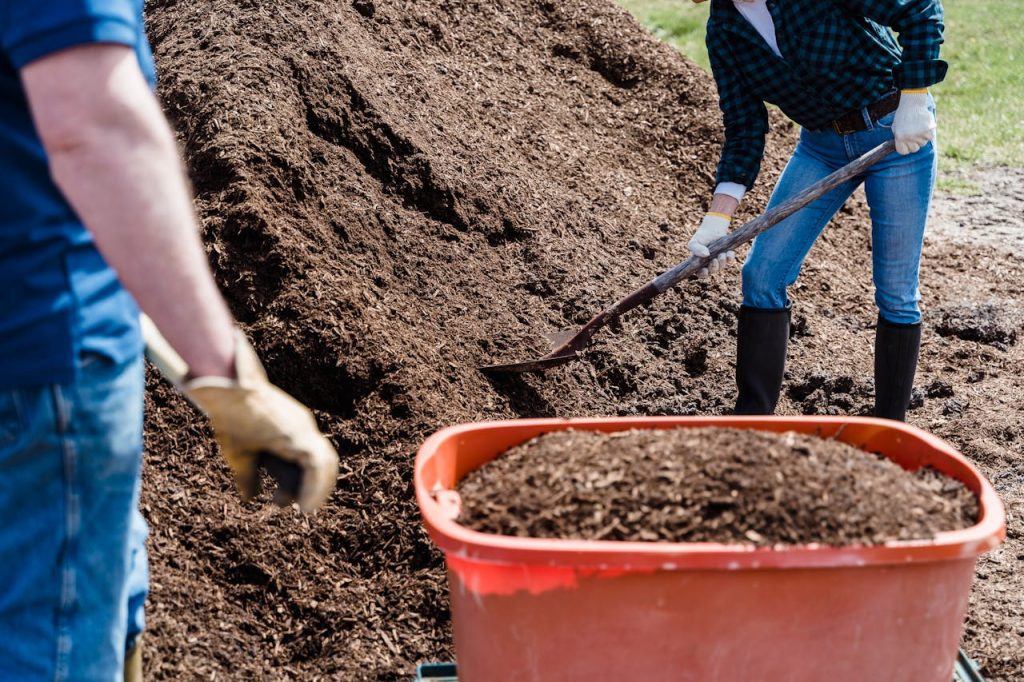
Not all mulch is finished mulch. Material that was stored in a wet, airless pile can turn sour, smelling like vinegar, ammonia, or sulfur. Spread fresh from the heap, it can irritate roots, raise temperatures, and push trees into a stress spiral.
Unknown sources can add other risks: salt-heavy manure compost, chips mixed with invasive seeds, or yard waste carrying persistent weed killers. The safest piles smell earthy, not sharp, and feel cool inside. If a load arrives hot or reeking, it should be turned, aired, and composted longer, then used as a thin top layer once it stabilizes. A slow cure beats a quick cover every time.
Keeping the Mulch Ring Too Small

A token mulch ring, a foot wide, looks tidy but forces turf to compete right up to the trunk. Grass steals water and nitrogen, and it pushes mowing and string trimming into the danger zone at the bark. Small rings also dry fast, so the root zone swings from soaked to dusty.
Even light, repeated scrapes can disrupt the thin living layer that moves sugars, leading to dieback months later. Better geometry is generous and boring: a broad circle that reaches the drip line when possible, or at least three ft wide on young trees. Kept at two to three in. deep, mulch buffers heat, reduces turf pressure, and keeps the trunk out of reach.