

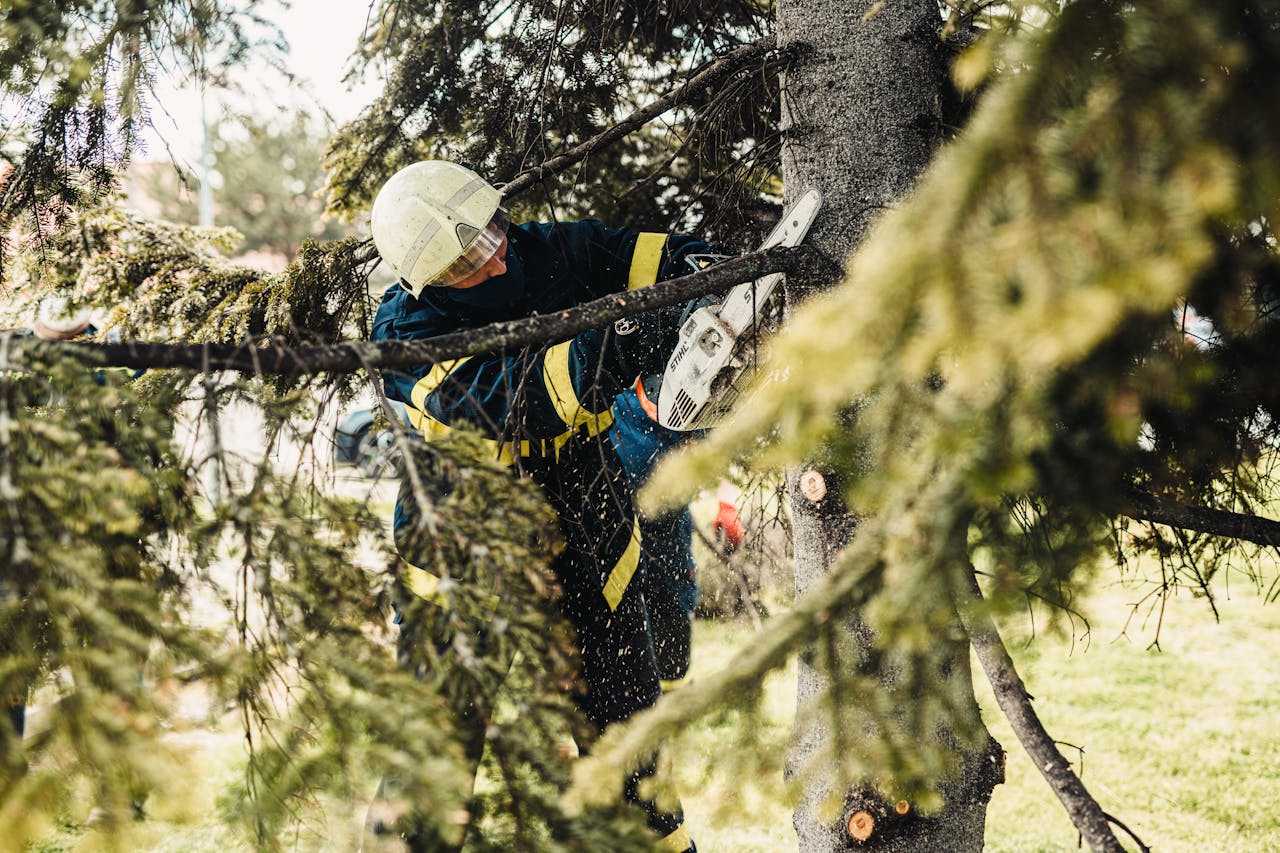
After a windy night, a backyard tree can look almost unchanged while quietly carrying new structural stress. Arborists and Extension specialists note that failures are often preceded by visible defects in the roots, trunk, or crown, and many storm losses involve trees that were already showing warning signs. The best first step is calm observation, because a familiar shade tree can shift from comforting to risky long before it falls. A slow walk around the trunk, root flare, and canopy often reveals the small changes that rough weather can quickly turn into major problems, even when the crown still looks mostly green.
A New Lean Or A Lean That Is Getting Worse

A trunk that has recently started leaning, or a lean that looks more pronounced after storms, deserves prompt attention. Extension guidance lists lean and poor architecture among common defect indicators, and it notes that leaning trees are more prone to failure, especially when cracks, decay, or soil mounding are also present.
Arborists do not treat every lean the same, because some trees grow that way and stay stable for years. The key warning sign is change: a sharper angle than before, fresh movement after wind, or a lean that appears to increase over time rather than remain constant. Fresh bark bulging adds concern.
Soil Heaving Or Root Plate Movement
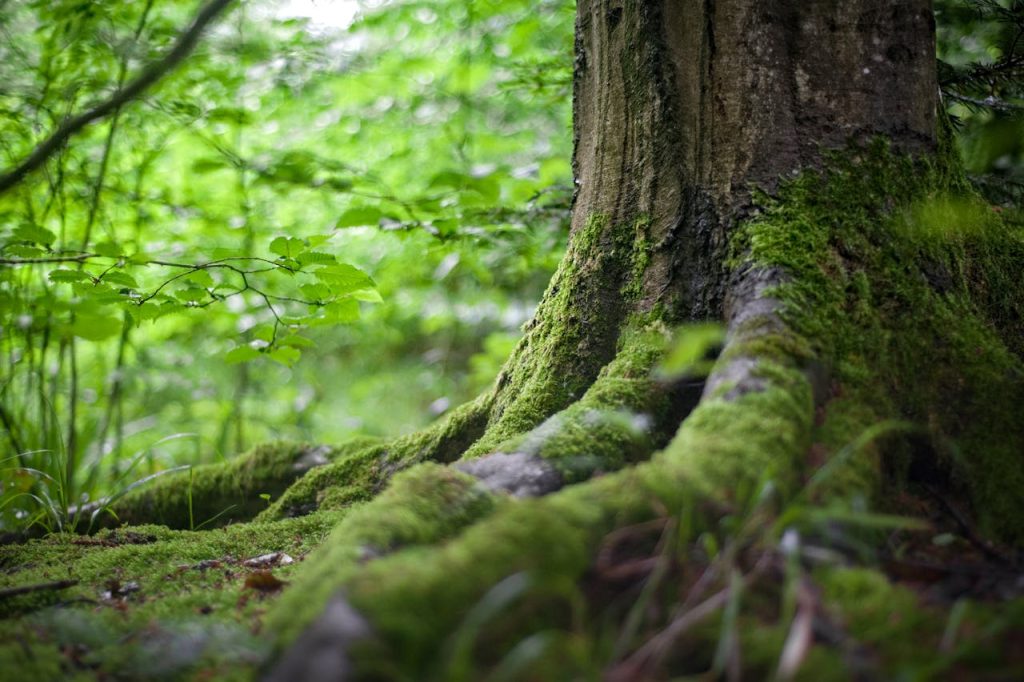
When soil lifts, cracks, or forms a new mound near the base, the tree may be failing at the roots before the trunk gives obvious clues. Mississippi State Extension describes this as root-ball rise, where the root plate starts to come out of the ground and the soil mounds on the side opposite the lean.
That sign often appears after saturated ground, repeated wind loading, or damaged support roots. Even when the crown still looks full, visible movement in the soil is a structural warning, because the tree is losing anchorage below the surface. Fresh mounding opposite the lean is a classic sign that anchoring roots are shifting.
Deep Cracks In The Trunk Or Major Limbs
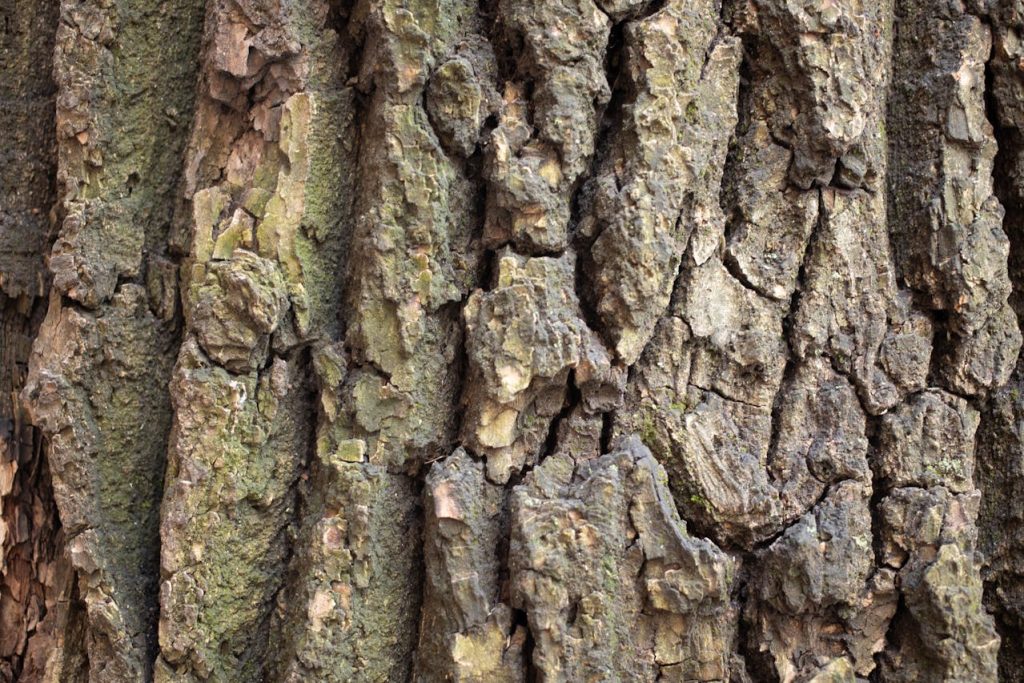
A deep crack is more than rough bark. Forest Service and Extension guidance describe cracks as defects that extend into the wood, and they can indicate the tree is already failing under load, particularly when the split is wide, fresh, or running through a trunk section or heavy scaffold limb.
Concern rises when multiple cracks show up in the same area, or when a crack touches another defect such as decay or a weak union. UC guidance also flags large branches with cracks as high failure potential, which is why arborists treat them as time-sensitive. Fresh callus around a crack does not always mean the structure is sound.
V-Shaped Forks With Included Bark
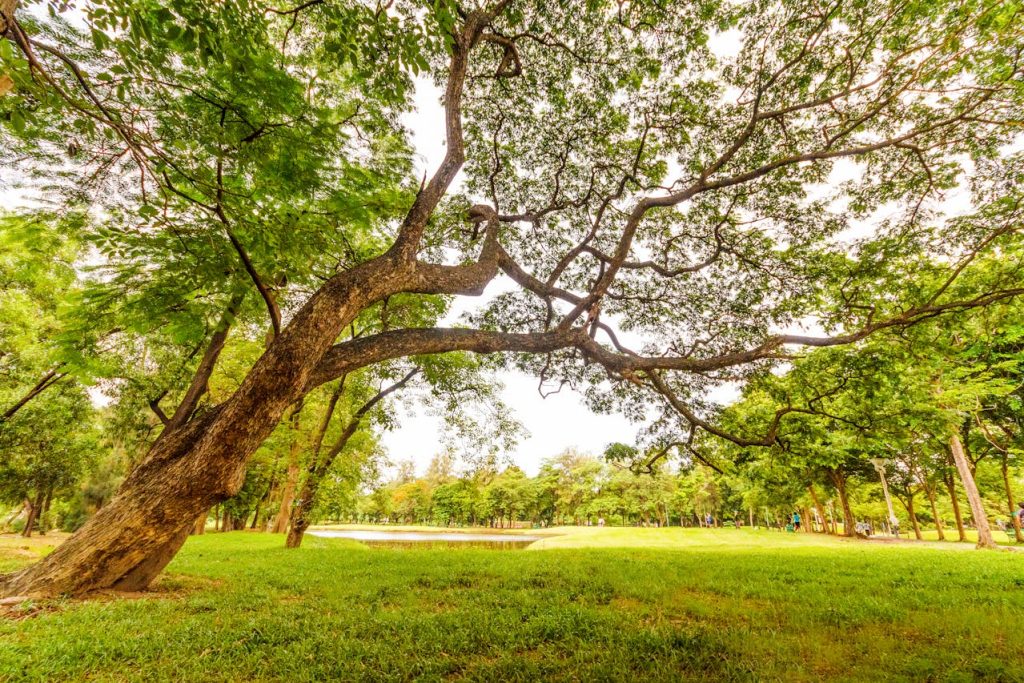
A tight V-shaped fork can be weaker than it looks, especially when two similar-sized stems grow together and trap bark inside the junction. Arborist and Extension references explain that included bark acts like a wedge, preventing solid wood from joining across the union and reducing structural strength.
Arborists often look for inrolled bark where the seam curves inward, along with co-dominant stems that press against each other. As those stems thicken and move in wind, the included bark can force the union apart, and the risk climbs further if cracks or decay are already present. Inrolled seams often mark a weaker fork.
Mushrooms, Conks, Or Cavities In The Wood

Mushrooms at the root flare, shelf-like conks on the trunk, and open cavities in the wood are classic signs that decay may be advanced. Forest Service and Extension guidance both note that fungal fruiting bodies on roots, stems, or branches can point to internal decay that is not fully visible from the outside.
Decay alone does not always predict immediate failure, but soft, crumbly, or hollow wood changes the picture fast. The risk becomes more serious when decay shows up with a crack, a weak union, or a large dead limb, because multiple defects reduce the remaining sound wood. Cavities near the base can also point to root decay.
Dead Limbs, Dead Tops, Or Broken Hangers

Dead wood is brittle and cannot flex like living branches, so it can break with little warning during wind or heavy rain. Forest Service hazard guidance treats dead trees, dead tops, and large dead branches as priority defects, and it calls out broken limbs lodged in the canopy as an immediate concern.
A dead section often appears alongside other structural or health problems that deserve a closer look. When several dead limbs show up in one crown, arborists usually check the trunk, root flare, and branch unions for connected defects rather than assuming it is only a pruning issue. Dead tops and large dead limbs raise the priority quickly.
Canopy Dieback After Root Damage Or Compaction
A thinning crown often starts underground. Mississippi State Extension explains that root loss from disease, injury, or soil compaction can reduce leaf area and cause branch dieback, and severe crown dieback is used as a visible clue that root support and tree health are slipping.
Recent trenching, paving, mower strikes near the base, or repeated traffic over the root zone can all damage structural roots. When canopy decline appears alongside root-collar fungi, trunk cracks, or a changing lean, arborists treat the tree as a higher failure risk. Some decline appears months after the root injury, which can hide the cause.