


Polaris looks like a promise: one steady point when everything else drifts and spins. Campers, sailors, and travelers have leaned on it for centuries, because it sits close to the north celestial pole and barely seems to move.
Here’s the catch: the North Star is easy to misuse. It is not the brightest star in the sky, it does trace a small circle, and it can be swallowed by haze or city glow. It marks true north, not magnetic north, which trips up anyone switching between sky and compass. With the Big Dipper, Cassiopeia, and a couple of quick checks, Polaris becomes quietly reliable again, not magical, just precise.
Mistaking the Brightest Star for Polaris
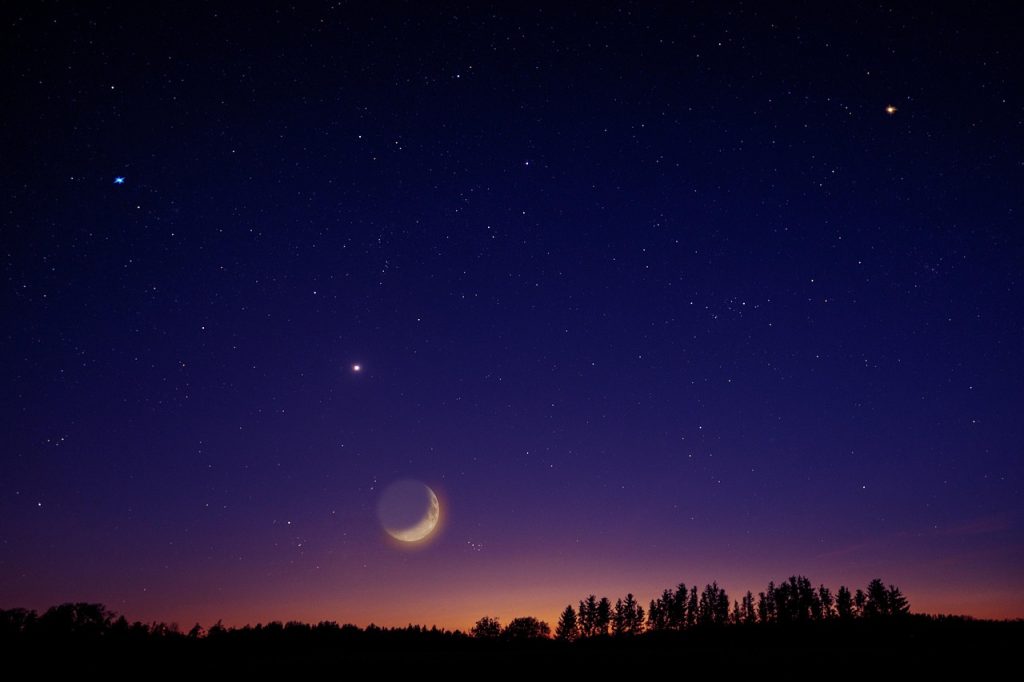
Many people hunt for Polaris by scanning for the brightest star in the north, then trusting the first bright point that cuts through city glow. That shortcut fails because Polaris is only moderately bright, and a bright planet can fool the eye.
The cleaner approach starts with shape, not sparkle. A star stays put while planes crawl and blink. Find the Big Dipper’s two bowl stars and extend that line about five times their spacing to a steady point. Polaris sits at the end of the Little Dipper’s handle, with faint stars curving away when the sky is dark enough. If the Dipper is hidden, the W of Cassiopeia aims toward the same spot.
Pointing the Big Dipper the Wrong Way

The Big Dipper trick gets repeated so often that it turns into a slogan: follow the bowl stars to Polaris. In practice, people grab the wrong pair, or extend the line out of the bowl’s base instead of through its lip, and end up aiming at empty sky.
The pointer stars are the two on the outer edge of the bowl, opposite the handle. The Dipper rotates, so “up” and “down” change, but that outer edge stays the same. Draw a line from the lower pointer star to the upper one, then keep going about five times their separation until it lands on one steady star. If the line runs into the handle, the direction is flipped, even in twilight.
Misreading Cassiopeia’s W Shape
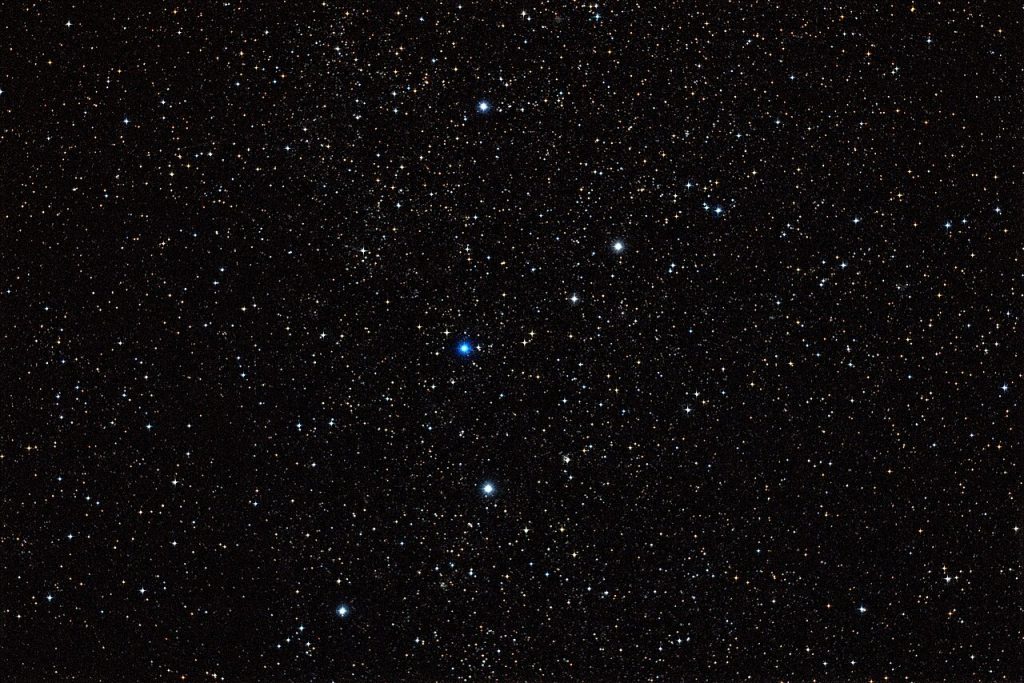
When the Big Dipper is low or hidden, Cassiopeia becomes the backup, and mistakes multiply. The W can flip into an M, and city glow makes other zigzags look convincing. That’s how Polaris gets found in the wrong place.
Cassiopeia’s five main stars make a crooked W that sits across from the Big Dipper. Draw a line from the center dip of the W toward its open side, and it trends toward Polaris. Polaris should anchor a faint hook of stars and stay put as minutes pass. In darker skies, the Little Dipper’s small bowl arcs away from it, confirming the match. If both patterns are visible, Polaris sits between them, not off to one side.
Expecting Polaris to Stay Perfectly Still

Polaris gets treated as a nail in the sky, so people use it for alignment, then get rattled when it seems to drift while everything else turns.
Polaris sits close to the sky’s north pole, so it traces a tiny circle instead of staying perfectly fixed. For casual bearings, it still marks true north well. For tighter work, hold a single viewing spot, line Polaris with a vertical edge or plumb line, and note where that line meets the horizon. Distant landmarks help; nearby branches shift when stepping and create parallax. Recheck later and average. Long-exposure star trails reveal the true pivot, with Polaris hovering near the center.
Mixing Up True North and Magnetic North

A common Polaris failure starts with a compass. The needle points toward magnetic north, then the search shifts to that bearing, and Polaris does not appear where it should. The mix-up gets worse near cars, fences, or phones, where magnetic fields can tug the needle.
Polaris marks true north on the sky, while a compass marks magnetic north on Earth. The angle between them, called declination, varies by location. A practical fix is to treat Polaris as the truth check: find it by star patterns first, then compare the compass bearing and note the offset for night. That single comparison turns a confusing gadget into a useful tool.
Searching for Polaris From the Wrong Latitude
Polaris advice often gets shared without the fine print, so someone tries it from the wrong latitude and assumes the sky is broken. In the Southern Hemisphere, Polaris never rises at all. Near the equator it hugs the horizon, where haze, hills, and roofs swallow it.
A simple rule keeps expectations sane: Polaris’s height above the horizon roughly matches the observer’s latitude in the Northern Hemisphere. That means it sits low in Florida and high in Alaska. When it is too low to trust, the safer move is to switch methods, using landmarks, GPS, or southern sky guides. Polaris is powerful, but only when the geometry cooperates.
Measuring Latitude Without a Level Horizon

Polaris also gets used to read latitude, and sloppy measuring sneaks in fast. An estimate taken from a hillside or a rocking deck can look precise and still be off by miles.
Polaris’s height above the horizon roughly matches latitude in the Northern Hemisphere, but it needs a level reference. A clean sea horizon helps; on land, a distant ridge can stand in. A quick field method is the fist rule: one fist at arm’s length spans about 10 degrees, stacked from horizon to Polaris. For better accuracy, an inclinometer app works once the horizon is clear. Repeat twice and average. Treat the result as guidance, not a final verdict.