

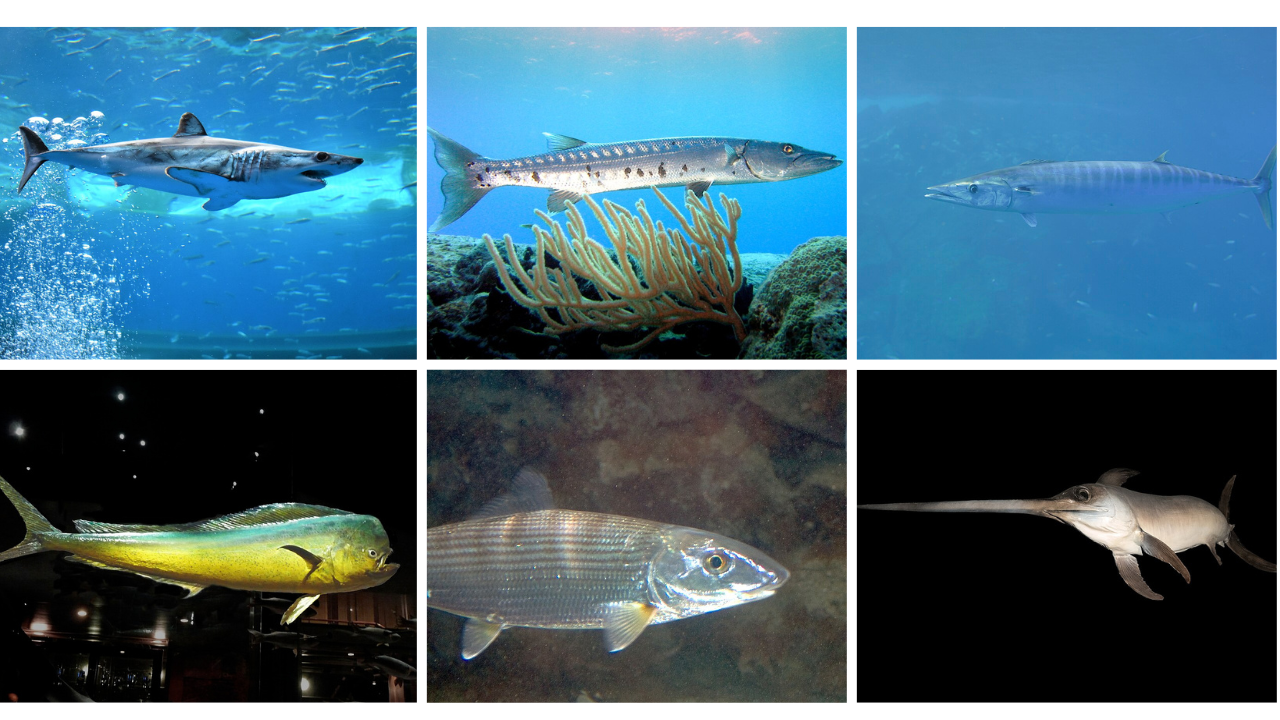
Speed in the ocean is rarely clean or simple. A fish can explode forward for a few seconds, then settle into a steady cruise. That is why fastest depends on what gets measured, where it happens, and how long the burst lasts.
Some speeds come from reel line, boat pace, or eyewitness guesswork. Other figures are lab estimates that do not capture open-water chaos. Even with that mess, a handful of racers keep surfacing in records and stories.
Their bodies are engineered for drag control, strong propulsion, and stability at pace, even in rough water. The myths are loud, but the biology is louder, and that is the fun part.
Sailfish
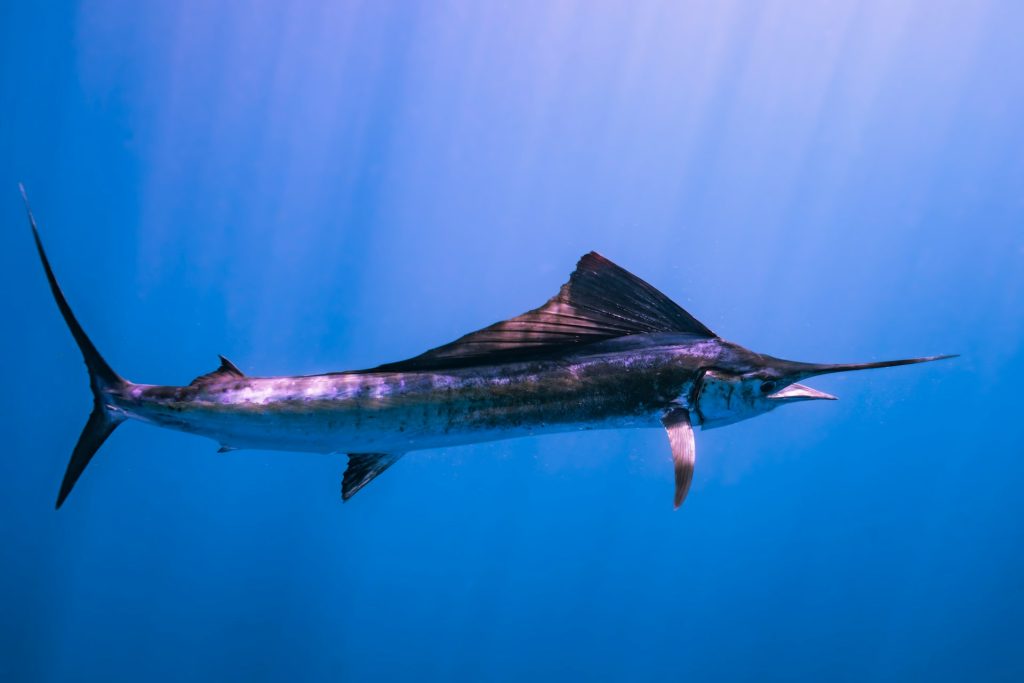
Sailfish are built like spears with an engine, with a tall dorsal fin that folds down for low drag and can flare for control when a bait ball suddenly changes direction in warm surface water.
They are often credited with top speeds near 68 mph, but that headline figure is hard to verify because many older claims came from line payout, boat pacing, or rough math rather than direct measurement for a burst lasting seconds.
What is easier to trust is their style of speed: sharp burst acceleration, tight turns, and repeated surges, plus a bill used to swipe and disorient prey so the chase stays short and efficient, even in chop.
Black Marlin
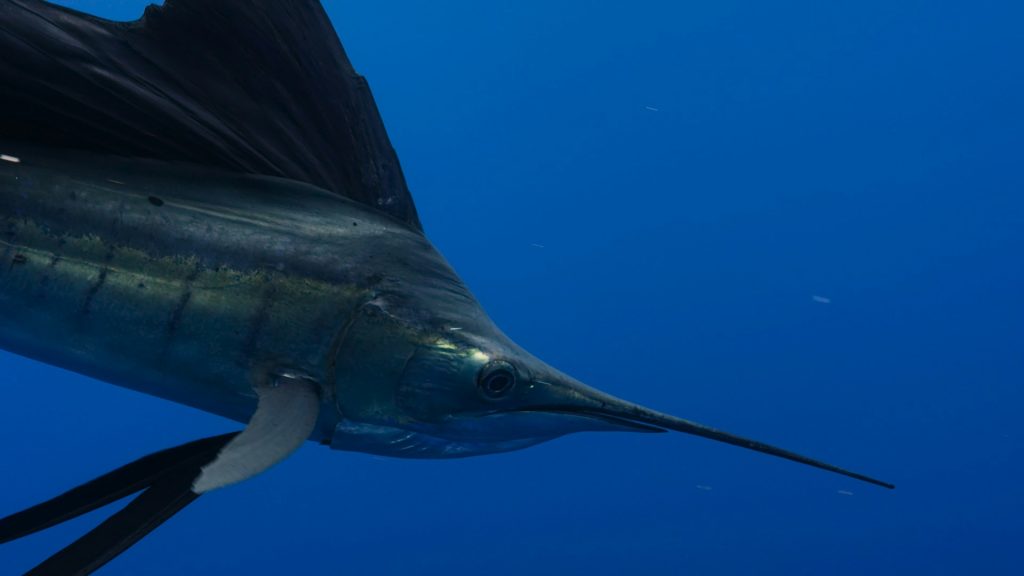
Black marlin are not the sleekest billfish, yet they make a strong case that raw torque matters, especially when a big fish has to accelerate in swell and keep tracking fast tuna or mackerel.
Some legends claim numbers above 70 mph, even 80, but many of those figures trace back to estimating speed from line leaving the spool, where drag, current, and angle can turn rough math into confidence.
A steadier truth is their violent burst runs and long, stubborn surges, powered by a stiff sickle tail and a deep body that acts like a sprung lever. Even their famously rigid pectoral fins hint at a design tuned for stability, not finesse.
Swordfish
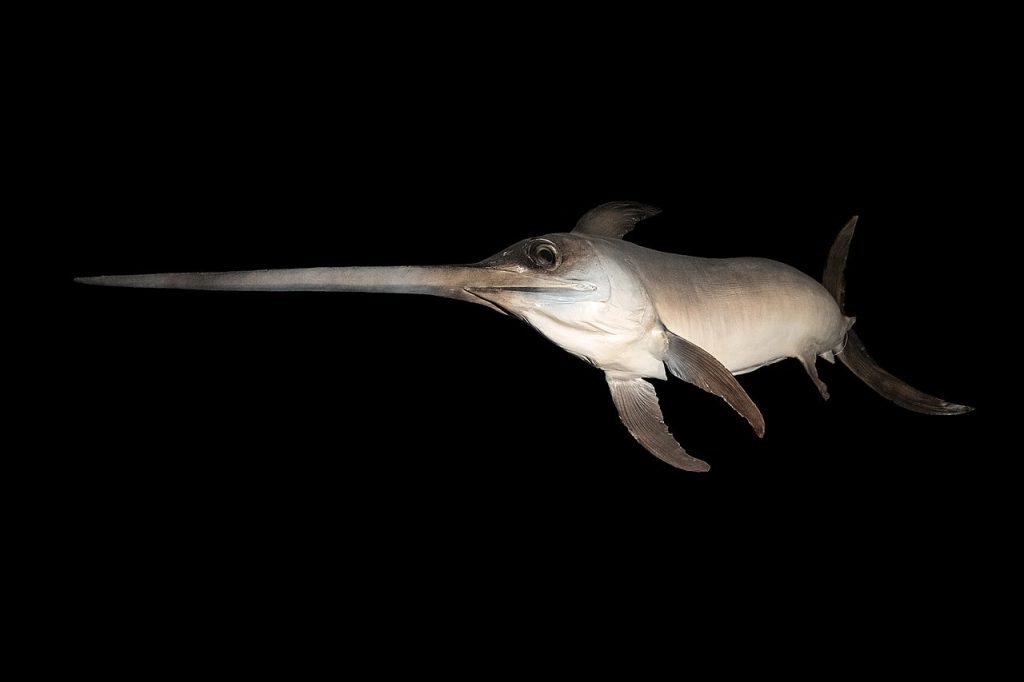
Swordfish look like living torpedoes: a rigid bill up front, a thick midsection for muscle, and a tail that can drive hard while the body keeps drag low in open ocean.
They are often said to hit 60 mph, but direct measurements are rare, and many estimates come from line payout or boat speed, which can turn a dramatic, seconds-long run into a headline.
Their real advantage is versatility, including deep dives from slicks into the twilight zone, roaming migrations, and a specialized heater organ that warms the eyes and brain for sharper hunting in cold water, plus a bill used to swipe and disorient prey when timing is tight.
Wahoo
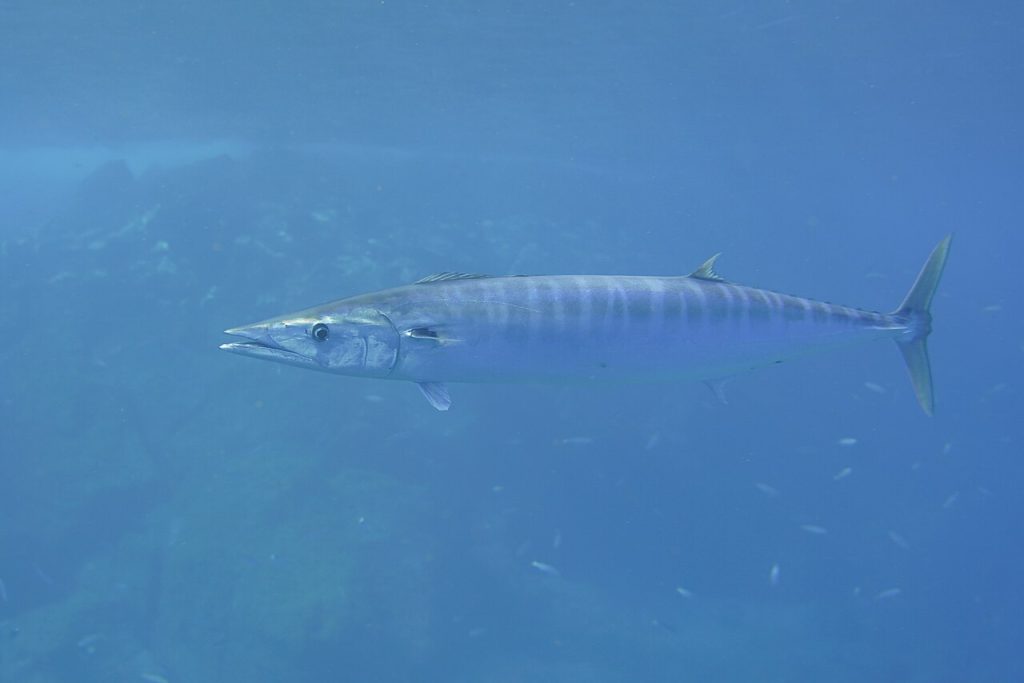
Wahoo have a reputation that feels earned because their speed shows up in the simplest place: a trolling lure that suddenly turns into a hot reel near current edges and weed lines.
They are built for straight-line bursts, with a narrow body, a powerful forked tail, and skin patterns that seem to blur when the fish lights up and runs. Claims around 60 mph circulate widely, and while exact numbers vary, wahoo are clearly among the ocean’s quickest sprinters.
The common myth is that they are only fast; in reality they are also efficient hunters, using surprise, depth changes, and short rushes to avoid long chases that waste energy.
Mahi-Mahi
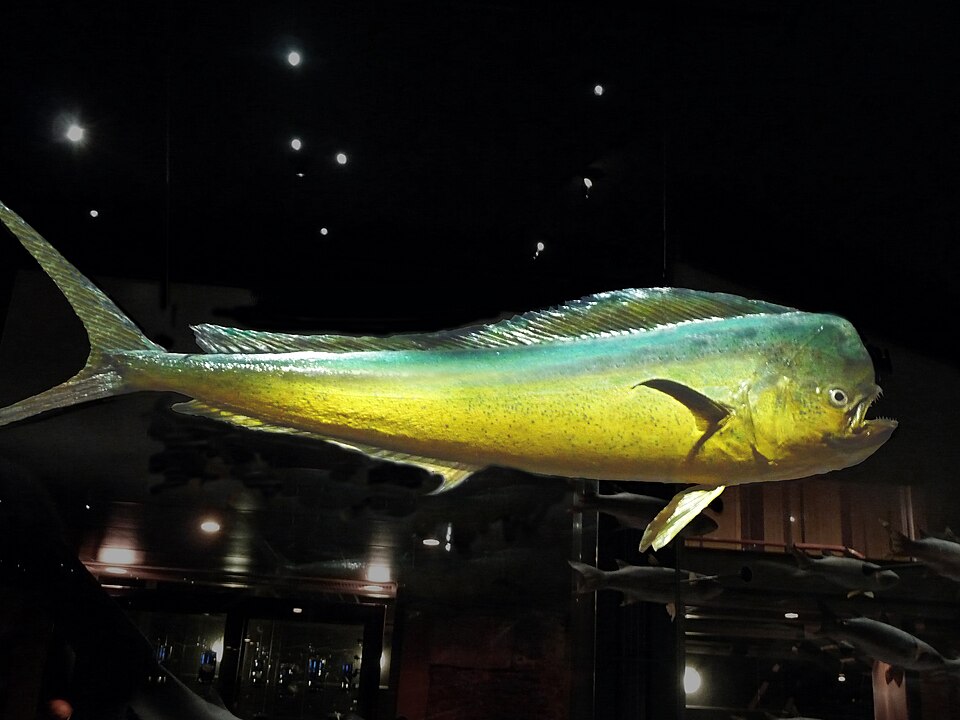
Mahi-mahi, also called dorado, mix speed with showmanship, which is why they look faster than the stopwatch might ever prove.
They run hot along weed lines and floating debris, using a tall forehead and long dorsal fin for stability while the tail does most of the work. Speeds in the 40 mph range are commonly reported, though conditions and measurement methods vary, especially when a hooked fish is leaping and turning.
The myth is that their pace comes from chaos; the reality is a tuned pelagic sprinter that converts quick meals into quick growth then outruns trouble in warm, clear surface water where predators can see everything.
Shortfin Mako Shark
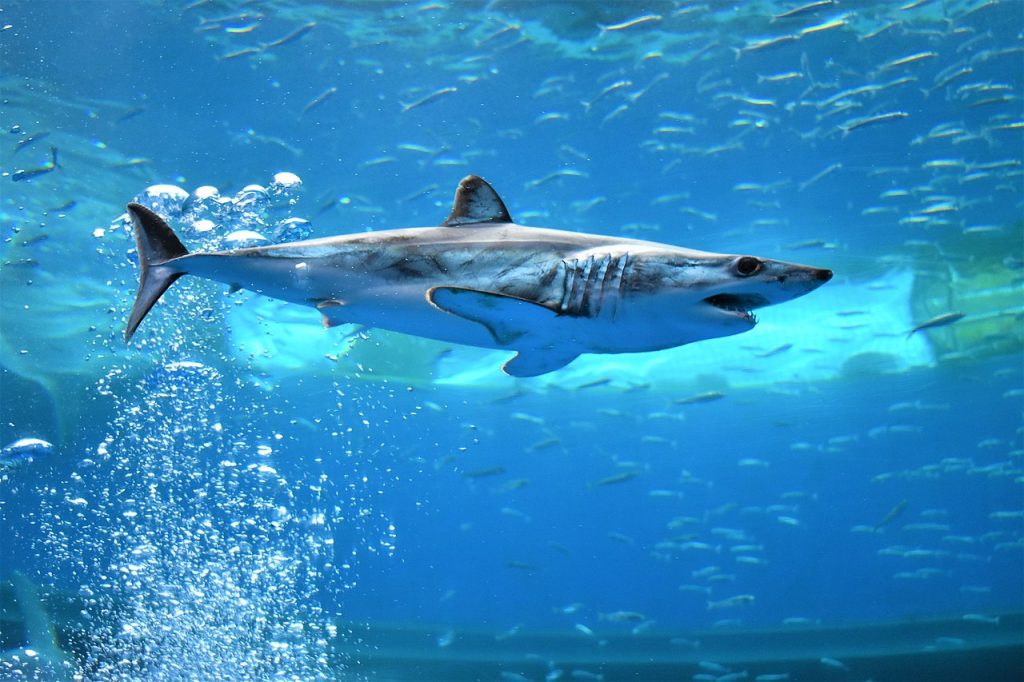
Shortfin mako sharks are proof that sharks count as speed machines too, with a stiff body, narrow tail base, and a crescent tail that looks tuned for distance and bursts in blue water.
They are sometimes promoted as the fastest shark, with claims climbing into the 40 mph range, but open-ocean measurements are limited and different studies capture different behaviors, from cruising to short accelerations.
The myth is that a shark is fast only when it is frantic; makos can be efficient athletes, helped by regional warm muscles that keep power available in cooler water and by a design that minimizes wobble when the pace rises.
Great Barracuda
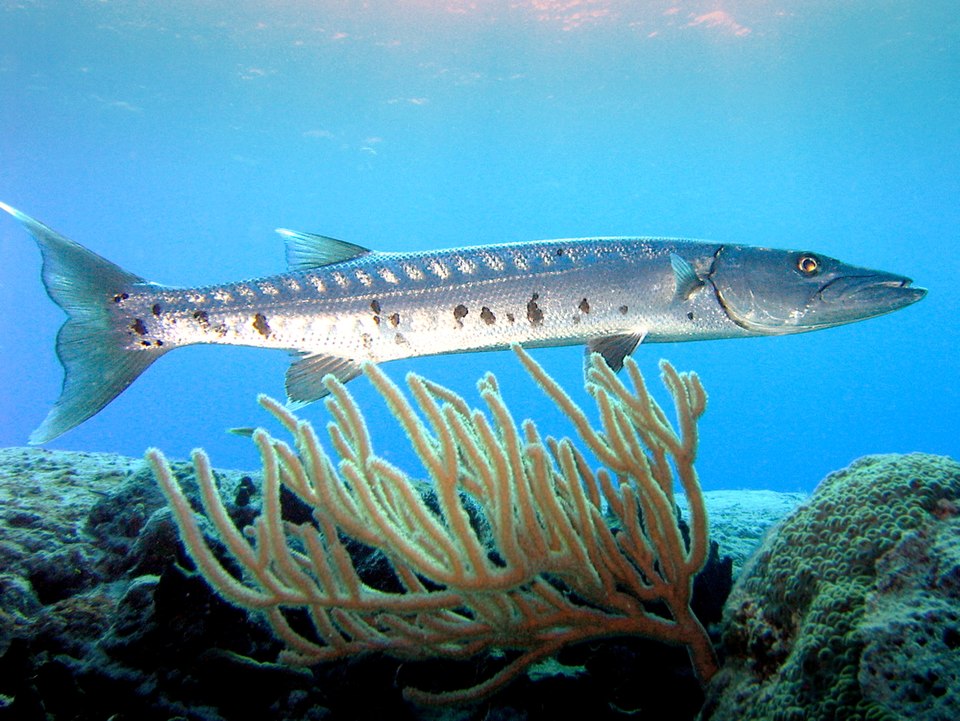
Great barracuda are not marathoners, but few reef-edge hunters look as sudden. A long body, rear-set fins, and a strong tail turn stillness into a fast strike.
They are often cited around 35 mph in short bursts, which fits their ambush style more than any long chase across open water. Speed here is about timing and surprise, with the fish using structure, shade lines, and quick direction changes to close the gap.
The myth is that barracuda are mindless missiles; in reality they are selective, conserving energy until a vulnerable target drifts into range, then accelerating with precision that feels almost mechanical.
Bonefish
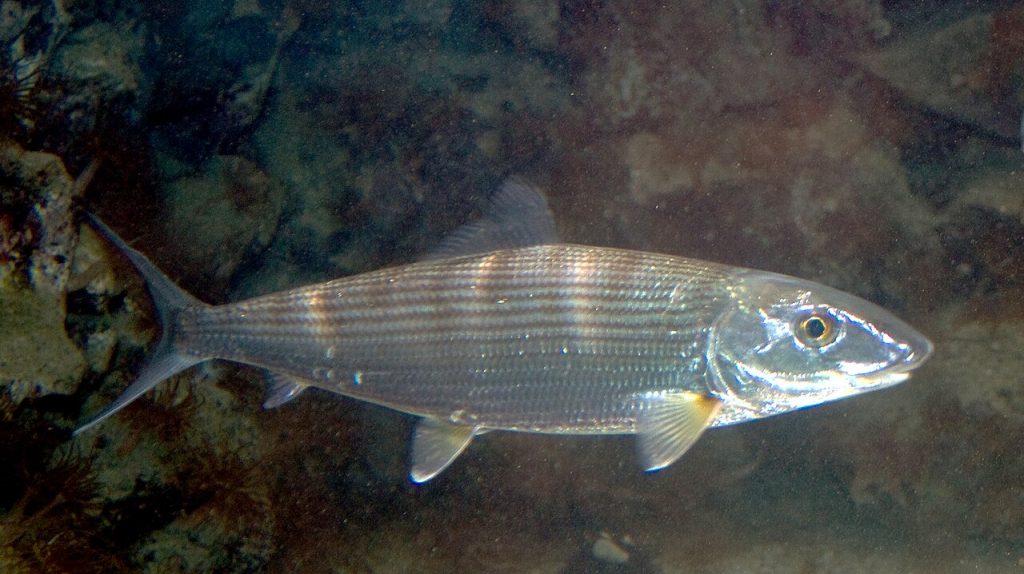
Bonefish earn their speed in shallow places where there is no room for sloppy movement. On a flat, a burst has to be clean, or it ends in sand and panic.
Often nicknamed the Gray Ghost, bonefish can hit startling bursts in the 30 to 40 mph range, powered by a narrow body and a tail built for quick acceleration. Their speed is also a defensive tool, letting them streak away from predators in water so skinny that escape routes are limited.
The myth is that flats fishing is slow and gentle; a spooked school shows the opposite, with fish turning into arrows that vanish across shallow water in seconds over turtle grass and sand.