

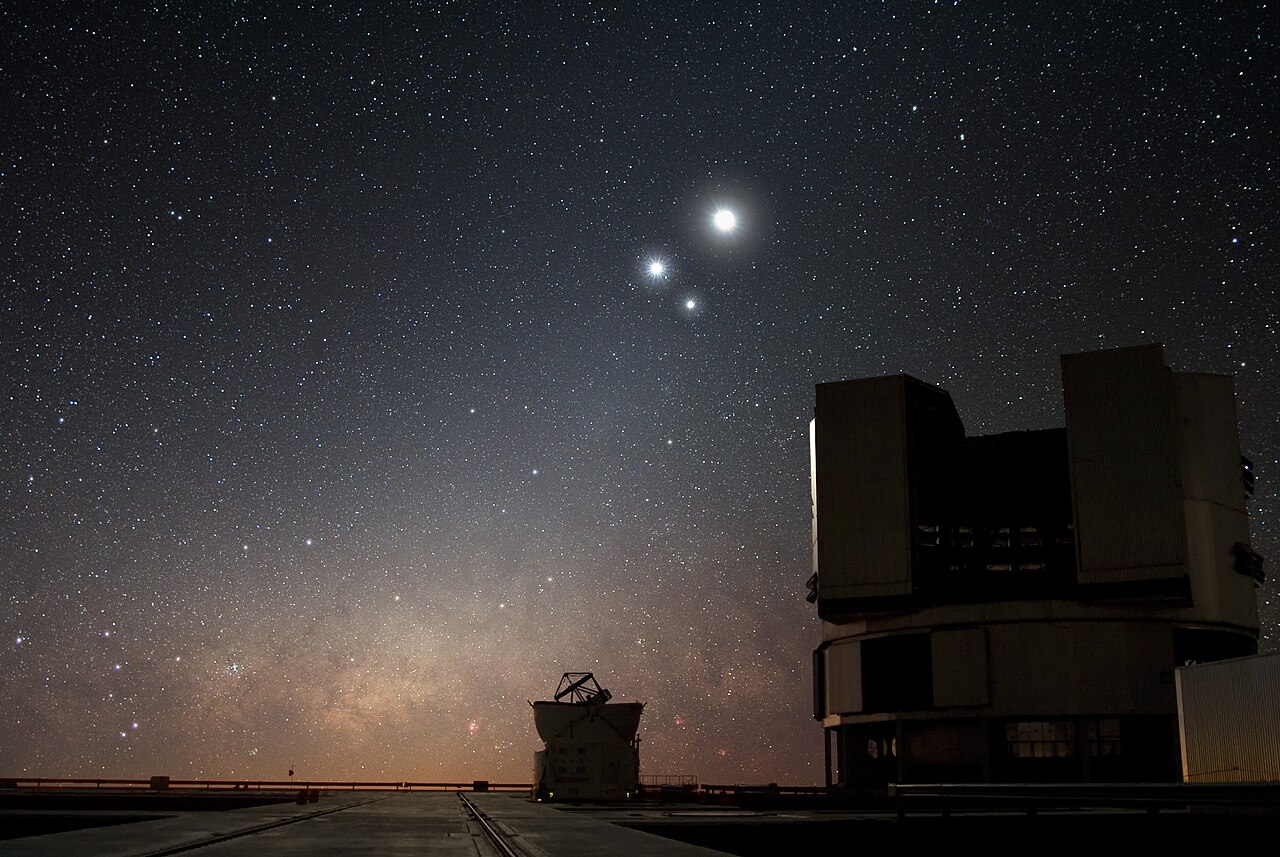
When Venus and Jupiter slide close together, the sky can feel staged, like someone arranged the planets for one calm evening. Most letdowns come from simple mix-ups: the wrong night, the wrong direction, or expecting a giant disc instead of bright points.
A conjunction is an apparent meeting, played out in twilight and low horizons. Venus often steals the scene with a clean, white blaze, while Jupiter holds steady nearby, brighter than most stars. The moment rewards patience and a few practical choices: a clear horizon, a simple pair of binoculars, and a quick check of local sunset or sunrise times before heading out.
Conjunction Does Not Mean the Planets Are Close
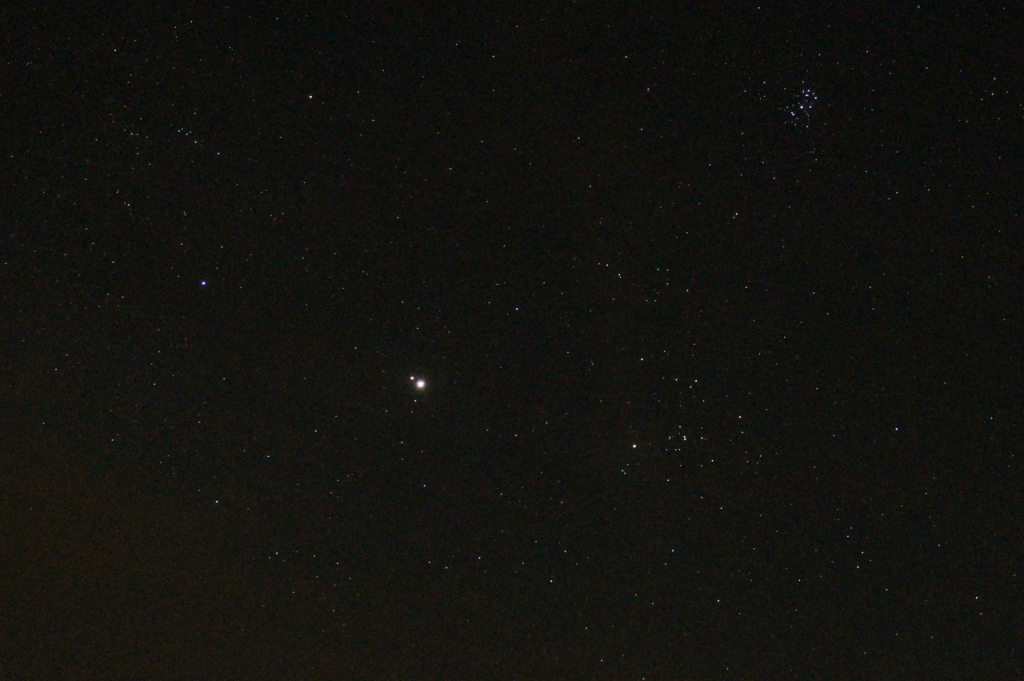
The most common mix-up is thinking the planets are actually near each other in space. In reality, Venus and Jupiter remain separated by hundreds of millions of miles, and only line up from Earth’s viewpoint.
That perspective trick is still worth chasing, but it helps to treat it like timing, not luck. The gap shrinks over several evenings, hits a minimum at conjunction, then opens again. Separation is measured in degrees, and even a close pairing may span a fingernail held at arm’s length. Having a backup night matters, because haze and low clouds love horizons, and the best view can arrive before or after the exact minimum.
The Best Night Is Not Always the Darkest
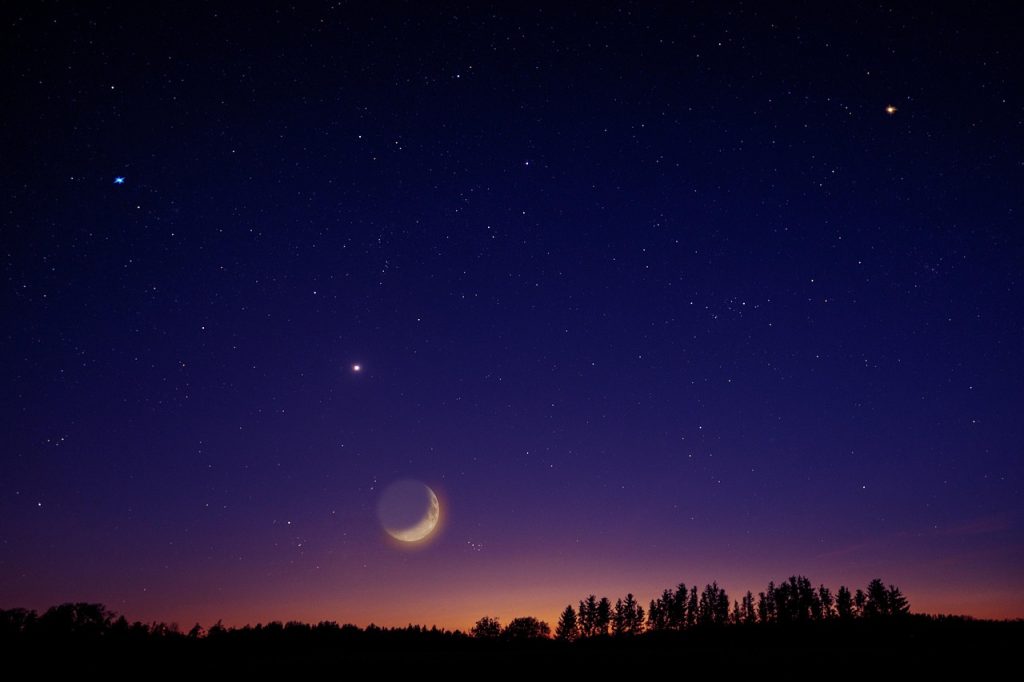
Many people assume a conjunction is a midnight show, when the sky is darkest. Often, the best pairing happens low in twilight because Venus stays close to the Sun in the sky, either after sunset or before sunrise.
Waiting until late night is a classic way to waste it. When Venus is the evening star, the duo sits in the west and sinks fast; as the morning star, it rises in the east and competes with dawn. The planets can shine through a bright blue sky, but trees and buildings block them easily. A flat horizon and a quick look at local rise and set times usually matter more than owning fancy gear. Clear air after a front helps, too.
Twinkling Is a Bad Identifier
The pair is often misidentified because both planets can look like stubborn headlights. Venus is usually the brighter one, crisp and white; Jupiter is slightly dimmer and more golden, but still outshines most stars.
Another backward assumption is that twinkling proves something is a planet. Planets tend to shine steadily, while stars flicker, yet low altitude and thin cloud can make anything shimmer. The clean tell is motion: planes crawl across the sky and blink, while Venus and Jupiter stay fixed against the constellations for the whole session. Noting a tree line helps, then checking 10 minutes later locks the ID.
More Magnification Can Make the View Worse
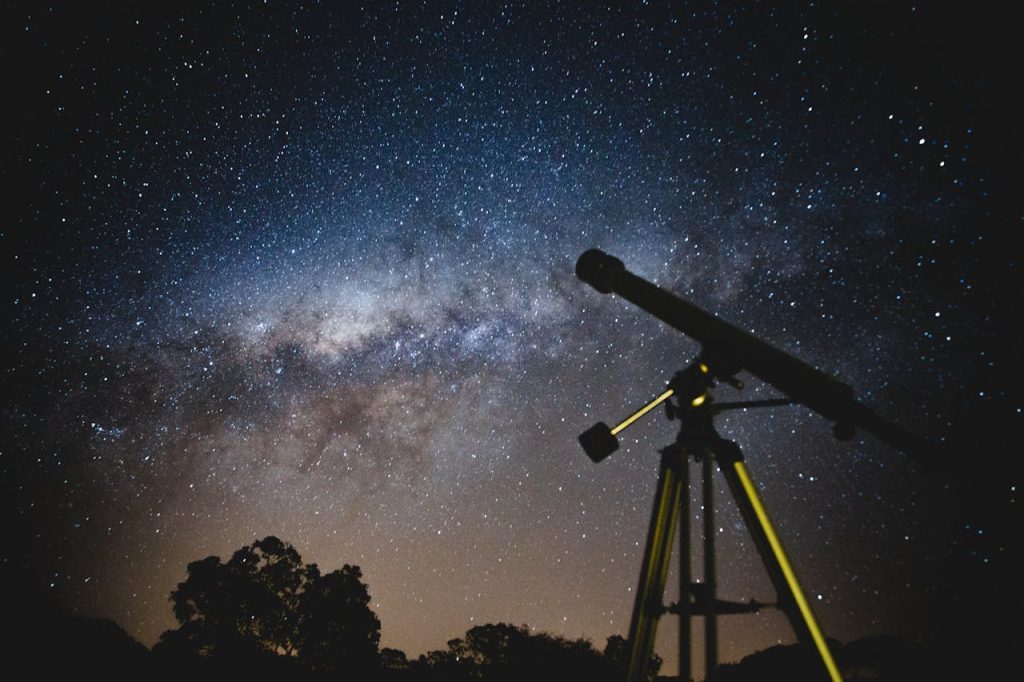
A common mistake is aiming straight for a high-power telescope, assuming it will make the conjunction more impressive. High magnification usually shrinks the field of view so much that one planet slips out of frame.
For the pairing itself, low power wins. Binoculars, or a small telescope with the widest eyepiece, can hold both worlds at once and still add detail: Jupiter’s four moons may line up like tiny beads, and Venus can show a phase. A steady support helps, since twilight wobble turns dots into streaks. Saving the magnification for later, after the planets drift apart, keeps the main moment intact, even from a city park.
A Clear Horizon Beats a Dark Sky
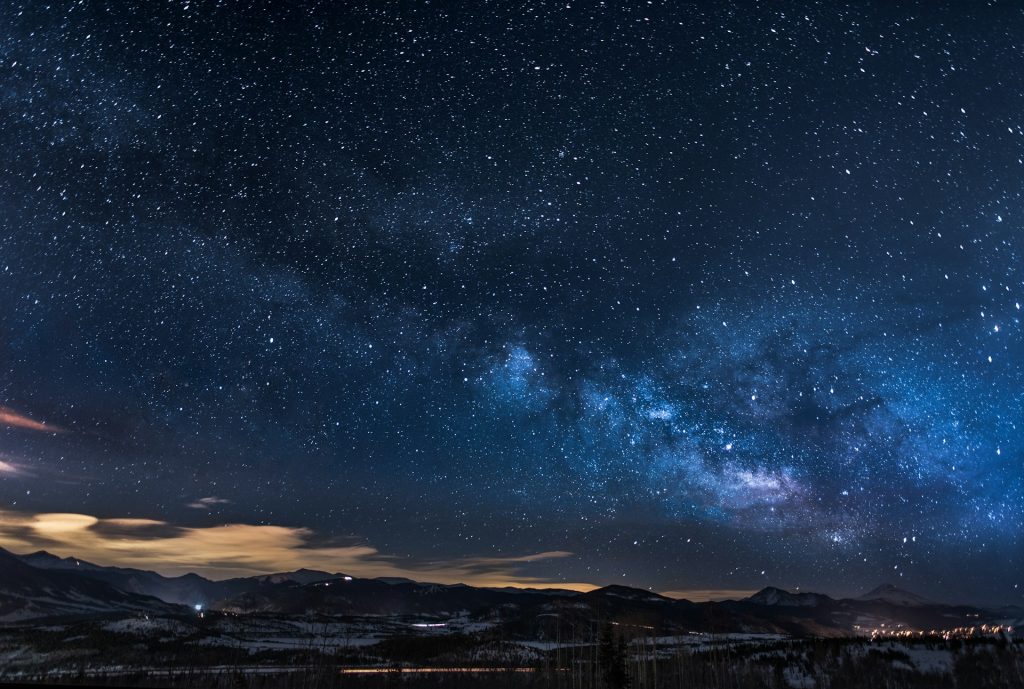
It sounds backward, but the darkest place is not always the best place for this event. Venus and Jupiter are so bright that light pollution rarely hides them, while a blocked horizon can erase the whole pairing.
Driving far into the countryside often trades streetlights for trees, hills, and mist pooling in low air. Cold, dry air can sharpen contrast, yet summer haze near sunset can soften everything. An open view to the relevant horizon, west for evening or east for morning, usually beats a remote overlook. If an app is used, it helps to treat it as a compass, then trust the two brightest points near the Sun’s path.
Phone Cameras Lose the Moment Without Manual Control
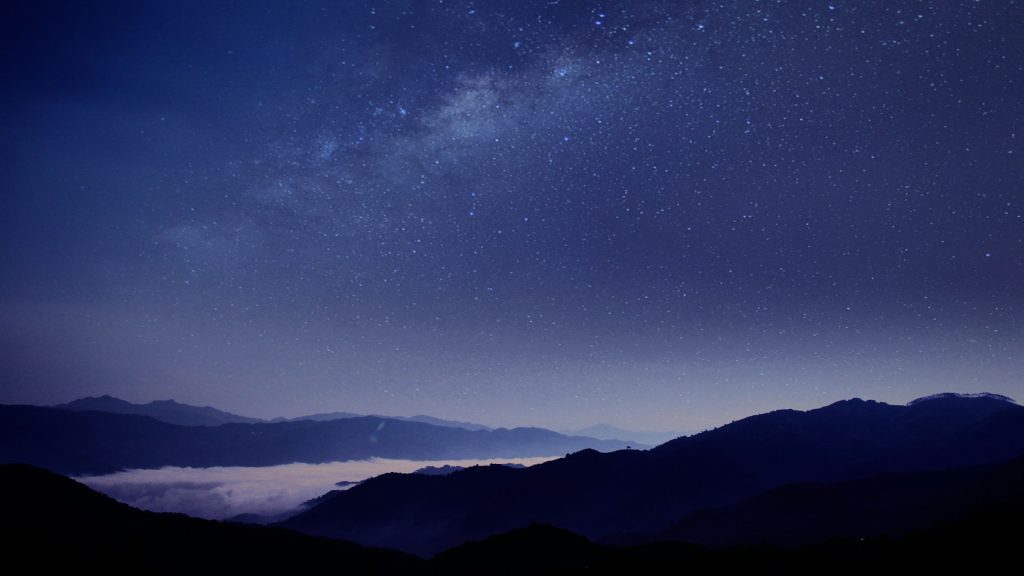
Photos often disappoint because cameras do not see twilight the way eyes do. Auto mode tends to overexpose the sky, turning Venus and Jupiter into bloated blobs, or it darkens the scene until the planets vanish.
The fix is calmer than it sounds: shorter exposures, lower ISO, and a stable rest on a railing or tripod. Phone night modes can smear the planets into commas as they drift through the frame. Using the 1x lens and cropping later usually beats digital zoom. HDR can dim bright points, so it often helps to switch it off. A short burst of frames, then picking the sharpest, preserves the clean point-light look in twilight.
Twilight Viewing Still Needs Sun Awareness
Another backwards belief is that nothing can be seen until the sky is fully dark. Venus and Jupiter can appear while the background is still bright, which tempts rushed viewing too close to the Sun’s glare.
Safety and comfort improve with a simple rule: keep optics pointed well away from the Sun, and wait until it is fully below the horizon in the evening, or not yet above it in the morning. Locating the planets with the naked eye first reduces guesswork. A building or hill can block the brightest part of the sky, and the view often improves 20 to 40 minutes into twilight as contrast builds. Hands steady once the glare is gone.
It Happens Often, but Not Always Conveniently
The last backwards idea is that a Venus-Jupiter conjunction is a once-in-a-lifetime miracle. On average, the pair comes close about once a year, though not always in a friendly spot. Many meetings are easy to miss because they occur too close to the Sun or in thick seasonal haze.
That is why some years feel dramatic and others feel invisible. The most photogenic encounters happen when the pair is higher in twilight, or when a slim Moon wanders nearby and adds scale. Treating a missed night as practice, not loss, keeps momentum. A quick check of the next season’s skywatching calendar can turn a one-off surprise into a habit.