

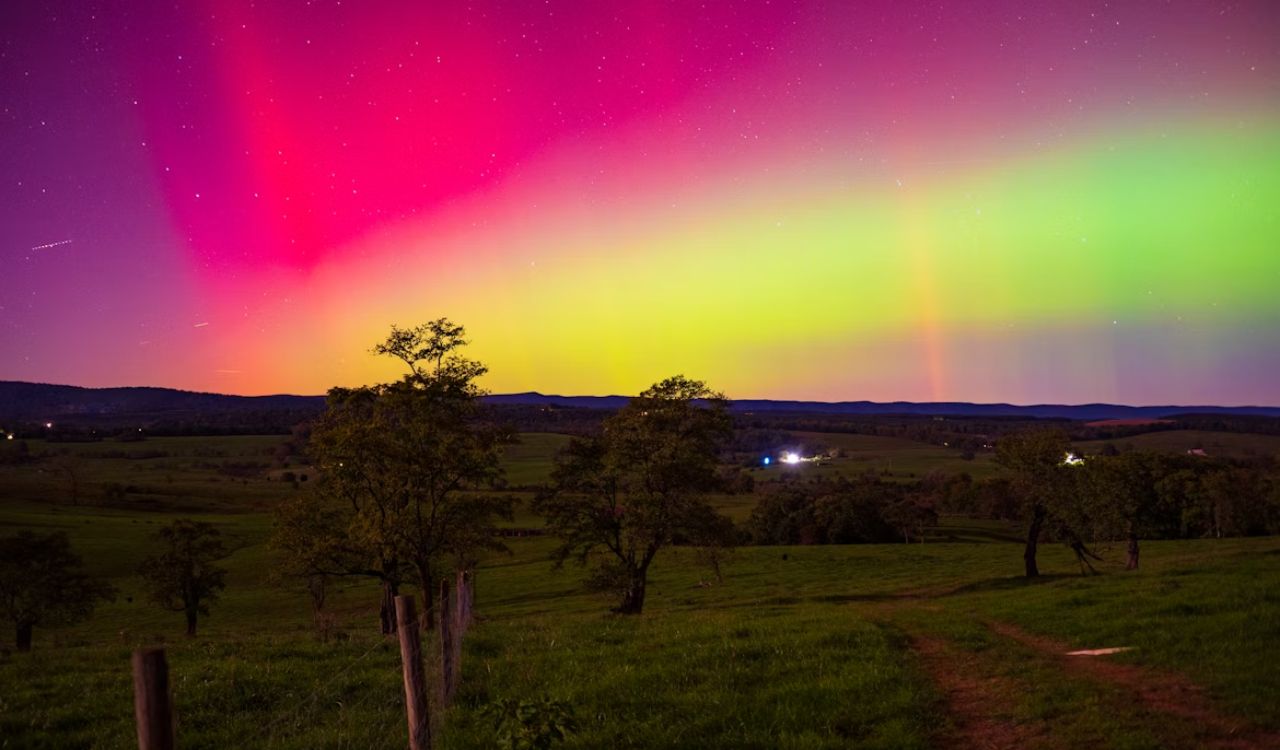
Earth experienced a rare and dramatic space weather event in mid January 2026 when a powerful surge of solar radiation struck the planet. The storm, the strongest of its kind in 23 years, sent charged particles racing toward Earth and collided forcefully with its magnetic field. The impact triggered widespread auroras that appeared far beyond their usual polar limits, surprising skywatchers as far south as Southern California. While the glowing skies captured global attention, the event also highlighted how active the Sun has become and why scientists carefully track these intense solar outbursts and their effects on Earth.
What Triggered This Powerful Solar Storm

On January 18, 2026, an exceptionally strong X-class solar flare erupted from an active region on the Sun. This powerful explosion released immense amounts of energy and charged particles that barreled into space. Shortly afterward, a full-halo coronal mass ejection, or CME, hit Earth’s magnetosphere with significant force. The impact energized Earth’s magnetic field, pushing geomagnetic activity to severe levels on multiple occasions over the following days. The combination of intense solar radiation and magnetic disturbance created conditions not seen in more than two decades, ushering in a dramatic period of space weather activity that mesmerized sky watchers.
The charged particles and magnetic fields thrust toward Earth by the solar eruption interacted violently with our planet’s magnetic environment. When those high-energy particles reached Earth, they compressed and disturbed the magnetosphere, which shields the planet from solar wind and harmful radiation. This disturbance allowed energetic electrons to penetrate deeper toward lower latitudes than is typical. As these particles collided with atoms and molecules in the upper atmosphere, they excited them, producing the glowing curtains of light known as auroras. Under these highly energized conditions, auroral displays stretched unusually far south, revealing brilliant green and red skies over regions that rarely see them.
Unusual Auroras Seen Across Wide Regions

The geomagnetic storm pushed auroras beyond typical northern latitudes into areas unaccustomed to such displays. Reports came from observers in Southern California, parts of the southern United States, and across much of Europe, where people captured vibrant auroral colors flickering through night skies. In some locations, residents saw bright bands and glowing arcs that blended with city lights, creating unforgettable images. Normally limited to high latitudes near the Arctic and Antarctic, these celestial shows appeared hundreds or even thousands of miles farther south than expected. The rare event prompted photographers and skywatchers alike to venture outside after dark, hoping to glimpse the ethereal spectacle.
How the Storm Affected Technology and Daily Life

While the auroras drew excitement, solar radiation storms can also carry real-world consequences. High-energy particles from the Sun can interfere with satellites, GPS signals, and high-frequency radio communications, particularly near the poles. During this storm, space agencies and satellite operators closely monitored systems for disruptions and adjusted operations as a precaution. Airlines were also alerted to increased radiation levels at cruising altitudes on polar routes. Despite the storm’s strength, widespread technological failures were avoided, highlighting how modern monitoring and preparedness help reduce risks.
Solar radiation storms pose the greatest concern for systems operating above Earth’s atmosphere. Satellites can experience electronic glitches, navigation errors, or temporary shutdowns when exposed to elevated radiation. Astronauts aboard space stations face increased exposure during severe events, requiring protective protocols. Even power grids can be affected if geomagnetic disturbances induce electrical currents in long transmission lines. Although this event caused minimal disruption, it reinforced why space weather forecasting remains essential as societies grow more dependent on satellite-based infrastructure.
Why Solar Activity Is Increasing Right Now

This powerful storm is tied to the Sun’s natural activity cycle, which rises and falls over roughly eleven years as its magnetic field shifts and reorganizes. Scientists are currently observing the Sun moving deeper into the most active phase of its latest cycle, a period marked by more frequent sunspots, intense solar flares, and powerful coronal mass ejections. As solar activity increases, the likelihood of strong radiation and geomagnetic storms also rises. Events like this provide valuable real-world data that help researchers refine predictive models, improve warning systems, and better understand how solar energy interacts with Earth’s magnetic environment.
Periods of heightened solar activity are not unusual over the Sun’s long history, but their consequences today are far more noticeable than in the past. Modern society depends heavily on satellites for navigation, communications, weather forecasting, scientific research, and global financial systems. As solar activity peaks, scientists anticipate more frequent eruptions capable of disrupting these technologies. This recent storm serves as a clear reminder that while Earth’s magnetic field offers strong protection, space weather remains a powerful natural force that requires continuous monitoring, preparedness, and international coordination.
What This Storm Reveals About Earth’s Natural Defenses
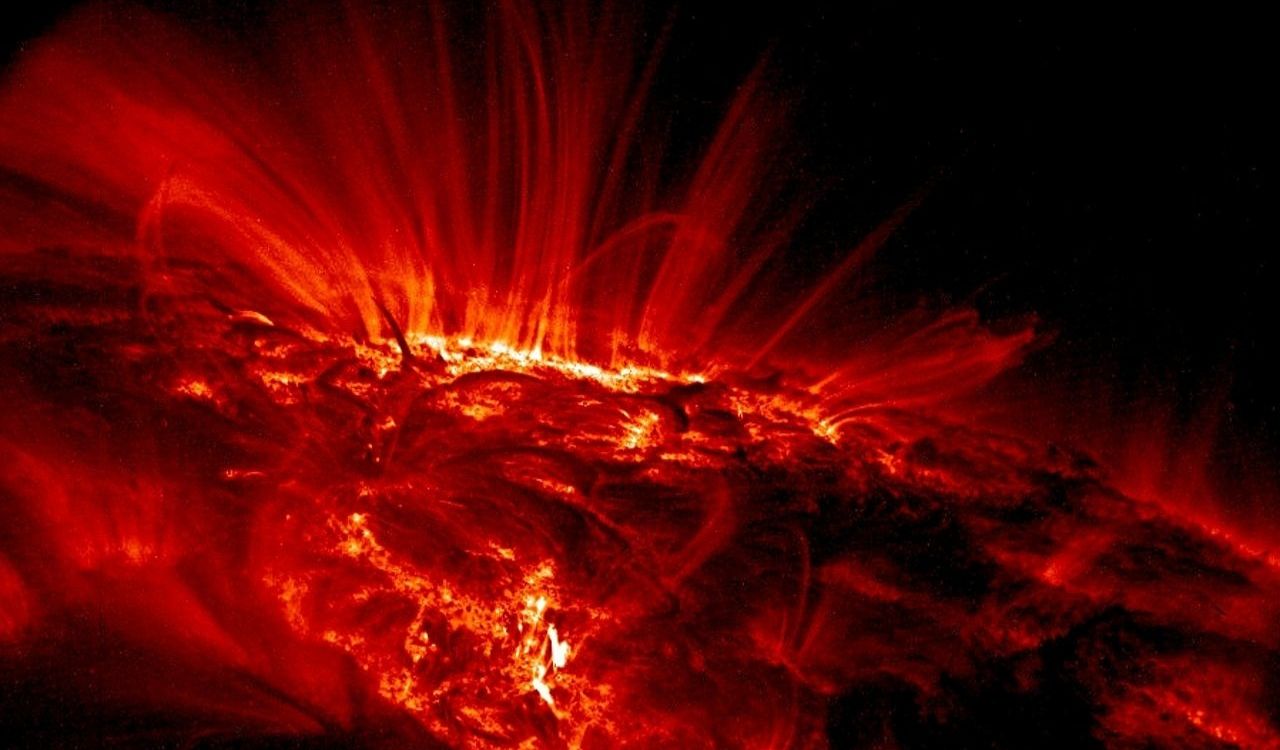
Earth’s magnetic field played a critical role in limiting the most dangerous effects of this powerful solar radiation storm. As charged particles slammed into the planet, the magnetic field redirected much of that energy toward the poles, where it produced auroras instead of widespread surface damage. This shielding prevented severe atmospheric loss and reduced radiation exposure at ground level. While the storm was intense, Earth’s mature magnetic system absorbed and redistributed the energy in a way that protected life and infrastructure, underscoring the importance of planetary defenses shaped over billions of years.
Events like this also highlight how finely balanced Earth’s natural defenses truly are. The magnetosphere does not block all solar energy, but it moderates its impact, transforming potentially harmful radiation into manageable disturbances and striking visual displays. Scientists analyze storms of this magnitude to better understand how Earth responds under extreme stress and how its defenses compare to planets that lack strong magnetic fields. Each major solar event acts as a real-world stress test, offering insights into planetary resilience and reinforcing why continuous monitoring of the Sun and Earth’s magnetic environment remains essential for the future.
What This Means for Future Solar Storms

As solar activity continues to rise toward its expected peak, scientists anticipate that powerful solar storms like this one may become more frequent in the coming years. Each event offers an opportunity to improve forecasting models and refine early warning systems that help protect satellites, power grids, and aviation. While Earth’s magnetic field provides strong natural protection, preparedness remains essential in a world increasingly dependent on space-based technology. Understanding how storms unfold allows agencies and industries to reduce risk and respond more effectively when future events occur.
This storm also serves as a broader reminder that Earth exists within an active and constantly changing solar environment. Space weather is not rare or abnormal, but a natural outcome of the Sun’s evolving magnetic behavior. By studying events of this scale, scientists gain deeper insight into how planetary defenses respond under stress and how long-term stability is maintained. Continued advances in monitoring and modeling allow earlier warnings and better coordination across industries. As technology improves, humanity is increasingly equipped to observe, understand, and adapt to the powerful solar forces that shape conditions both in space and on Earth.