

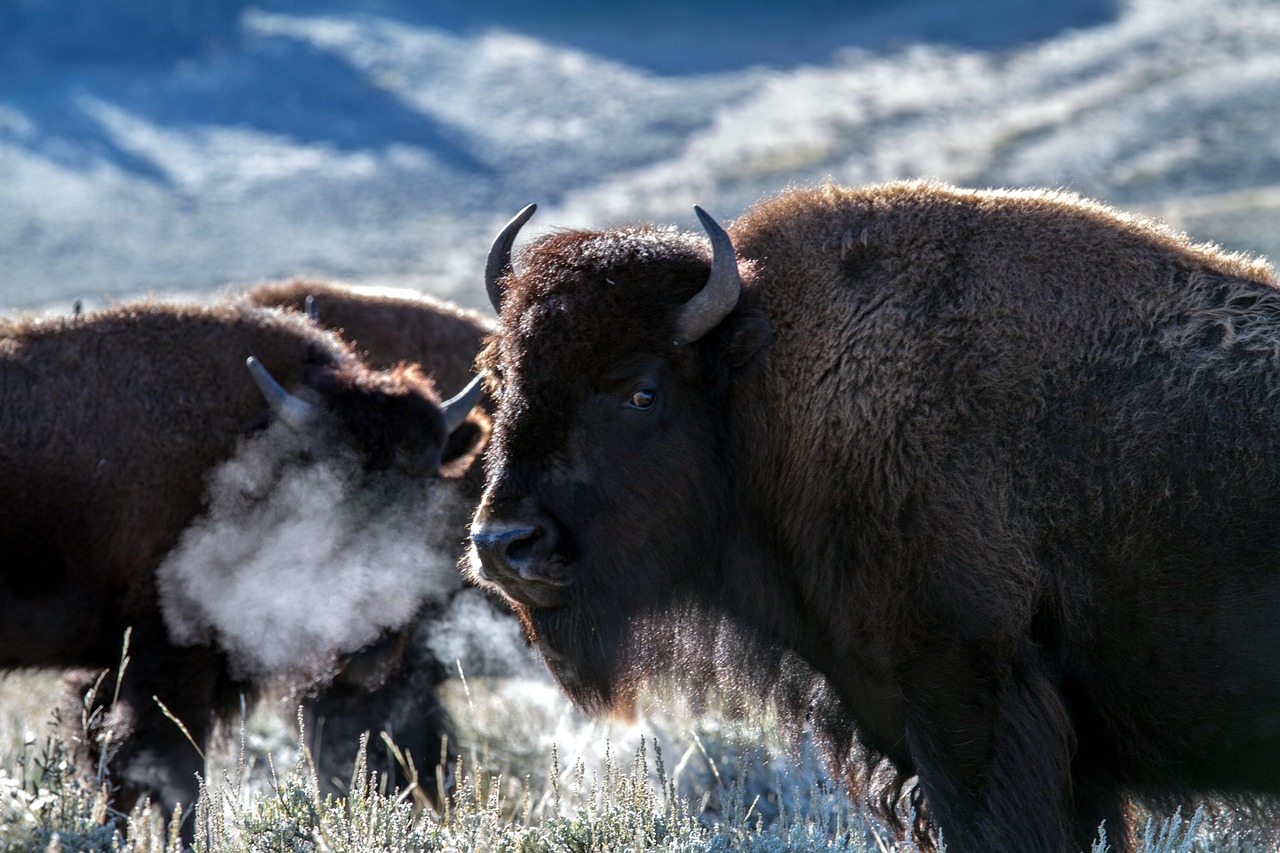

Bison once shaped grasslands across North America, then nearly vanished in a single human lifetime. Their return is not a simple release-and-hope story. It is decades of fence lines, grazing plans, disease protocols, and partnerships that treat bison as ecological engineers and cultural relatives. Across prairie states, on Tribal lands, and inside protected parks, herds are expanding in carefully chosen places where habitat can handle them and communities want them back. The comeback is uneven and sometimes contentious, but it is real, visible in hoofprints, grazed mosaics, and the deep quiet a herd brings to open country.
Tribal Nations Are Rebuilding Buffalo Herds

Much of the modern bison comeback is being driven by Tribes restoring buffalo to Native lands for food sovereignty, culture, and habitat resilience. The InterTribal Buffalo Council links dozens of Tribal Nations and supports herd management, training, and transfers that help new herds start with healthy animals and workable infrastructure. ITBC describes a network of 86 Tribes across 22 states managing over 20,000 buffalo, with restoration underway on nearly 1 million acres of Tribal land. The scale matters because it grows bison where long-term commitment is strongest, not where a trend is loudest.
Banff’s Backcountry Herd Is Growing Again

In Banff National Park, plains bison returned through a staged reintroduction built around health testing, soft-release, and a defined range. Parks Canada notes that 16 bison were moved from Elk Island National Park to Banff in 2017, then 31 animals were released from the soft-release pasture in July 2018 into a 1,200 km² reintroduction zone. The goal is ecological function, with bison creating a mosaic of grazed and rested patches that benefits many species. The project shows how large mammals can come back when land use, disease risk, and public expectations are planned for.
American Prairie Is Stitching A Bigger Landscape

On the Montana prairie, American Prairie has used phased releases and long-term grazing plans to rebuild a free-ranging herd. Its timeline notes bison stepping back onto the landscape in 2005, followed by later additions that increased herd size and genetic breadth. The organization frames bison as the engine that helps prairie recover, from plant diversity to habitat structure for birds and insects. The work stays slow because it depends on acquiring and connecting habitat, then managing grazing pressure so the land improves rather than degrades. It is restoration measured in decades, not seasons.
Tallgrass Prairie Preserve Restores With Fire And Hooves

In Oklahoma, The Nature Conservancy’s Tallgrass Prairie Preserve uses bison and prescribed fire together, treating both as tools. TNC says it has worked since 1989 to restore a functioning tallgrass prairie ecosystem using about 2,500 free-ranging bison and a patch-burn model. That approach creates shifting patterns of fresh regrowth and rested grass, which supports a wider mix of plants, insects, and grassland birds. Bison also move differently than cattle, often leaving varied structure behind that keeps habitat from turning uniform. The prairie looks wilder because it is managed more intentionally.
Badlands Bison Are Seeding New Tribal Herds

At Badlands National Park, bison management has become a source for restoration beyond park fences. NPS reported that in 2022 it distributed about 655 bison from Badlands to multiple Tribes, supporting herd growth on Tribal lands. Transfers like these matter because they move animals from well-managed herds into places building long-term cultural and ecological programs. The park still balances forage, visitor safety, and herd health, but surplus becomes opportunity rather than waste. It is a practical model: protect a core herd, then share animals to expand bison presence across the region, year after year.
Wind Cave Keeps A Conservation Line Alive

Wind Cave National Park is part of the quiet backbone of bison recovery: maintaining a conservation herd with clear lineage. NPS notes that 14 bison were sent to Wind Cave in 1913, followed by six more from Yellowstone in 1916, forming the foundation of today’s herd. That history matters because genetics and disease status shape where bison can be moved and how new herds can be started. Keeping a well-managed source herd means future restoration projects can draw on animals with known background, instead of gambling with health risks. It is slow conservation work, but it keeps options open for the next wave of returns.
Theodore Roosevelt Park Shows Why Active Management Matters

Theodore Roosevelt National Park holds bison in two units and manages herd size to match forage and water limits. NPS describes target ranges of 200–500 bison in the South Unit and 100–300 in the North Unit, with periodic roundups to keep the ecosystem balanced. Those operations can feel intrusive, but they prevent overgrazing in a fenced landscape and maintain habitat for other wildlife. When parks remove animals, many are rehomed through Tribal programs, turning population control into restoration fuel elsewhere. It is unglamorous work that keeps bison on the land long-term.
Elk Island Supplies Disease-Free Bison For New Starts

Elk Island National Park has become a key source herd in Canada, especially for reintroductions that require strong disease safeguards. Parks Canada explains that the Elk Island wood bison herd was established in 1965 to serve as a source of disease-free wood bison for reintroduction projects. That kind of source herd makes transfers possible without importing brucellosis or tuberculosis concerns into new landscapes. Careful genetics, veterinary screening, and quarantine protocols are why some reintroductions succeed while others stall. Behind every headline release is a long chain of health decisions made well before the trailer door opens.
Alaska’s Wood Bison Come Back In Staged Transfers

One clear sign of return is that bison are being re-established in places where they disappeared entirely. Parks Canada notes that wood bison from Elk Island were sent to the state of Alaska in 2008, 2022, and 2024, with further transfers planned for 2026 and 2028. Those dates reflect a strategy: build herds step by step, keep genetics broad, and scale up only when management capacity is ready. Reintroductions in the north also test how bison fit alongside modern land use, from subsistence traditions to wildfire-driven habitat change. It is restoration that acknowledges uncertainty and plans for it.
Wind River’s Buffalo Shift Toward Wildlife Status

Some of the most important work is happening in the rules, not only in the pastures. In 2025, reporting described the Eastern Shoshone decision to classify buffalo as wildlife rather than livestock on the Wind River Reservation, a move meant to restore buffalo’s ecological and cultural role. That framing changes how bison are managed and how land is planned around them, closer to elk or deer than to cattle. It can open space for more natural movement and biodiversity, but it also demands clear agreements about fences, neighbors, and shared stewardship. The shift signals that bison return is increasingly about governance that matches ecology.