

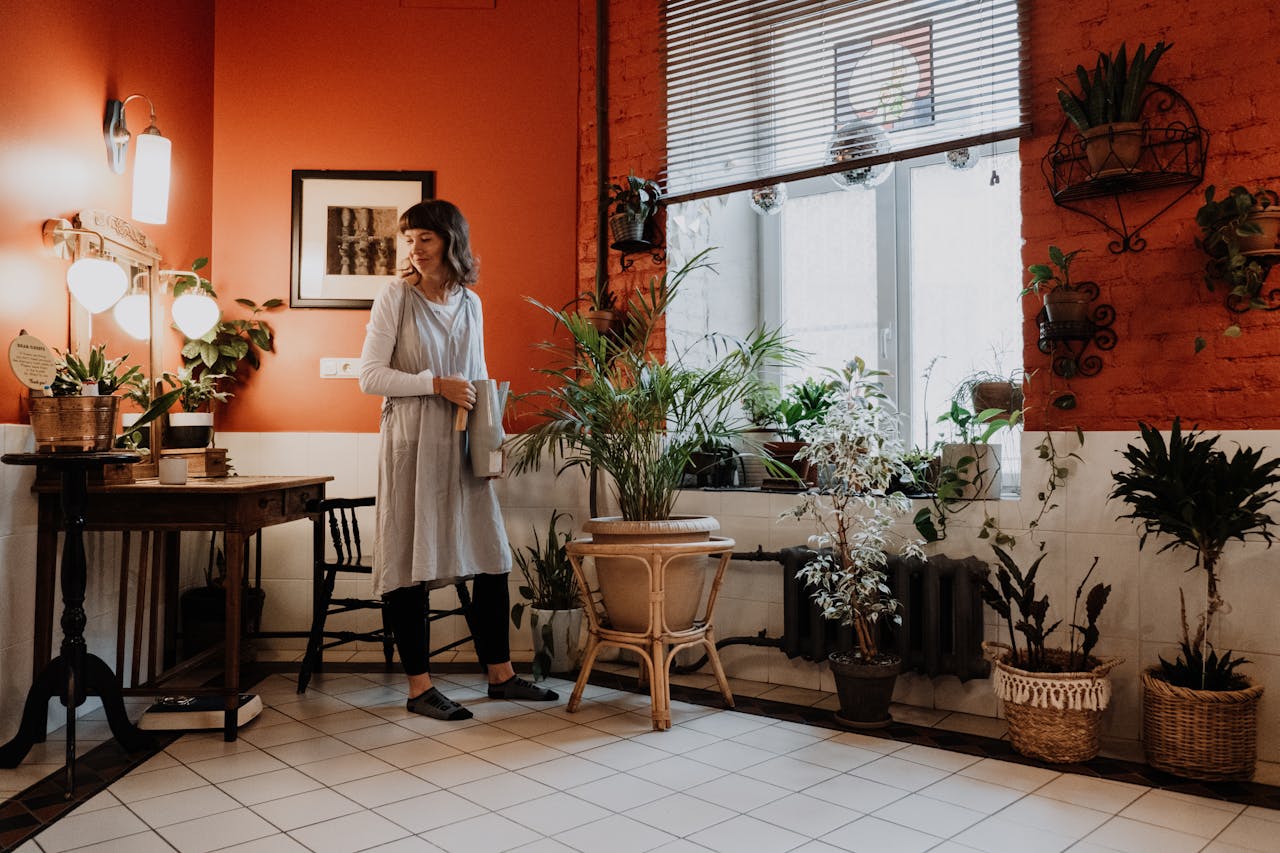
A flowering houseplant can look like simple color on a windowsill, then suddenly it becomes the room’s loudest shape. Big leaves, glossy surfaces, and repeated blooms pull the eye and shrink the sense of space, especially in smaller homes.
Designers see the same pattern every spring: a plant outgrows its corner, blocks light, and makes everything nearby feel cluttered. Late-winter sun is already scarce, so a fast grower can cast a heavy shadow and turn a calm vignette into visual traffic. The fix is not giving up flowers. It is choosing scale, training growth, and leaving breathing room so the rest of the decor can speak too.
Peace Lily (Spathiphyllum)

Peace lily reads calm in a store, but at home it can widen into a glossy green fan that steals air from a small room. The leaves arch outward, catch lamplight, and make nearby art and textiles feel quieter by comparison. Creamy white spathes hover at eye level, so even neutral blooms can start feeling like the main event.
In bright, indirect light with steady moisture, the clump thickens fast and starts leaning toward one side of the window. Designers keep it balanced by rotating the pot, dividing crowded roots in spring, and giving it a clean backdrop so the shape reads intentional, not accidental, over time. In photos, too.
Tropical Hibiscus (Hibiscus rosa-sinensis)

Tropical hibiscus starts as a cheerful pot on a sill, then it begins acting like a small indoor tree. With strong sun and regular feeding, woody stems stretch, side branches widen, and glossy leaves stack up until the window feels smaller. It also sheds the occasional spent bloom, adding specks of color to floors and tabletops.
The flowers are big and saturated, and that color repeats day after day, which can overpower calm rooms with soft rugs and pale walls. Designers prune after a heavy flush, stake for a cleaner outline, and keep nearby patterns restrained so the plant looks bold on purpose, not busy. Even in winter.
Pink Jasmine (Jasminum polyanthum)

Pink jasmine looks delicate, but it is still a vine built for motion, and that energy shows indoors. Once it finds sun and a little support, stems race along rods and shelves, and the mass of foliage starts reading like visual static. If it sits near curtains, it can tangle itself into fabric in a week.
Late-winter clusters of buds blush pink before opening white, and the fragrance can fill rooms fast. That intensity is lovely, but it can make a small space feel crowded. Designers train it to one hoop or trellis, pinch new growth after flowering, and keep surrounding styling quiet so it stays the star, not the clutter.
Cane Begonia (Angel Wing Types)

Cane begonias, including angel wing types, are loved for spotted leaves and dangling clusters of pink flowers, but they grow with attitude. Each cane adds height quickly, leaves flare outward, and the plant starts competing with lamps, frames, and wall art for clean space. A mature pot can feel like a living screen in front of a window.
When stems lean toward light, the silhouette turns messy, and even pretty blooms can feel like extra noise in a tight corner. Designers stake early, trim leggy canes, and rotate the pot weekly. They also keep one statement begonia per room, because doubling up makes the corner feel crowded fast.
Anthurium (Flamingo Flower)

Anthurium is sold as tidy tabletop color, yet its shine and bold shape can take over a room once it settles in. Warmth and humidity push wider leaves, the crown thickens, and waxy blooms keep cycling, repeating the same bright note until other pops of color feel redundant. Even one plant can dominate a nook.
Under evening lamps, glossy surfaces throw highlights that pull attention from quieter textures like linen, wood, and woven rugs. Designers calm the effect with matte pots, softer greens nearby, and distance from crowded shelves. With fewer competing objects, the plant reads like intentional drama instead of constant shine.
Geranium (Pelargonium)

Geraniums bring instant cheer, but indoors they do not stay compact without strong sun and regular pinching. Stems stretch toward the brightest glass, fuzzy leaves add texture, and flower heads keep arriving in reds and corals that repeat across the room. Two pots can read like a theme, not an accent.
That steady color can overpower softer palettes and make a calm space feel busier than it is. Designers treat geraniums like seasonal decor: one clean container, tip-pinching for density, and a firm prune after a bloom cycle. If it turns leggy, they shift it outdoors or pass it along so the room regains its balance quickly.
Christmas Cactus (Schlumbergera)

Christmas cactus starts as a tidy pot, then its segmented stems multiply and drape until it reads like a living fringe. Older plants can spread wide across a shelf, covering books, frames, and small objects with green arcs. In a small room, that cascade can make the wall feel crowded.
When buds set in late fall or early winter, the bloom show can be big in magenta, red, or peach, and the color hangs around for weeks. Designers give it one clear hanging spot against a plain wall and keep decor low and matte. After flowering, they rotate the pot and trim stray stems so the outline stays clean and the plant looks curated, not chaotic.
Amaryllis (Hippeastrum)

Amaryllis is sold as a quick holiday centerpiece, and that is exactly how it behaves: fast, tall, and impossible to ignore. A single bulb sends up thick stalks that rise 18 to 24 inches, often in pairs, topped with huge trumpet blooms in red, white, or bold stripes. Even a simple room feels festive when it opens.
That height blocks sightlines across a table and can make a small dining area feel top-heavy. Designers use it as a brief focal point, then shift the pot to a calmer ledge after flowering. The strap leaves keep stretching toward light, so they turn the pot, trim spent stems, and keep the area around it clean.
Clivia (Kaffir Lily)

Clivia stays quiet for months, which is why its bloom season can feel like a surprise takeover in late winter. It forms a dense fountain of strappy leaves that widens each year, then a stout stalk lifts a round head of orange or yellow flowers. When the pot is large, the leaf fan can spill well past its base.
The silhouette is strong and architectural, so it can dominate a modest living room the way a sculpture might. Designers place clivia on a low stand near a blank wall, keep nearby patterns minimal, and avoid pairing it with tall lamps. With more negative space, the plant looks intentional, not oversized for the room.
Moth Orchid (Phalaenopsis)

A moth orchid is elegant, but repetition is where designers see rooms tip into looking staged. Bloom spikes push outward for weeks, flowers can last for months, and repeated arcs of white, yellow, or purple start reading like a permanent motif. In small dining areas, the table can begin to feel like a hotel lobby display.
The leaves widen, and stakes, clips, and plastic wraps add little bits of clutter that show up in close views. Designers limit orchids to one cluster per sightline, use simple pots, and remove packaging. They pair the blooms with matte foliage plants so the shine feels special, not nonstop. Less fuss, more calm.
Good rooms feel like they can breathe. When a flowering plant is chosen for the scale of the space, then trained with a little restraint, it becomes a steady source of joy instead of visual pressure. The most beautiful interiors are often the ones that leave room for life to grow, without letting it crowd out everything else.