

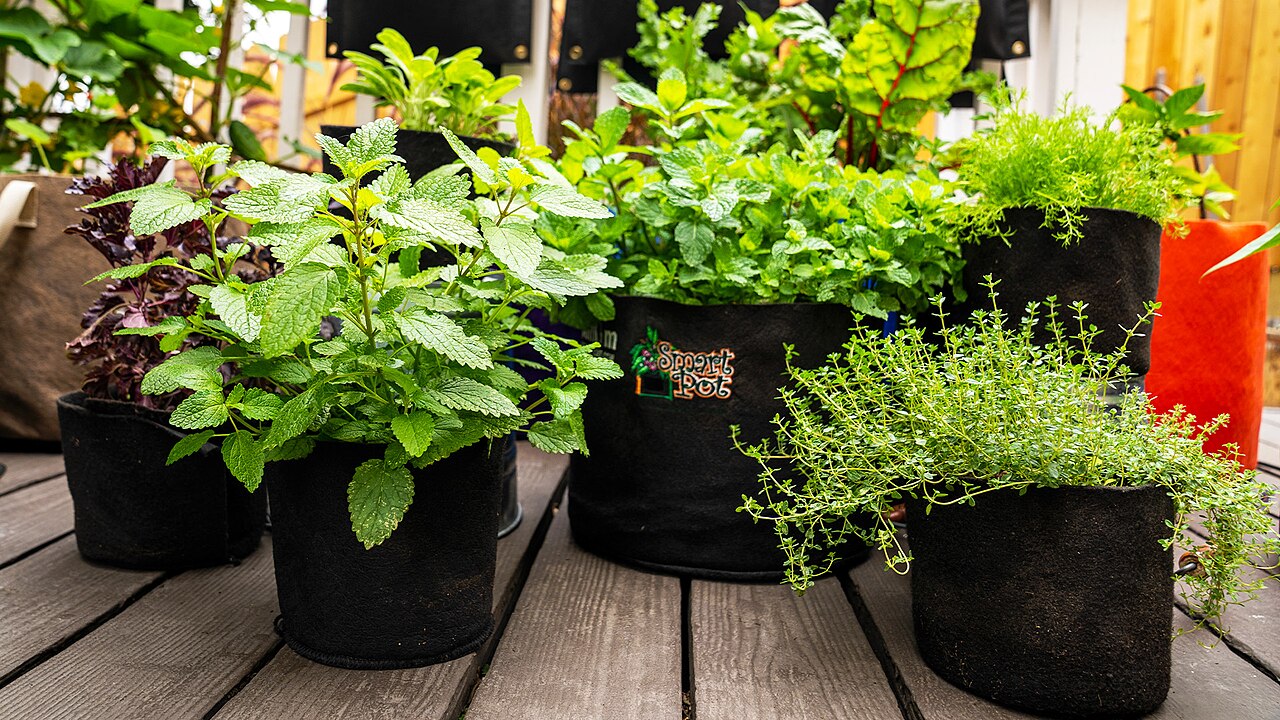
Fabric pots look like the easy answer for small-space food gardens. They are lightweight, affordable, and simple to move when weather shifts. Early growth often looks great, which is why many gardeners assume the system is foolproof. Then heat arrives, watering gets uneven, and a healthy setup can slide fast.
Most failures are not random, and they are not signs that container gardening does not work. Fabric pots amplify both good habits and weak habits. If the setup is dialed in, they perform beautifully. If the basics are loose, stress shows up quickly in leaves, flowers, and fruit.
The fix is not complicated, but it has to be consistent. Root volume, mix quality, watering rhythm, and feeding schedule all work together. Miss one, and the other three have to compensate. Keep all four steady, and vegetables usually recover and produce hard.
This guide breaks down the practical moves that keep fabric-pot gardens productive from transplant to final harvest. Each section focuses on a common failure point and the fix that actually holds up in real weather. No gimmicks, no miracle hacks, just repeatable container strategy. Apply it once, and every season gets easier.
Fabric Pots Are Great Until Heat Exposes the Weak Points
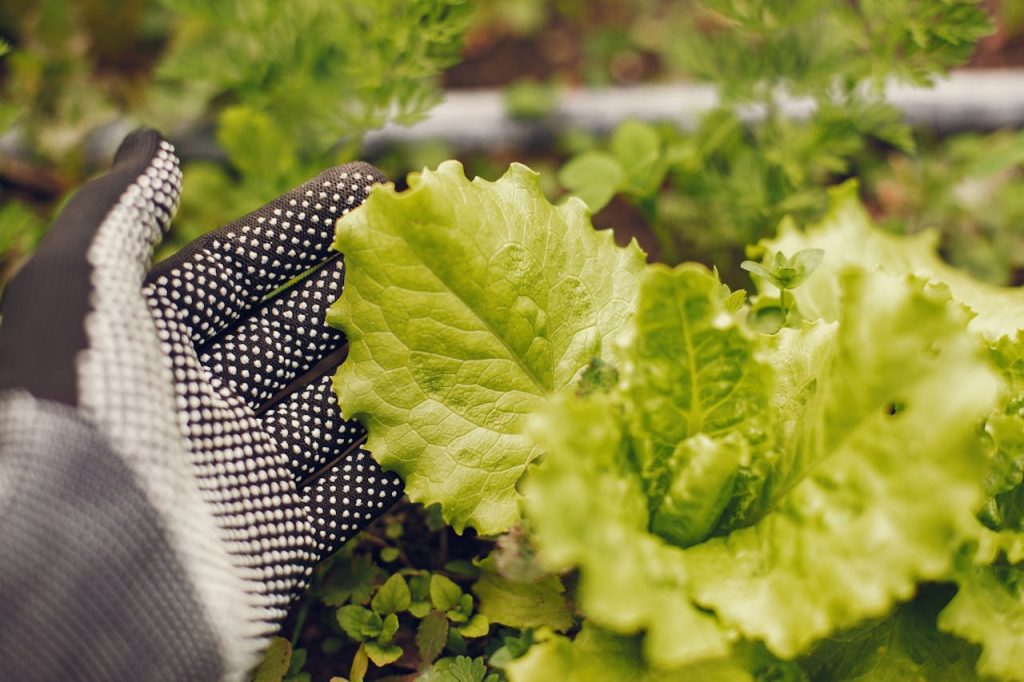
Fabric containers breathe, and that root-zone airflow is a real advantage. Roots hit the edge, branch out, and avoid the hard circling common in rigid pots. That helps build a finer feeder-root network. In cool weather, this often translates to clean, vigorous growth.
The same airflow also increases moisture loss from the sides and top. On hot days, the root zone can swing from comfortable to dry in a short window. That swing is where plants stall. Growth pauses, blossoms drop, and stress accumulates quietly.
Many gardeners misread early success as a sign that maintenance can stay casual. It cannot. Fabric pots reward routine more than they reward guesswork. You need a system that matches temperature, crop type, and pot size.
Once you treat fabric pots as high-performance containers rather than generic planters, results improve fast. The goal is stable roots, not constant rescue. Stability beats reaction every time. That mindset shift is where thriving gardens start.
Container Size Decides More Than Most Gardeners Realize
Pot size is not a cosmetic choice, it is your root budget. Small volume means less water reserve, less nutrient reserve, and faster temperature swings. Even strong plants struggle when the root zone runs out of room early. That is why under-sizing feels fine first, then fails midseason.
For fruiting crops like tomatoes, peppers, and eggplant, bigger containers are safer from day one. A deeper, wider root zone buffers heat and gives you more forgiveness on busy days. You are not just buying space, you are buying consistency. Consistency is what protects yield.
Leafy crops and herbs can live in smaller volumes, but matching depth to crop still matters. Shallow roots tolerate shallow containers. Tap-rooted or heavy-fruiting plants do not. When crop and container are mismatched, every other part of care becomes harder.
If you are choosing between two sizes, choose the larger one and plant fewer specimens. Crowding is one of the fastest ways to create water stress and nutrient competition. One strong plant in proper volume usually outperforms two cramped plants. Bigger pots reduce emergency decisions later.
The Potting Mix Has to Hold Air and Moisture at the Same Time
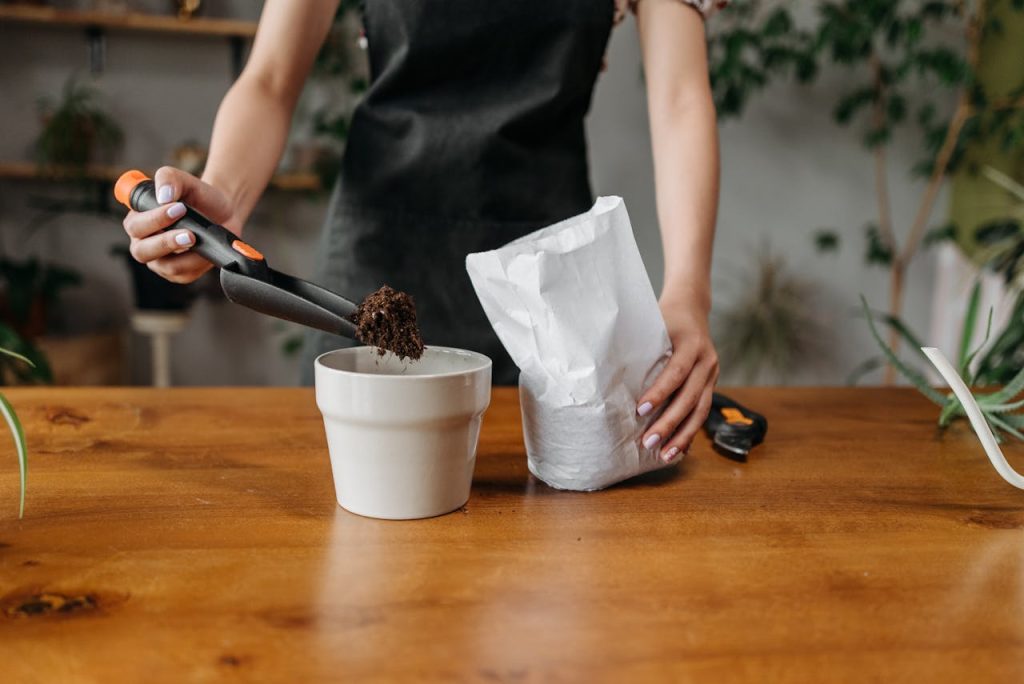
Garden soil from the yard is usually too dense for containers. It compacts, drains poorly, and limits oxygen around roots. Fabric walls cannot fix a heavy, collapsing medium. The result is a confusing cycle of soggy bottoms and dry tops.
Use a quality container mix designed for drainage and structure. A good blend keeps pore space open while still holding enough moisture between waterings. That balance is the core of fabric-pot performance. When the mix is right, roots stay active longer each day.
Fill close to the rim so you use the full container volume. Half-filled pots overheat faster and dry unevenly. Top off settling media early in the season before roots occupy the full space. A full profile gives better moisture buffering and stronger root distribution.
Avoid tricks like adding rocks at the bottom to improve drainage. In practice, they reduce usable root depth and can create awkward moisture behavior. Clean drainage comes from media structure, not from filler layers. Keep it simple and root-focused.
Watering Rhythm Is the Difference Between Growth and Survival Mode
Most fabric-pot failures trace back to watering inconsistency. Too little water causes repeated drought stress. Too much water displaces oxygen and weakens roots. The right target is evenly moist root zone, not soaked soil and not dusty dryness.
Do not water by the clock alone. Check the medium with your finger, then water deeply when needed. Light surface sips train shallow roots and increase midday wilt. Deep watering encourages roots to use the full container.
Morning is the anchor window because plants enter heat with a full reserve. In intense summer conditions, a second check later in the day is often necessary. But that second pass should be based on soil condition, not habit. Measured decisions outperform fixed routines.
Mulching the top layer helps reduce evaporation and smooth moisture swings. Raising pots slightly off hot surfaces also improves airflow and drainage behavior. Small placement tweaks can cut water stress dramatically. The goal is fewer extreme highs and lows in the root zone.
Feeding Has to Be Scheduled Because Nutrients Wash Out Faster
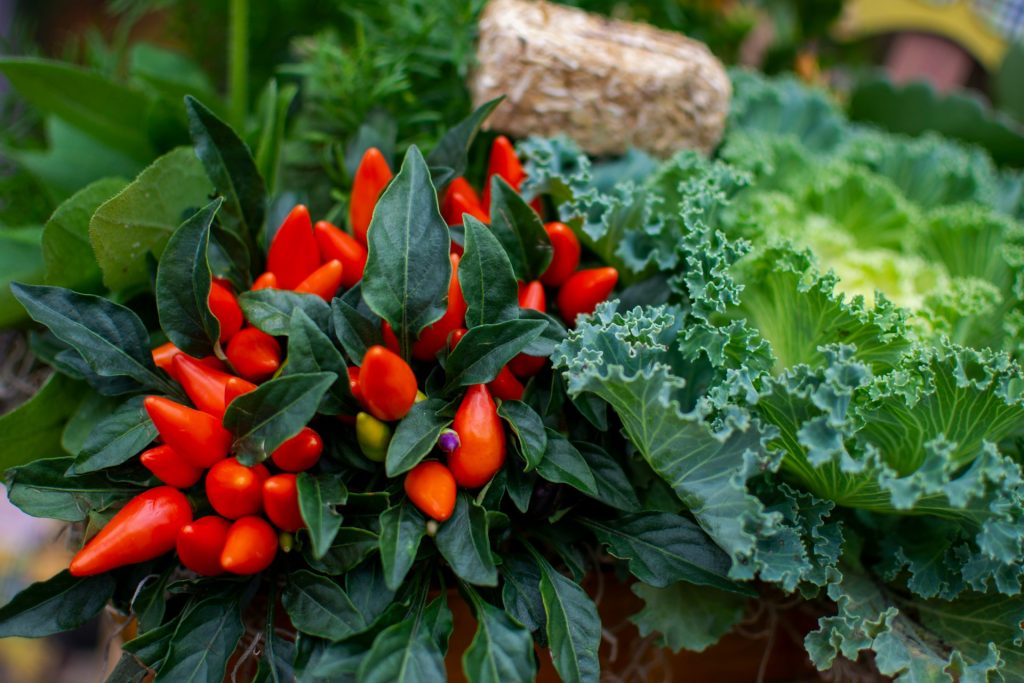
Container vegetables consume nutrients quickly, and frequent watering accelerates nutrient loss. Waiting for visible yellowing means you are already behind. Fabric pots drain well, but that same drainage can leach fertility faster than expected. A feeding plan prevents the slump.
Start with a balanced fertilizer approach, then adjust for crop stage. Leafy growth needs one profile, heavy flowering and fruiting often need another. Overfeeding nitrogen late can produce lush leaves with weak fruit set. Balanced inputs protect both plant health and harvest quality.
Smaller, steady feed doses usually perform better than occasional heavy doses. They reduce burn risk and keep nutrient availability more even. Plants respond to consistency, not spikes. Think maintenance, not rescue.
If plants look hungry, confirm moisture before adding more fertilizer. Dry roots cannot absorb nutrients efficiently, so extra feed can worsen stress. Rehydrate first, then resume a normal schedule. Water and nutrition have to work as a pair.
Light, Heat, and Placement Quietly Control the Entire Outcome
Most vegetables still need strong light to produce well in containers. If sun hours are weak, growth gets stretched and fruiting drops. Fabric pots cannot compensate for poor light. Site choice is part of plant care, not a separate decision.
Heat load also changes performance more than people expect. Pots on dark concrete or near reflective walls can run hotter and dry faster. That creates hidden stress even when watering seems adequate. A small move in placement can stabilize the whole system.
Use mobility to your advantage. Shift containers when extreme afternoon heat overwhelms young plants, then return them to strong light when conditions moderate. The point is not shade all day. The point is managing peak stress windows.
Airflow matters too, especially in humid conditions. Crowded clusters trap heat and moisture around foliage, increasing disease pressure. Give plants breathing room and keep leaf canopies from merging too tightly. Clean spacing improves both vigor and sanitation.
The Warning Signs Show Up Early if You Know What to Watch
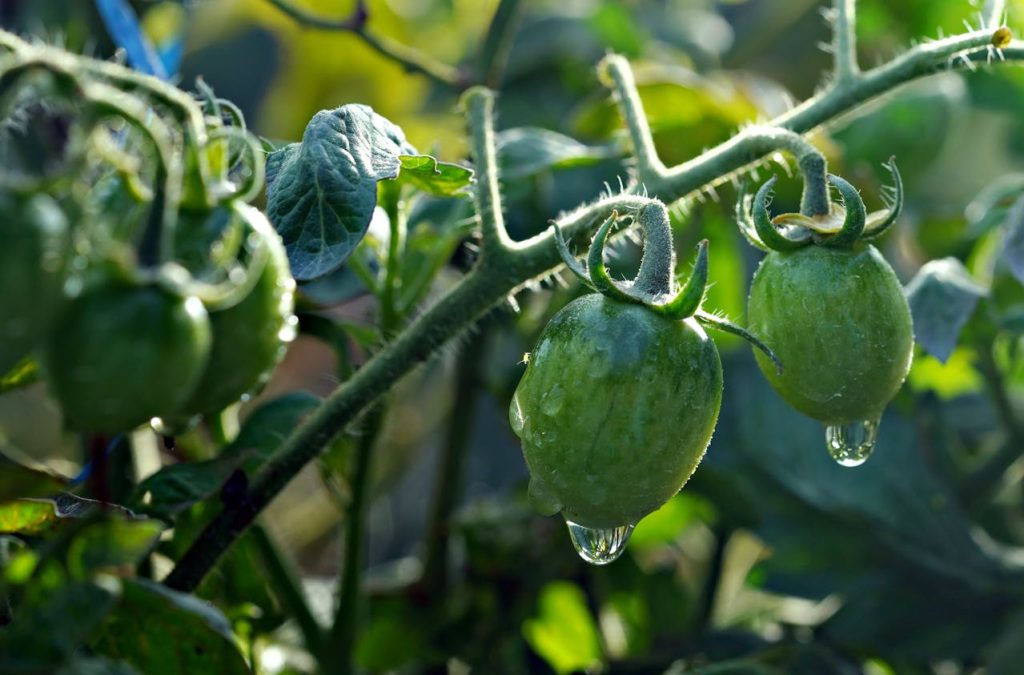
Midday wilt that recovers by evening often signals rapid dry-down, not immediate disease. Repeated cycles of this stress reduce flowering and fruit quality over time. The plant survives but stops thriving. Catching this pattern early prevents a long decline.
Blossom drop, fruit cracking, and bitter flavor often point to moisture swings. It is less about one bad day and more about unstable root conditions across many days. Stabilize watering and mulching first. Then judge recovery through new growth, not damaged older tissue.
Lower-leaf yellowing can be nutrient depletion, but context matters. If the mix is dry, feeding alone will not fix it. If the mix is saturated, roots may be oxygen-starved. Diagnose moisture state first, then choose the fertilizer move.
When a container is clearly undersized, inputs only go so far. Upsizing and resetting the root zone is often the cleanest solution. Trying to coach a crowded root system through peak summer is high effort with low return. Better structure usually beats heroic maintenance.
A Clean Reset Between Seasons Makes the Next Crop Stronger
End-of-season cleanup is not optional if you want reliable results next round. Remove old roots, wash containers, and let them dry completely before storage. Check seams and handles so failures do not surprise you midseason. Preventive care saves time when planting returns.
Refresh media rather than reusing exhausted mix as-is. Old mix can hold salts, pathogens, and uneven structure that drag down new transplants. Even partial replacement with quality fresh mix improves performance. New roots deserve a clean start.
Rotate crop types across seasons when possible. Repeating the same heavy feeder in the same setup can magnify nutrient imbalance and disease pressure. Rotation breaks patterns that become invisible over time. Diversity protects container health.
Treat each season as a reset of system quality, not just a new planting date. Right size, right mix, steady water, and scheduled feeding should be rebuilt intentionally. When those fundamentals are reset, fabric pots stop feeling fragile. They become one of the most dependable ways to grow vegetables at home.
Sources
Rutgers Cooperative Extension (Somerset): Benefits of Grow Bag Gardening
Practical notes on grow-bag airflow and moisture behavior.
Royal Horticultural Society (RHS): Vegetables in Containers
Best practices for container size, watering frequency, and feeding needs.
Oregon State University Extension: No Yard? Grow Vegetables in Containers
Crop-to-container sizing guidance and practical setup tips.
University of Minnesota Extension: Fertilizing and Watering Container Plants
Clear guidance on watering rhythm, leaching, and fertilizer scheduling.
University of Maryland Extension: Maintaining Container-Grown Vegetables
Root-zone moisture management and ongoing container care.
University of Illinois Extension: Growing Vegetables in Containers
Light requirements, placement decisions, and container performance basics.