

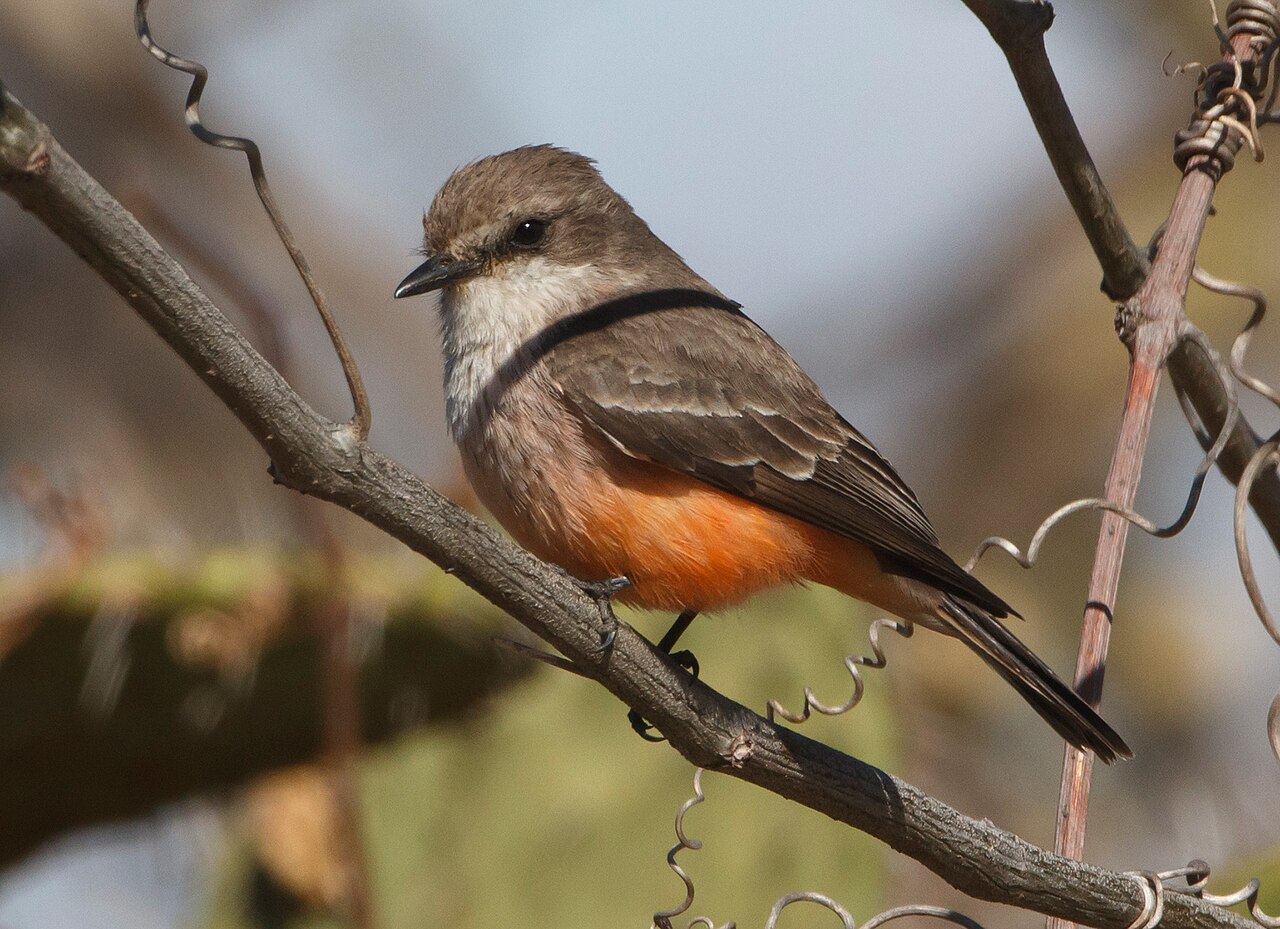
In the American Southwest, the vermilion flycatcher turns a plain perch into a small event. Most flycatchers are quiet in color, so this species reads like an exception the moment it settles in view.
The U.S. range is fairly tight, centered on parts of Texas, Arizona, New Mexico, and California, with a few winter stragglers along the Gulf Coast. Some birds stay near the Mexico border year-round, while others shift only short distances season to season. In open scrub, farmland edges, and streamside trees, quick field marks line up cleanly and leave little doubt, even during a brief stop on a roadside pullout at eight a.m.
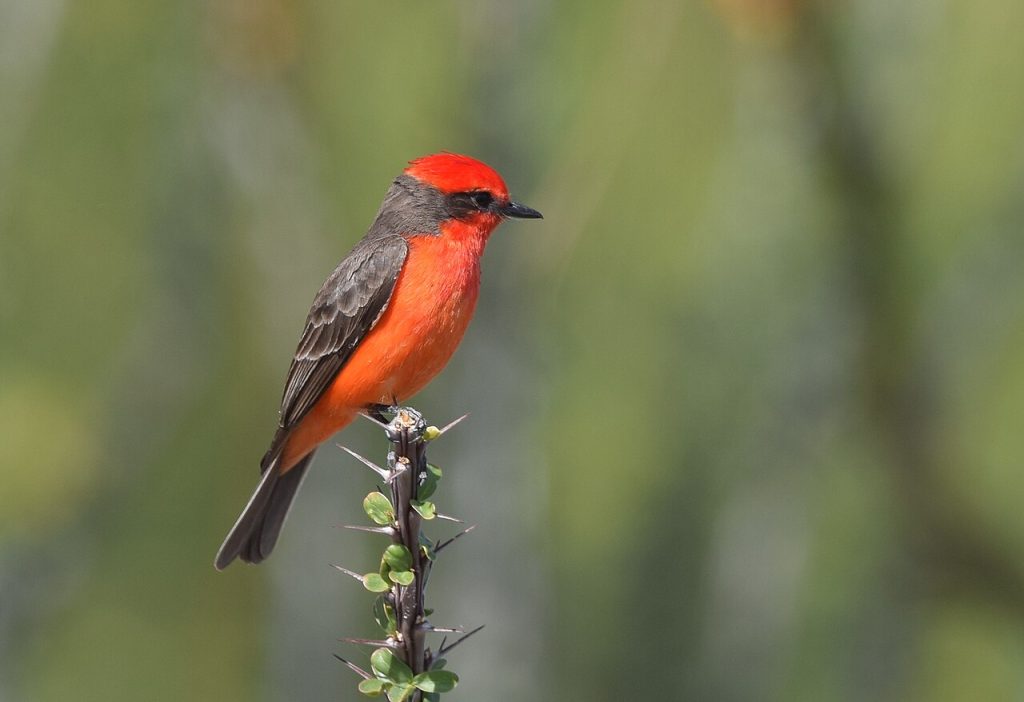
Male Flame-Red Head And Breast
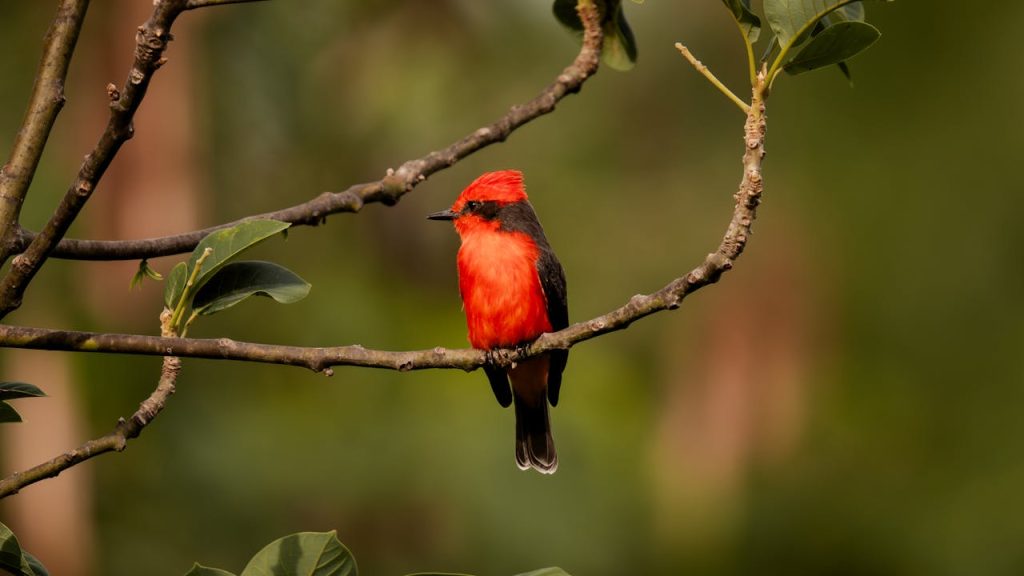
On an adult male, the head and breast glow a saturated red that stands out even in flat desert light. Ornithologists often point to those red and black field marks as the quickest route to a confident call.
The red runs clean from crown through chest, then stops where black wings take over, creating a sharp, tidy contrast. A dark mask along the eyes adds definition to the face, so the bird reads as structured, not just bright. Perched above scrub, a stream corridor, or a farm edge, that red front stays visible through small turns of the body, even when the view lasts only a handful of seconds at midrange in harsh sun.
Black Wings And Eye Mask
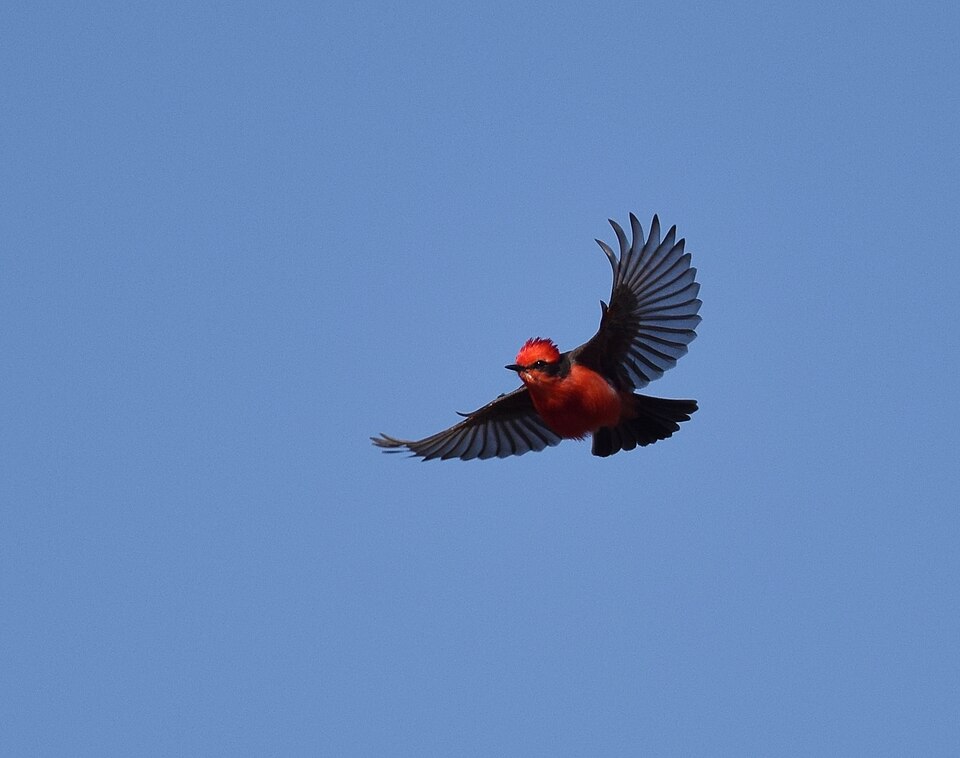
After the red, the male’s black wings do much of the confirming. They frame the body like dark panels and stay readable when the bird pivots on a perch, so the pattern does not vanish with a change of angle.
That black continues into a mask along the eyes, giving the face a clean, purposeful look that stands out against the red head. In open desert or along a stream where trees border water, the mask keeps the head from looking round and undefined. Even during quick flights out to grab insects, the wings flash dark before the bird returns to the same lookout. In practice, the red draws attention, and the black locks the ID.
Female Blackish-Brown Head And Wings
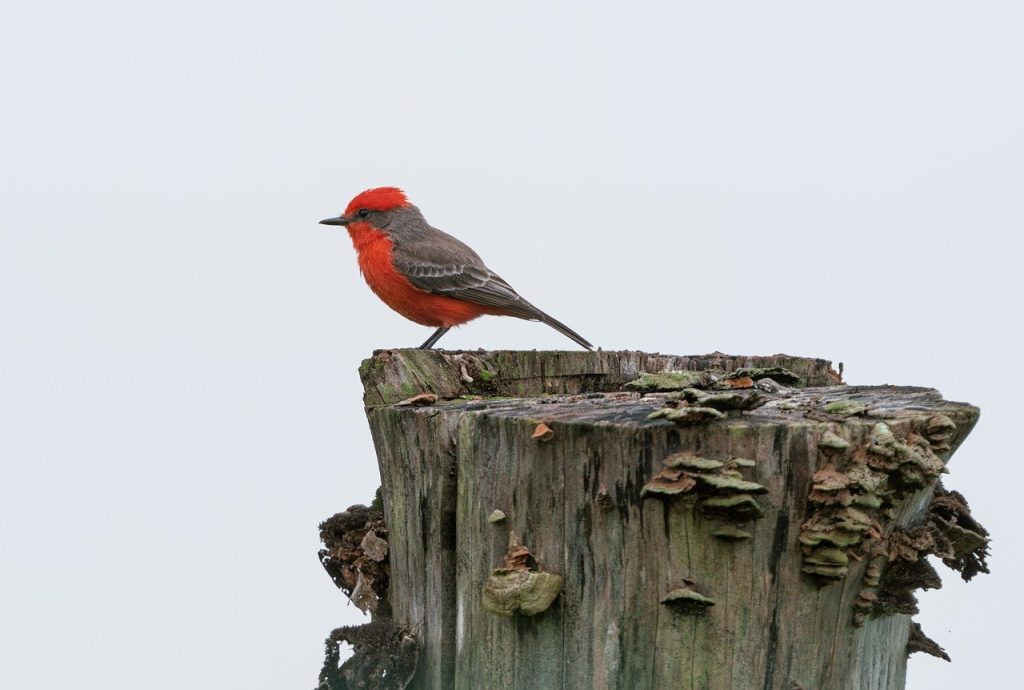
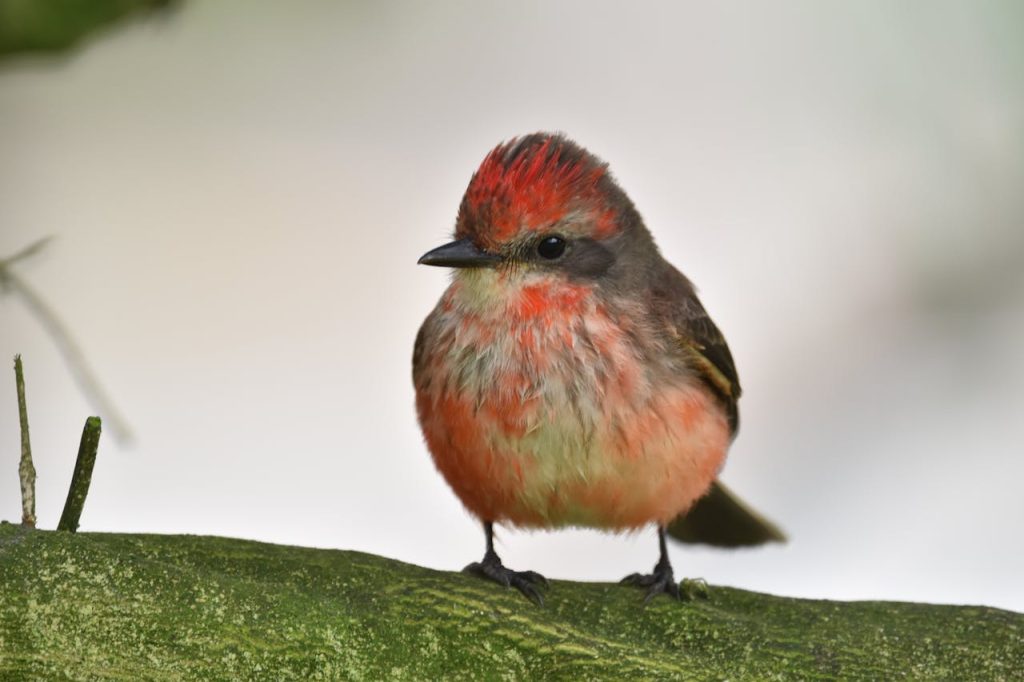
Female vermilion flycatchers can look modest at first glance, but the upperparts offer a solid anchor. The head and wings are blackish-brown, creating a capped look that blends into mesquite, willows, and fence lines.
Within the species’ Southwestern range, that dark top paired with a paler underside narrows the options quickly, especially when a bright male is not present for comparison. It also explains why females are easier to miss in open scrub or farmland until they shift into better light. Once the blackish-brown hood-and-wing tone is registered, the streaked breast and warm belly tones tend to show soon after.
White Breast With Brown Streaking
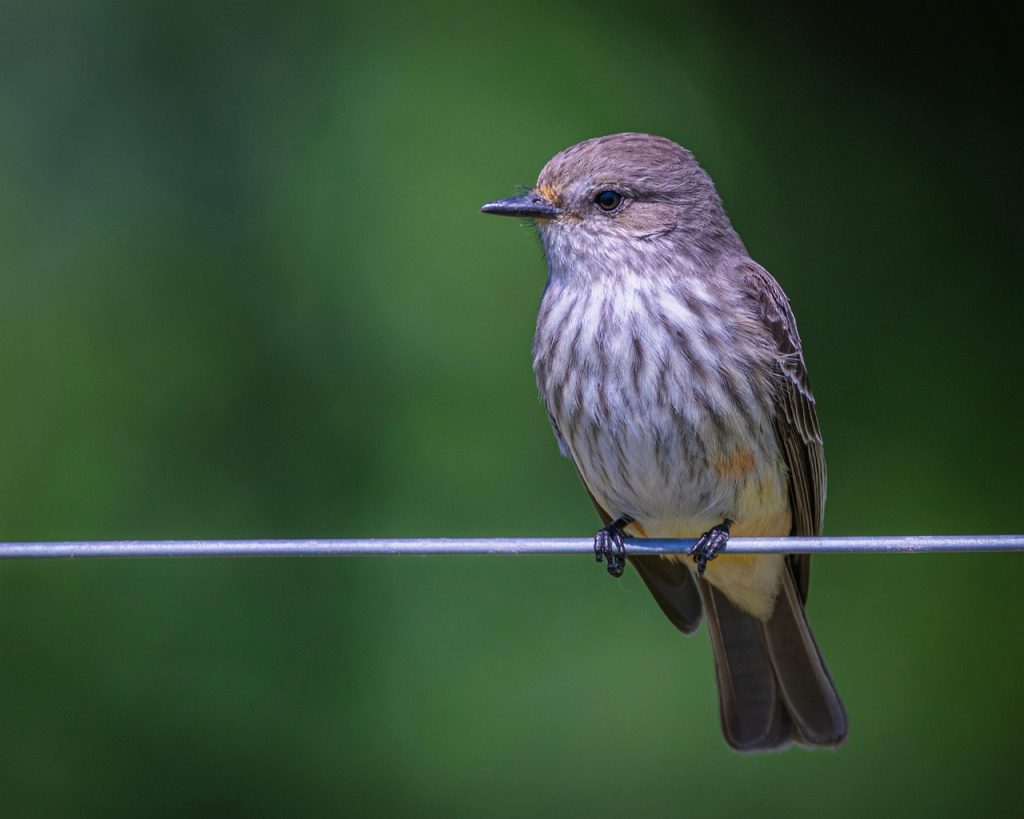
The female’s underside carries the most obvious patterning. The breast is white, but it is not plain; brown streaks run through it, breaking up the light area.
In desert shade, the streaks can look fine and penciled, while in direct sun they appear stronger and more contrasty, especially when the bird faces into the light. That variability can confuse quick looks, so the key is noticing that the marks sit on a white base rather than a buff wash. Along streamside trees, scrub flats, or farmland edges, the streaked breast plus blackish-brown head and wings forms a consistent package that holds up in brief views at distance.
Reddish-Orange Wash On The Belly
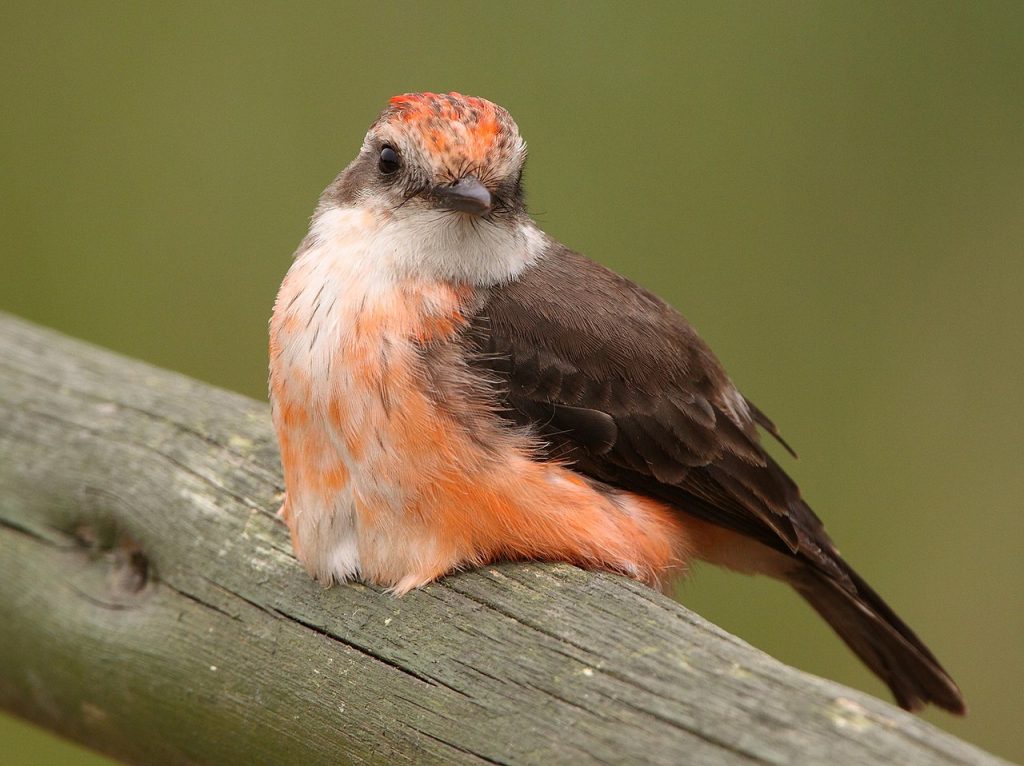
A subtler female mark sits lower than most binoculars land at first. Beneath the streaked white breast, the belly can show reddish-orange feathers, a quiet echo of the male’s fire.
It often appears as a warm blush rather than a bold patch, so angle and light matter in open scrub or at a streamside perch. When the bird stretches, preens, or turns side-on, that orange can peek out and connect the female’s muted look to the species’ signature palette. In parts of Texas, Arizona, New Mexico, and California, this detail can be the deciding clue when the bird stays still and the rest of the pattern feels too subdued for confirmation.
Southwestern Range And Winter Stragglers
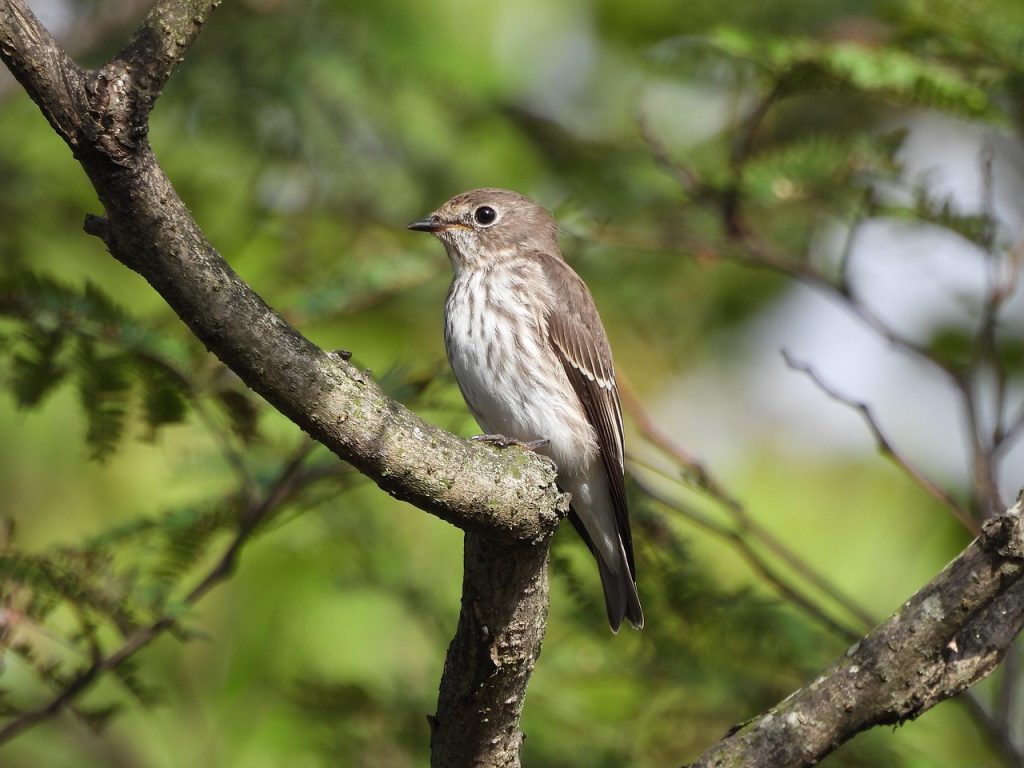
Range is a practical field mark because it shapes expectations before plumage details even register. In the United States, vermilion flycatchers occur mainly in parts of Texas, Arizona, New Mexico, and California.
Portions of Texas and Arizona along the Mexico border can host them year-round. Elsewhere in the region, birds may move short distances, sometimes shifting to slightly higher elevations in summer. A few winter stragglers also show up along the Gulf Coast, which can surprise observers outside the core range. When the map fits, the red-and-black pattern carries more weight, and the identification process speeds up.
Open Country Near Streams And Ponds
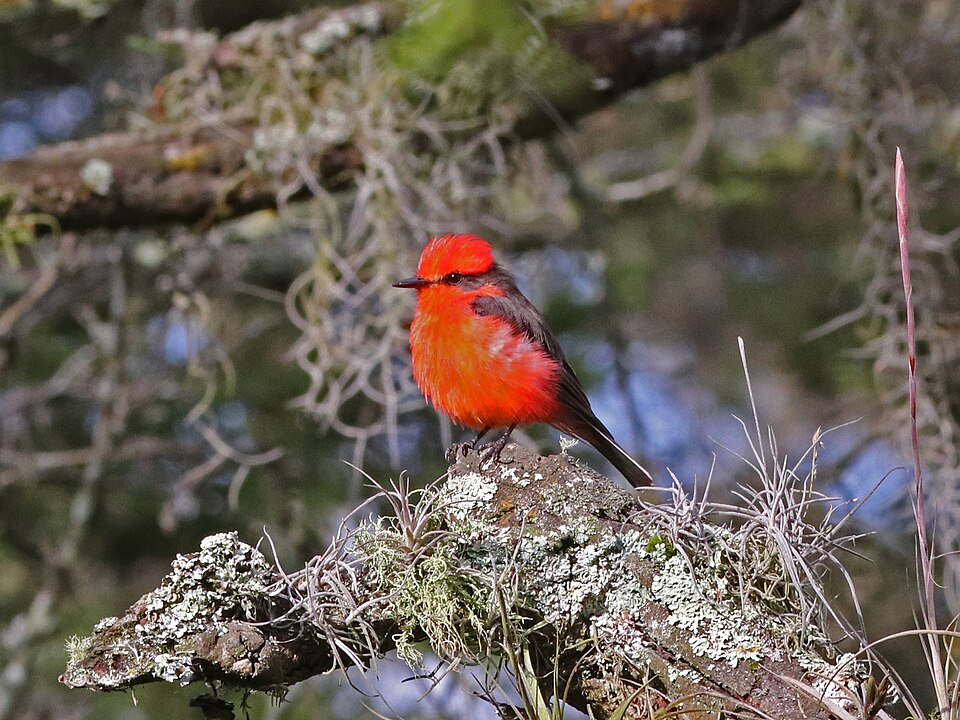
Habitat supplies the missing piece when a flycatcher sits still and refuses to pose. Vermilion flycatchers favor open areas, showing up in scrublands, farmlands, and deserts with only a few trees.
Water edges matter, too. Trees along streams or around ponds create exposed perches, and those corridors can concentrate sightings. Inside the Southwest range, that preference makes the birds less elusive than the map suggests because effort can stay on open ground with scattered trees. Many sightings come from simple, repeated perches along a wash or irrigation line, where the bird watches, sallies, and returns without much wandering.
Perch-And-Sally Hunting For Insects
Behavior can confirm the ID when color is seen only in flashes. Vermilion flycatchers often hunt from an exposed perch, flying out to snatch prey in midair, then dropping back to the same lookout.
The diet is insect-heavy, including grasshoppers, butterflies, wasps, and bees, so the hunting rhythm can repeat every few minutes in good conditions. That steady loop of watch, launch, and return fits open scrub, farmland edges, and stream corridors where perches are clear. When a small flycatcher shows that pattern and carries even a hint of red or warm orange, the odds swing strongly toward vermilion in the Southwest range.
High, Clear Call With A Rising Pattern
Sound helps when the bird stays tucked in foliage and the view never fully opens. Males give a high, clear call often described as peet-peet-a-weet, and it carries well across open ground.
The song varies by individual, but it typically rises in pitch and repeats several times, which makes it easier to pick out from background chatter near water. Adults also call or chatter to each other, adding quick notes around a perch line. When that rising pattern matches a small flycatcher in scrub, farmland, or streamside trees within the Southwest range, the identification becomes far more secure, even when only a sliver of color shows.
A vermilion flycatcher is memorable because the clues reinforce each other: a tight range, open habitat, a consistent perch style, and colors that do not need interpretation. Field guides from Cornell Lab of Ornithology and National Audubon Society describe the same core marks, and the match feels immediate once the pattern is learned. Even the quieter female has enough structure to reward a careful look, and that small moment of recognition tends to stick.