

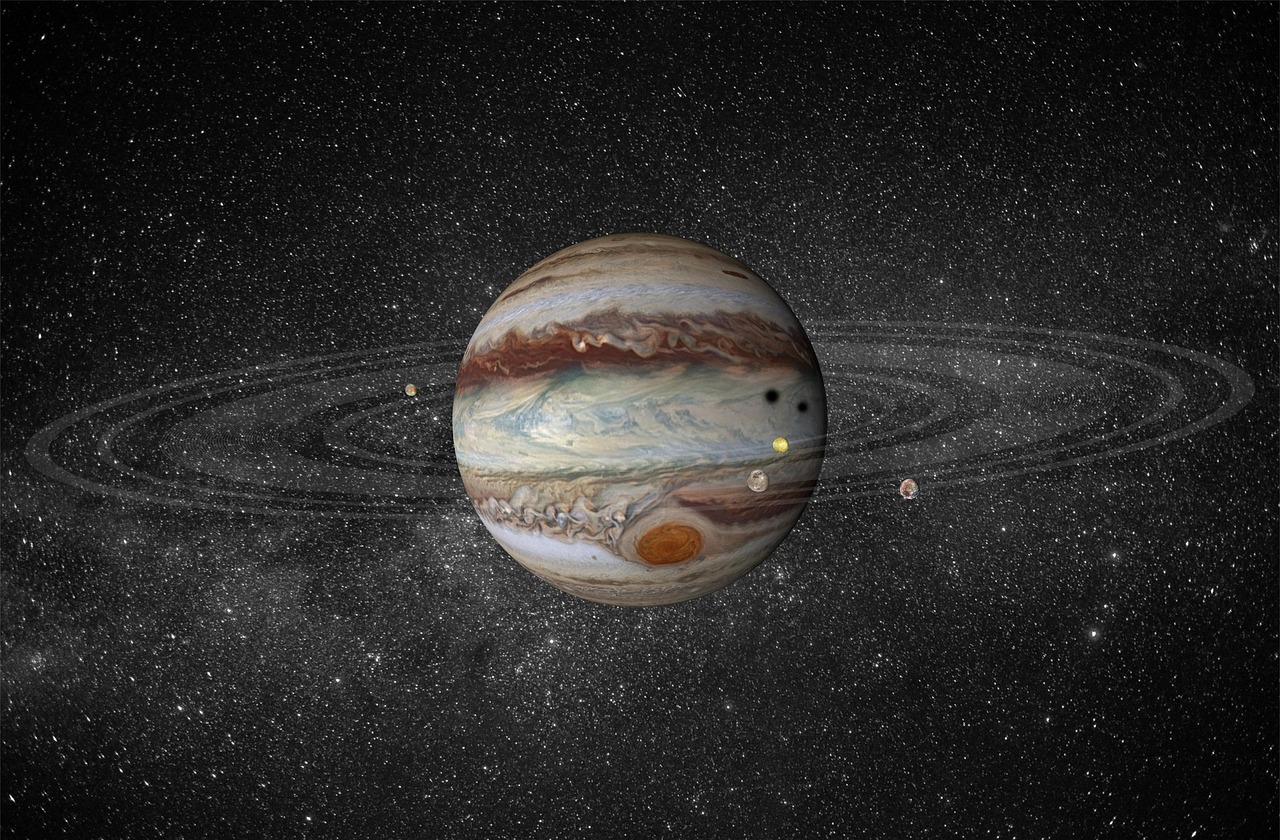
Jupiter has long stood as the giant benchmark of the solar system, yet each new mission update keeps pulling it outside familiar planetary categories. Measurements from NASA’s Juno mission show a world where winds dive far deeper than expected, magnetic behavior shifts with time, and polar weather systems organize into durable geometric clusters. Instead of settling into one tidy model, Jupiter keeps exposing new layers of motion, chemistry, and interior structure, reminding researchers that even the best-tested planetary rules can still bend when the data gets sharper, year after year.
It Spins Too Fast To Behave Calmly
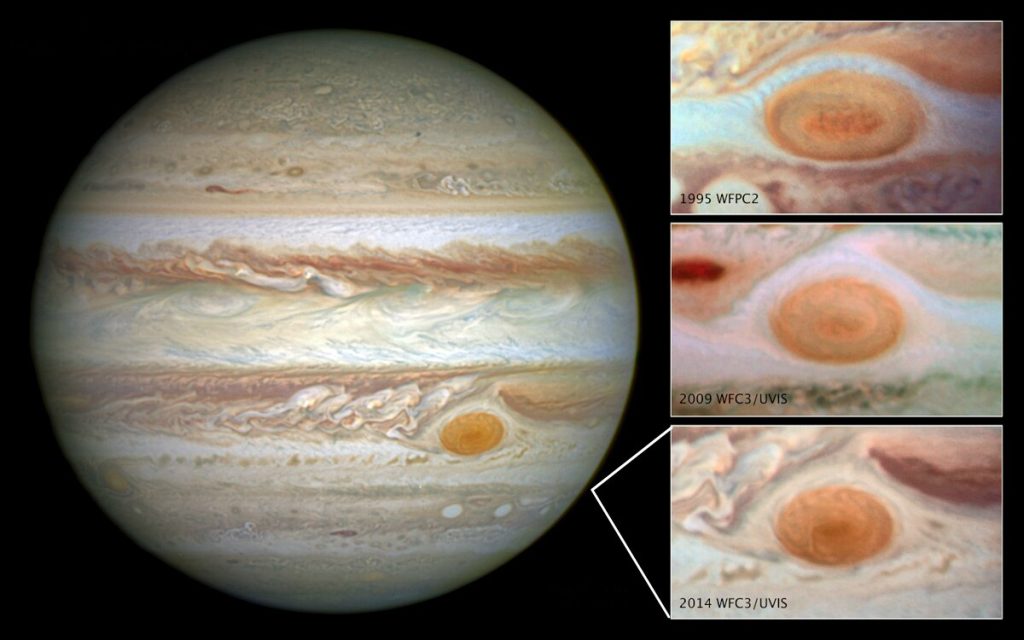
Jupiter completes a full rotation in about 9.9 hours, which is startling for a planet that is more than 11 times Earth’s diameter. That rapid spin stretches the planet at the equator and helps build powerful jet streams that carve its cloud bands into sharp lanes. The equator visibly bulges.
Winds can reach roughly 335 mph, and Juno data shows that many of those winds are not shallow surface effects but deep atmospheric flows. What once looked like decorative striping is now read as a global engine moving heat and momentum through a huge, layered world, one that rotates so quickly it reshapes itself.
There Is No True Surface To Stand On
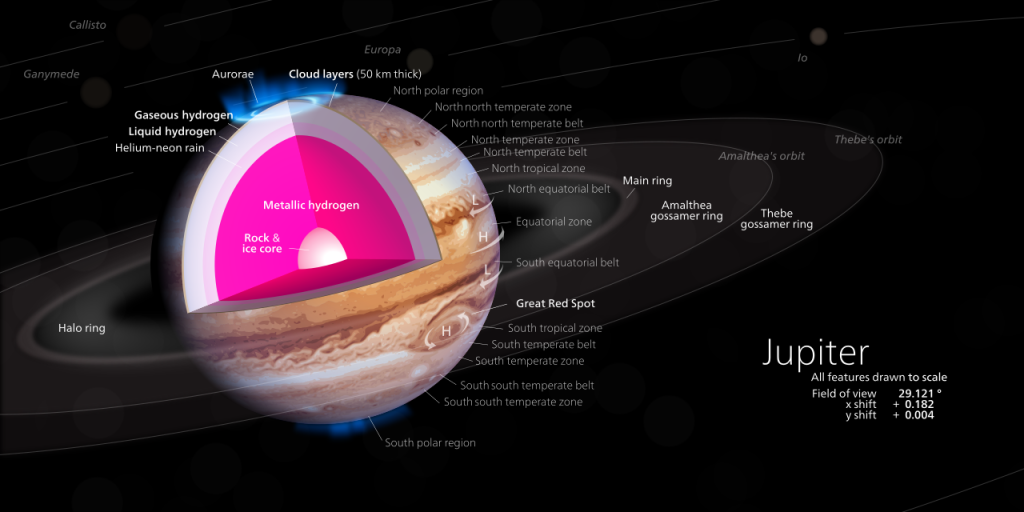
A typical mental picture of a planet includes land, crust, and a place where atmosphere ends and ground begins. Jupiter does not offer that boundary. Its upper layers are gas, then denser fluid states, and pressure keeps rising with depth instead of yielding a clear, walkable surface.
NASA describes deep hydrogen compression that eventually forms conductive metallic liquid, making Jupiter feel less like Earth and more like a continuous gradient of states. That alone breaks the old classroom instinct that all planets are worlds with a top and a floor, because Jupiter behaves like transition all the way down.
Its Storm Chemistry Rewrites The Rulebook
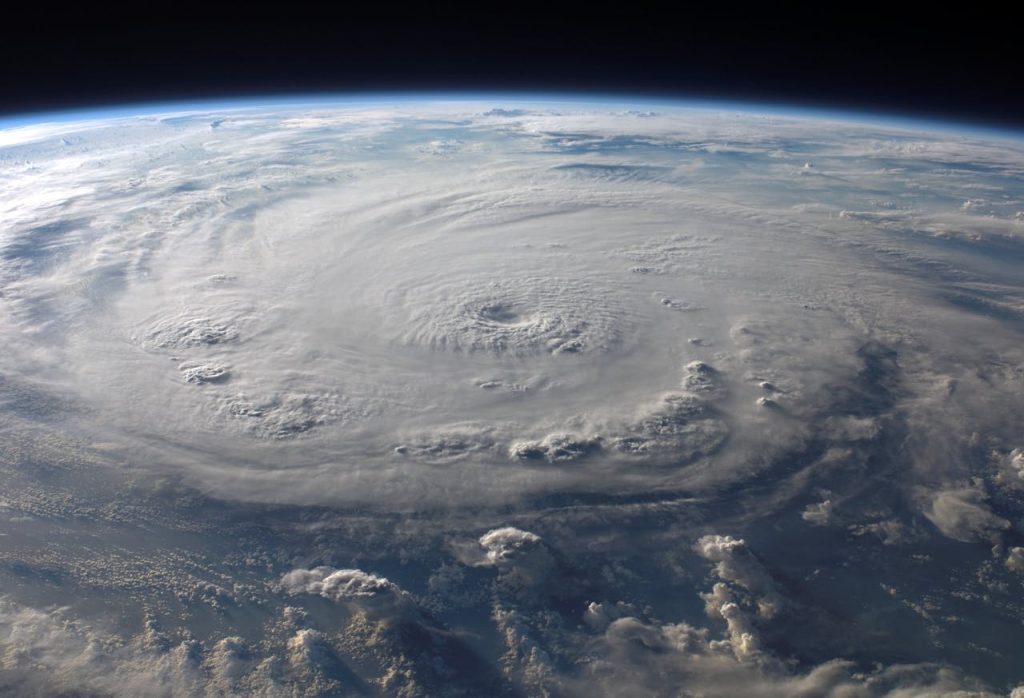
Jupiter’s storms are not just bigger versions of thunderstorms on Earth. Juno observed shallow lightning linked to ammonia-water mixtures and evidence for slushy hailstones called mushballs, which can drag ammonia and water downward before evaporating at deeper, warmer levels.
That transport helps explain why ammonia can look depleted in some atmospheric regions even when it is not gone. Instead, chemistry and weather are coupled in a strange conveyor system. The atmosphere is not simply mixing; it is sorting, hiding, and redistributing key compounds in motion, then returning them in altered form at scale.
The Great Red Spot Reaches Far Deeper Than Expected
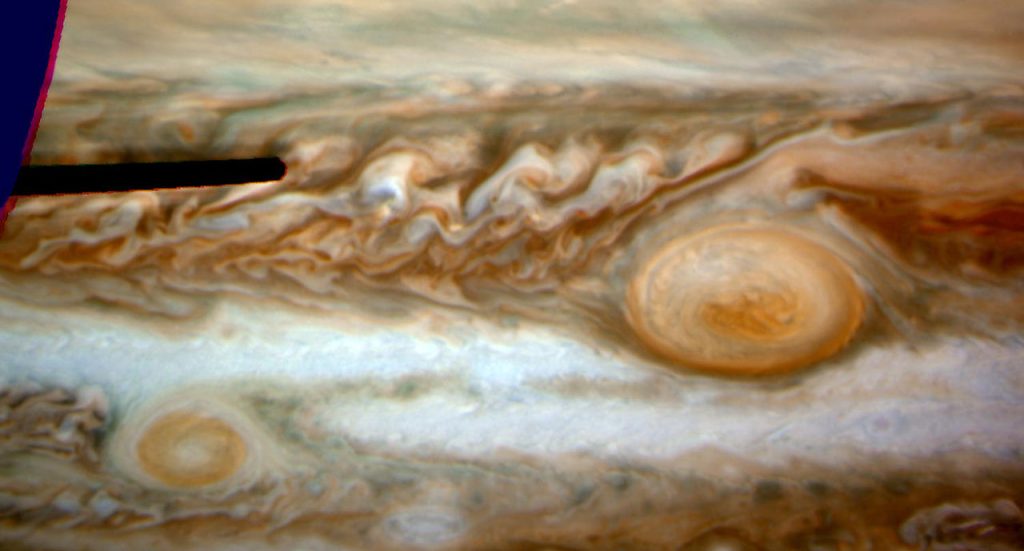
The Great Red Spot is often treated like a painted emblem, but Juno measurements showed it extends about 300 miles below the visible cloud tops. That depth turns it from a surface curiosity into a major dynamical structure tied to deeper atmospheric circulation.
Its horizontal span has changed over time, yet it remains one of the clearest signs that Jupiter stores long-lived weather energy in ways Earth cannot match. The storm’s persistence is not just about size. It reflects a planetary environment where rotation, layered flow, and heat transport keep feeding giant vortices over decades with unusual consistency.
Polar Cyclones Hold A Strange Long-Term Geometry
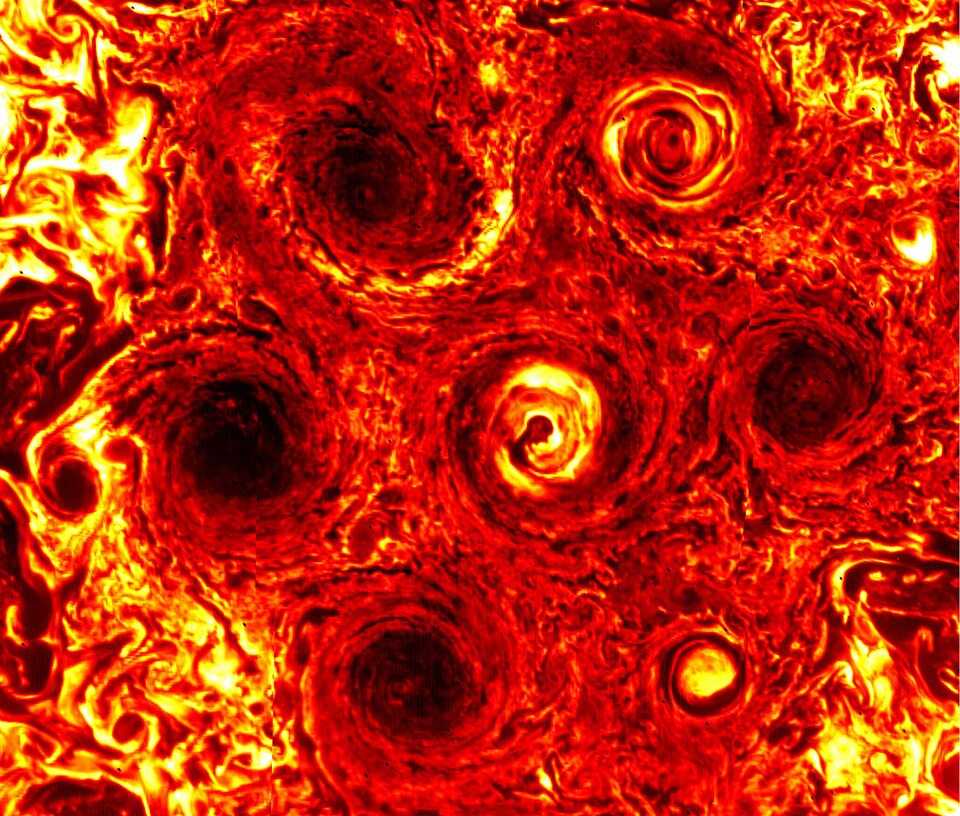
At Jupiter’s poles, Juno revealed tightly packed cyclone systems unlike anything on the terrestrial planets. The north pole hosts a central cyclone encircled by eight others, while the south pole has one surrounded by five, each structure large enough to dwarf entire countries.
What surprised researchers was not only scale but stability. These vortices interact, press against one another, and still persist as organized clusters rather than collapsing into chaos. Jupiter’s rapid rotation and deep atmospheric coupling appear to support a polar weather architecture that remains hard to reproduce in simple models.
The Magnetic Field Is Irregular And It Drifts
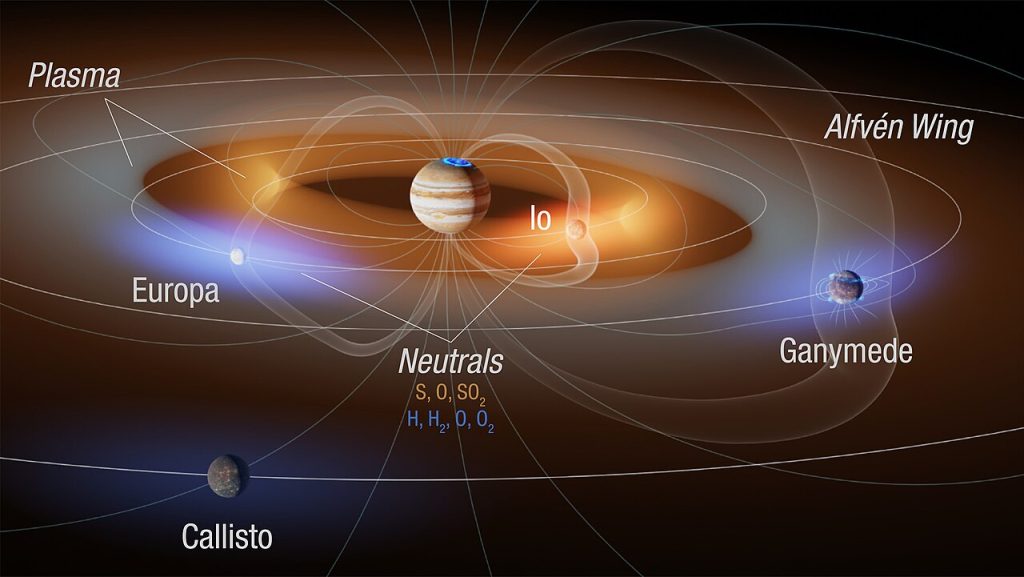
Before Juno, Jupiter’s magnetic field was known as the strongest planetary field in the solar system, but new mapping showed it is also more irregular than expected. Juno later detected secular variation, meaning parts of the field measurably change over time instead of staying fixed.
The strongest changes cluster around the Great Blue Spot near the equator, and the pattern is consistent with deep zonal winds shearing magnetic structure thousands of kilometers down. That blend of atmospheric motion and internal magnetism is a key reason Jupiter stops behaving like a simple textbook gas giant.
Its Auroras Follow A Different Physical Script
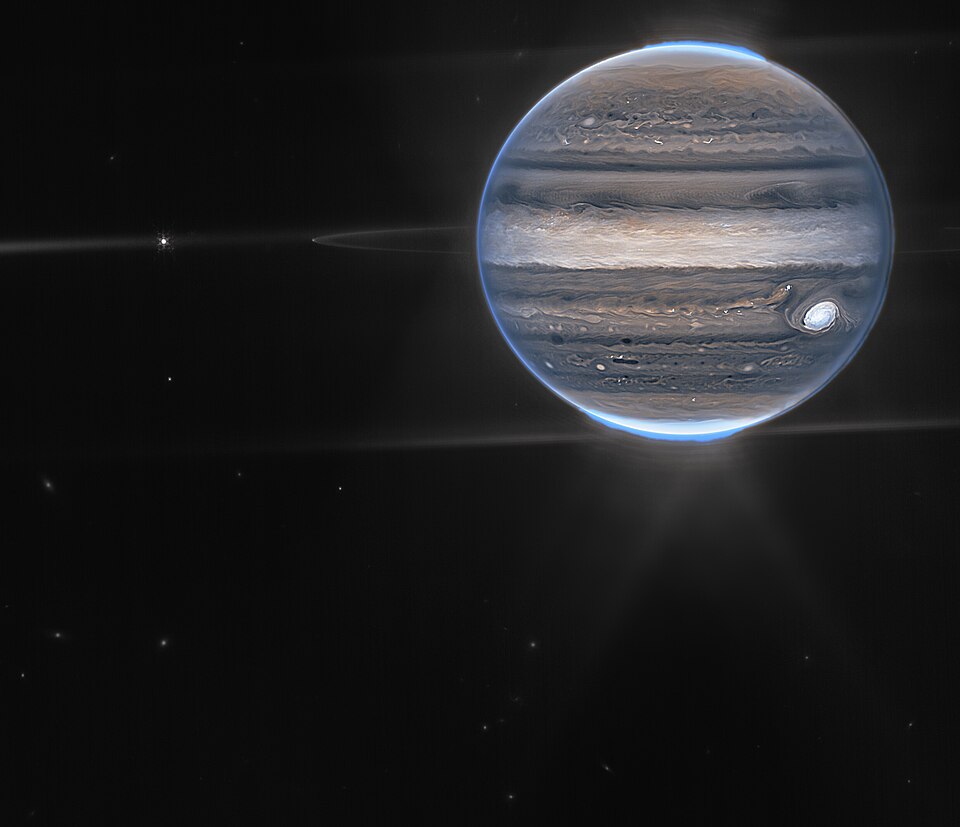
On Earth, many auroral patterns map cleanly onto open magnetic field regions and solar-wind input. Jupiter’s X-ray auroras can pulse poleward of the main belt and differ between north and south, a behavior that long resisted explanation and did not fit the usual template.
Combined observations from Juno and ESA’s XMM-Newton linked 27-minute pulsations to magnetic compressions and EMIC waves that drive ions into Jupiter’s atmosphere. In other words, Jupiter’s auroras are not just brighter. They reveal a magnetosphere running on geometry and particle pathways that are fundamentally unusual and deeply layered.
Internal Heat Keeps The System Restless
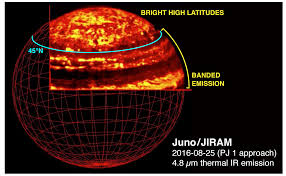
Jupiter does not merely reradiate incoming sunlight. Energy-budget studies using Cassini-era data found emitted thermal power substantially greater than absorbed solar power, implying a strong internal heat contribution that helps power circulation and long-lived weather.
This matters because atmospheric behavior cannot be modeled as a passive shell warmed from outside. Jupiter is heated from within while also being forced from above, creating a layered energy problem that is still being refined. When a planet runs on two strong heat sources at once, steady-state assumptions begin to fail quickly in practice.
Even Its Interior Looks Less Neat Than Old Models
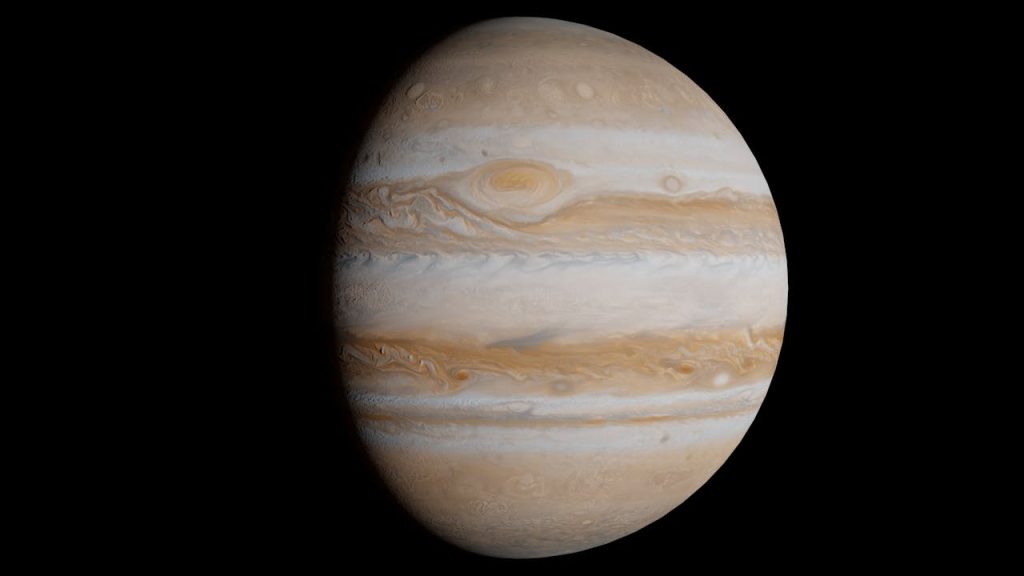
Classic diagrams once implied a cleaner inside story: atmosphere above, metallic layer below, compact core at center. Juno gravity and magnetic results support a blurrier picture, including evidence for a diluted, fuzzy core region rather than a sharply bounded rock-ice sphere.
That reframes formation history as well. If heavy material is mixed and spread over a broad inner volume, Jupiter’s early collisions, accretion, and interior evolution were likely more complex than streamlined models suggested. The planet’s present behavior may be the surface expression of that deep, messy beginning over billions of years.
It Acts Like A Bridge To Exoplanet Science
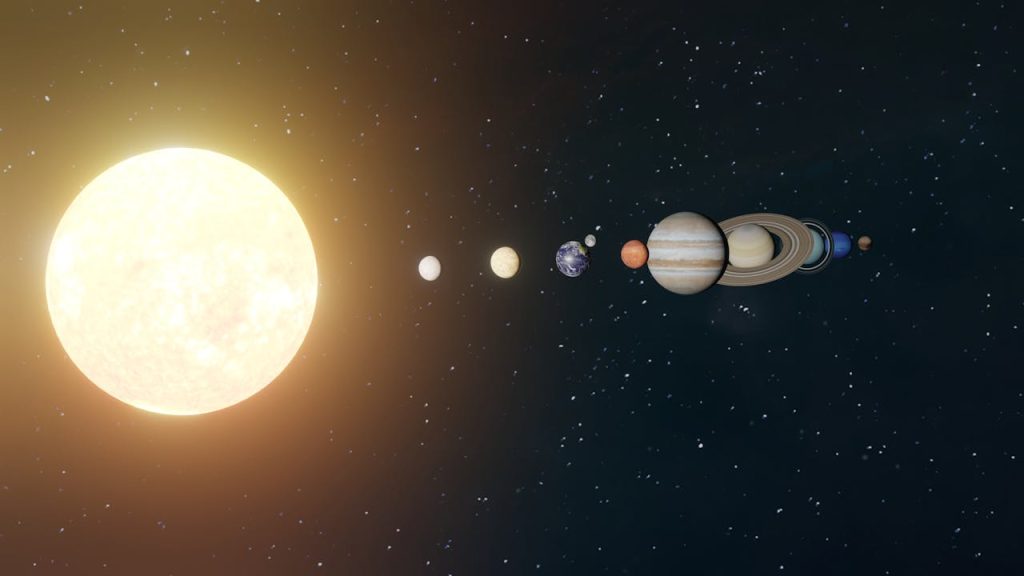
Jupiter is close enough for direct spacecraft sampling, yet physically similar to many giant exoplanets detected around other stars. Every revision to its weather, magnetism, and heat budget improves how astronomers interpret unresolved distant worlds observed mostly through light curves and spectra.
That is why each Juno flyby still matters. Jupiter is no longer just the largest local planet; it is a calibration world for planetary science itself. As models update around its anomalies, the definition of normal giant-planet behavior becomes broader, more precise, and more honest about uncertainty.
Jupiter’s story now feels less like a solved chapter and more like an unfolding conversation between data and imagination. Each close pass by Juno narrows one mystery while opening another, from deep winds to magnetic timing to atmospheric chemistry. That steady rhythm of discovery gives planetary science something rare: a nearby world still capable of genuine surprise, and a reminder that the solar system remains alive with unanswered questions.