

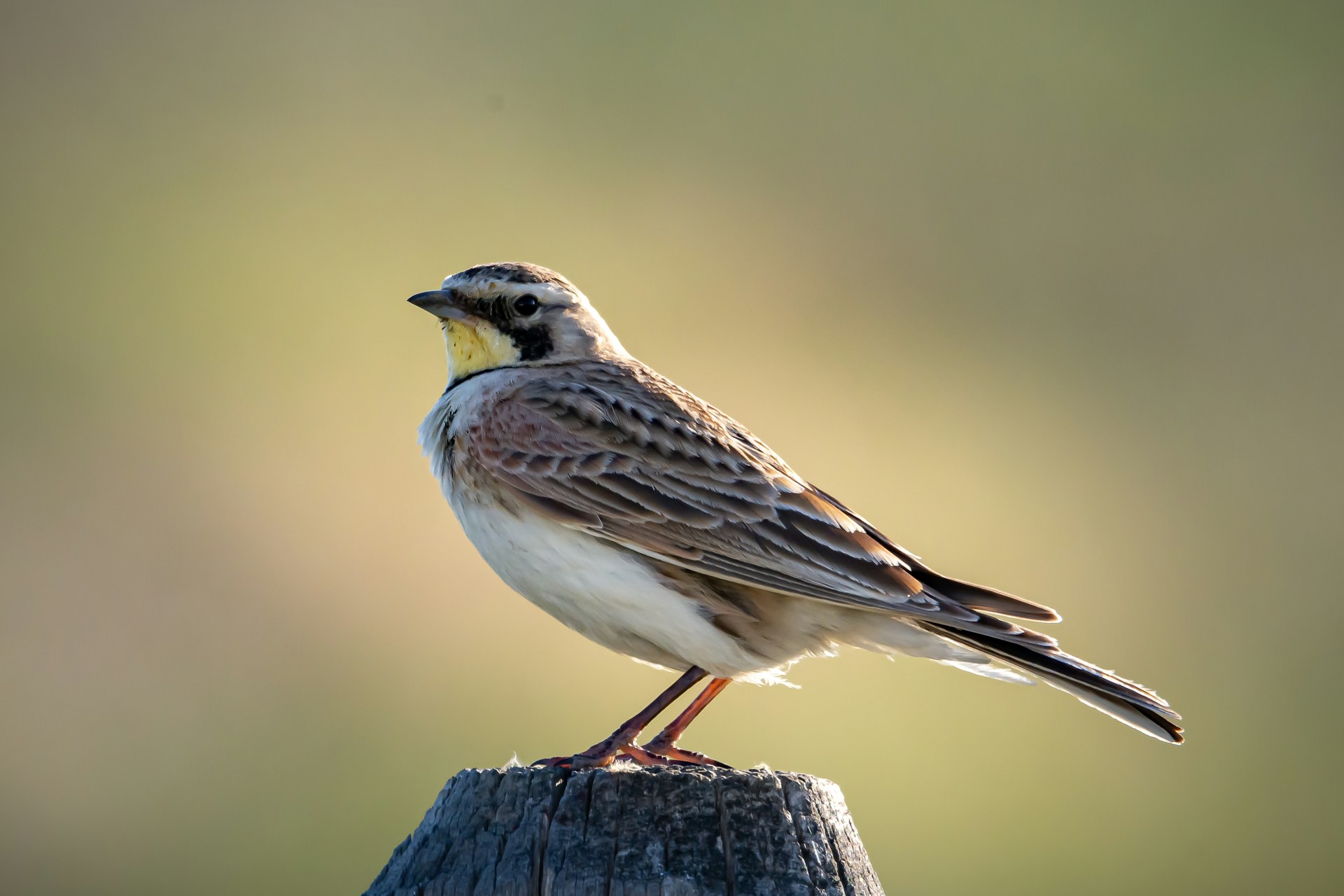
Horned larks look plain at first, sandy little birds that seem designed to disappear into bare ground and glare.
Look closer and you notice the tiny black feather tufts that form its horns, plus a face pattern that feels sharp and alert.
It sings with stubborn joy, rocketing up from a dirt patch and pouring notes into open sky that seems too big for any voice.
That mix of toughness and charm is why it keeps landing in Bird of the Year spotlights and local bird celebrations.
People like a survivor, especially one that lives where the wind never stops and shade is rare and hard-earned.
The horned lark is also a living gauge for grasslands, farms, beaches, and high deserts that many people overlook.
When it is thriving, open-country ecosystems usually have the right mix of short cover, bare soil, and food.
When it starts fading, it often signals a quiet shift in land use and climate that can ripple through everything else.
What makes the horned lark so easy to root for
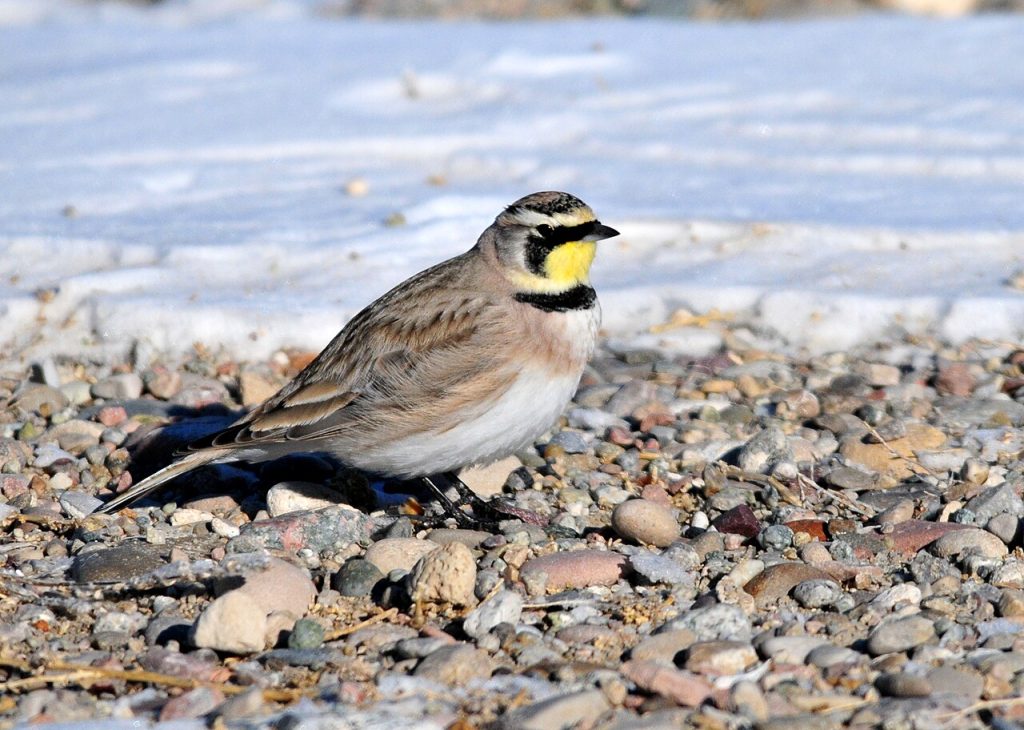
It chooses open ground and still manages to raise young in plain sight, which makes the bird feel both brave and oddly relatable.
That takes patience and constant vigilance. Threats come from above, from the grass line, and from people passing by.
Its courtship flight is a clean, bold move: it climbs, sings, then drops in a fluttering spiral toward the same patch of earth.
Even non-birders can feel the drama. Easy-to-see behavior is part of what makes it a natural ambassador species.
A bird built for open country
Horned larks pick habitat many animals avoid, short grass, packed sand, gravel bars, and stubble where cover is minimal.
They need visibility more than shelter, because their best defense is spotting danger early and sprinting or flying low and fast.
Their pale colors match soil and dry plants, so you often notice movement before you notice a bird.
That camouflage works when vegetation stays patchy, but it fails when the ground becomes uniform, tall, or thick with shrubs.
Nests sit right on the ground, usually a small scrape lined with stems and sometimes edged with pebbles for shape.
Some pairs build a little rim or use a tuft as a windbreak, which helps eggs hold warmth during cold snaps and sudden rain.
In winter they form roaming flocks and switch heavily to seeds, tracking food across open country as conditions shift.
This flexible lifestyle helps them survive, yet it also ties them to landscapes that humans can change in a single season.
Why Bird of the Year attention matters
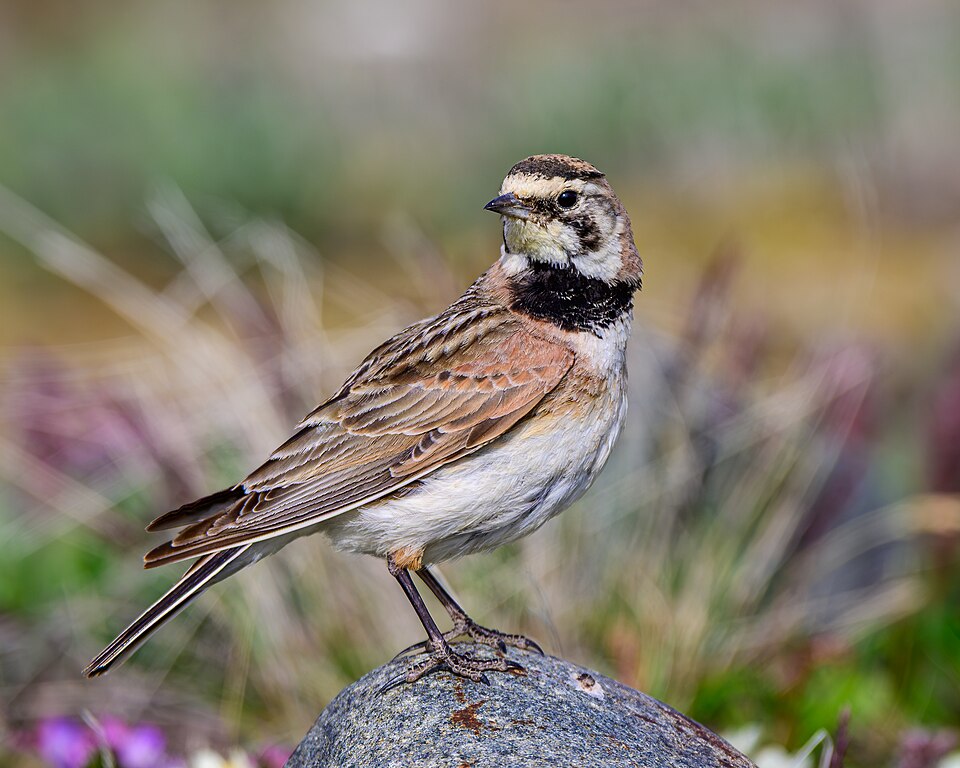
Bird of the Year campaigns often choose a species that tells a bigger story about a place, not just a pretty face in a tree.
The horned lark fits because it lives across huge ranges, from beaches and prairies to alpine tundra and open desert basins.
It is common enough that many people can actually find one, which turns a headline into a real encounter outdoors.
When a bird is accessible, beginners learn faster and they start noticing the difference between healthy habitat and tired ground.
Spotlights also celebrate the details that hook memory, the tiny horns, the rising song, and the way it owns empty space.
That attention can boost monitoring and local stewardship, especially for grasslands that rarely get the love forests receive.
The catch is that celebration can hide uneven trends, because some populations are stable while others are slipping away.
The hidden problem behind the praise
The biggest threat is not one dramatic event. It is the slow loss of the kind of open, rough ground the species needs to nest.
Grasslands get converted, fragmented, or allowed to grow tall and woody, and a bird that needs short structure simply loses space.
Intensive agriculture can erase weedy edges and fallow patches, while early mowing or haying can wipe out nests in one pass.
Chemicals that cut insects can also cut breeding success, because adults need protein-rich bugs when chicks are growing fast.
Because these changes stack quietly, declines can be easy to miss until silence replaces a song that once felt guaranteed.
What conservation looks like for an open-ground bird
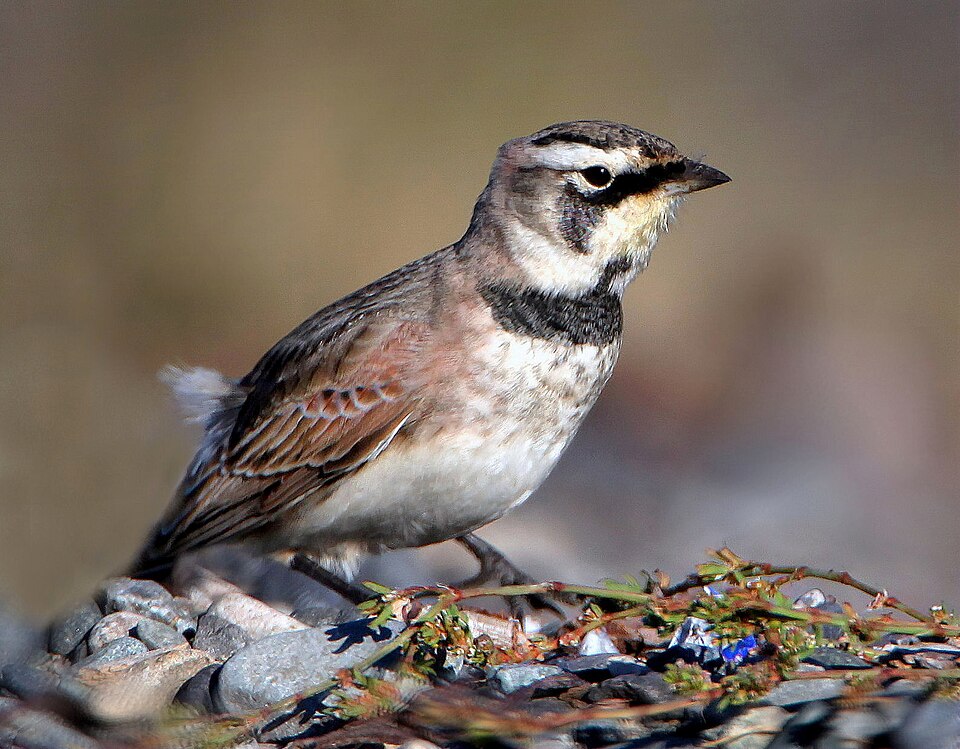
Helping horned larks is less about planting more trees and more about keeping some land open, varied, and lightly disturbed.
Short grass plus patches of bare soil can be ideal, especially when managers rotate treatments so the whole area is not hit at once.
On farms, leaving field margins and reducing work during peak nesting can keep adults from abandoning a scrape they already started.
Some operations shift mowing dates, raise mower height, or leave refuge strips so at least a portion of nests can finish the cycle.
On public lands, grazing can help when it prevents shrubs from taking over and maintains a low structure that larks prefer.
The key is balance, because too much pressure strips food and cover, while too little lets habitat close in and become unsuitable.
How you can notice and help without causing harm
If you spot a horned lark, watch from a respectful distance and avoid wandering through the bare, short-grass areas it favors.
Ground nests are easy to crush. Repeated flushing can also expose eggs to heat, cold, or opportunistic predators.
Keep dogs leashed in open nesting habitat during spring and early summer, when a single chase can end a breeding attempt.
If you log sightings, submit them to local bird projects. Lots of small observations add up to a clear trend line.