

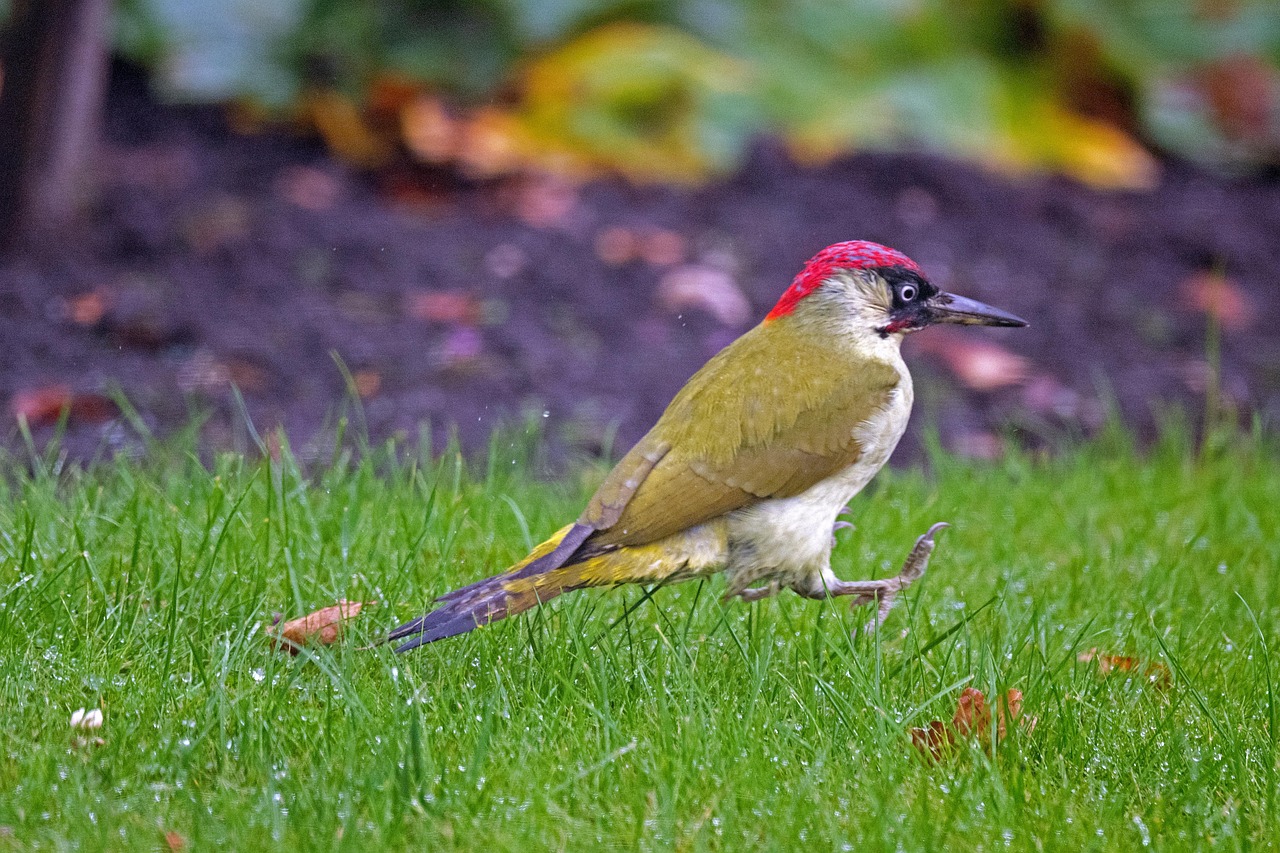
Woodpeckers can seem obvious until one slips behind a trunk and the field marks vanish. In parks, gardens, and street trees, quick looks turn into quick guesses, especially when two species share the same black and white pattern. Biologists say several woodpeckers are missed because they move fast, blend into bark, or show up only briefly at feeders. The payoff for slowing down is real: each bird has its own rhythm, preferred menu, and signature way of working wood, soil, or sap. Winter and early spring help, because drumming carries farther and bare branches leave fewer places to hide. A five-second view can be enough.
Downy Woodpecker
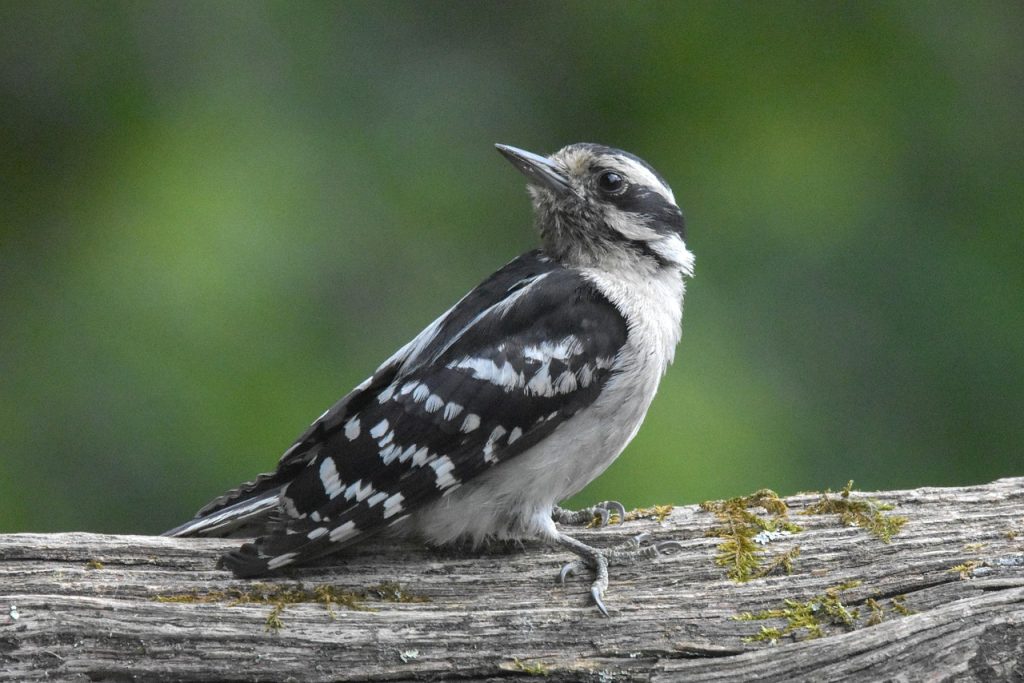
Downy Woodpeckers get overlooked because the whole bird can feel sparrow-sized when it clings to thin twigs. It often visits suet and sunflower feeders, then darts to the far side of a branch where the pattern blends into winter bark.
Biologists separate it from the Hairy by scale and details: a short bill, a softer look, and small black spots on the white outer tail feathers. It also favors slender limbs and weedier edges, so the best views often come from watching quick, light taps on small branches. When both species appear at one feeder, the Downy tends to look compact and busy, shifting positions every few seconds.
Hairy Woodpecker
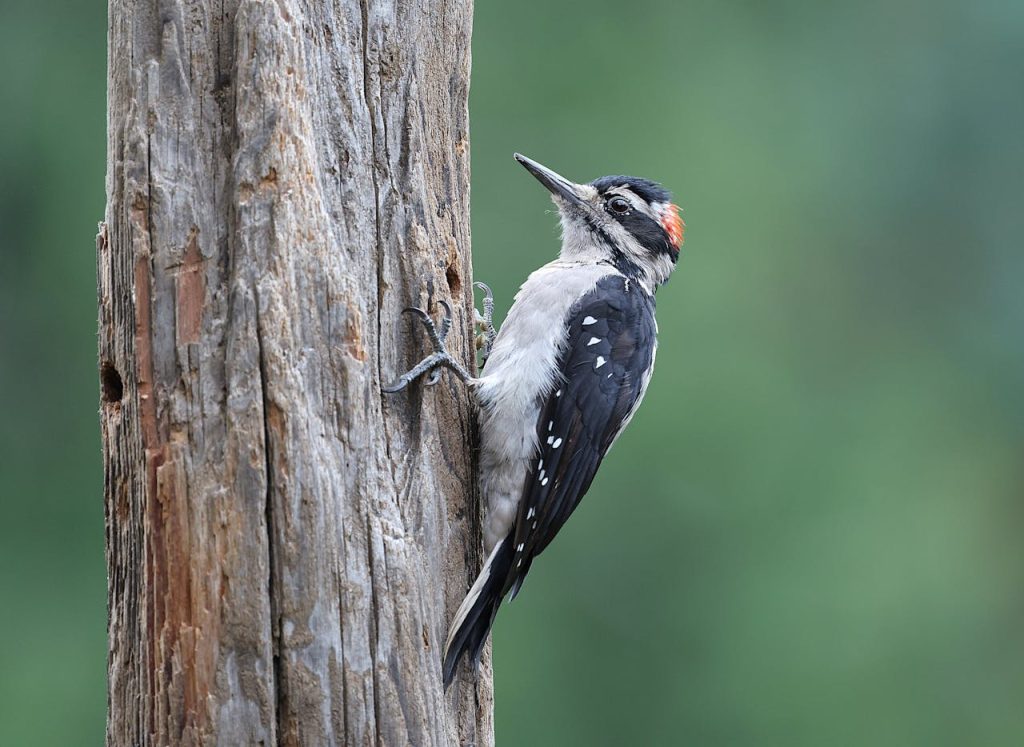
Hairy Woodpeckers are misidentified constantly because they share the Downy’s crisp black and white outfit. A fast glance at a feeder can turn into the wrong call, especially when distance hides the difference in size.
Biologists look for a longer, sturdier bill that can approach the length of the head, plus a cleaner white tail without the Downy’s spots. The bird also reads larger and more elongated on a trunk, and its drumming often sounds heavier and more deliberate on big limbs. It favors mature woodland, but yards with large trees and standing snags can still host it through colder months, and it settles longer at suet.
Red-bellied Woodpecker
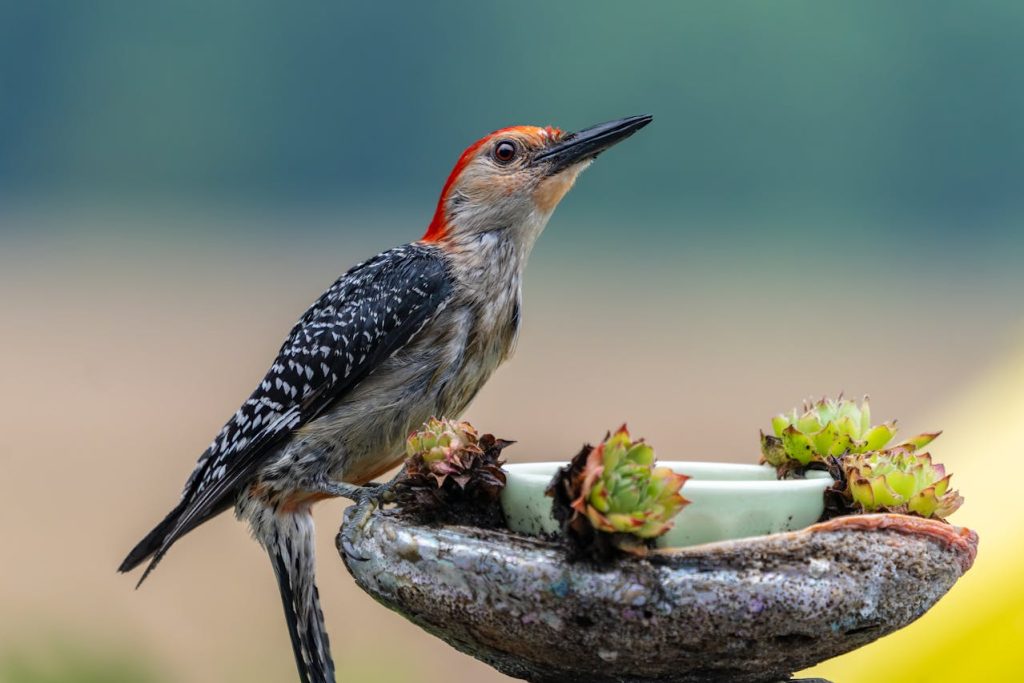
Red-bellied Woodpeckers get mislabeled because the name points attention to the wrong feature. The faint blush on the belly is usually hidden, while the barred back and red on the head are what show in shade. A rolling call often comes first.
Biologists note the pattern: black and white laddering across the back, then the placement of red. Males show red from the bill to the crown, while females usually keep red on the nape. Common in eastern woods and suburbs, it eats insects, fruit, and seeds, and often tucks food into bark near oaks, hickories, and berry shrubs. Caching brings it back to the same trunk for quick, repeat checks.
Northern Flicker
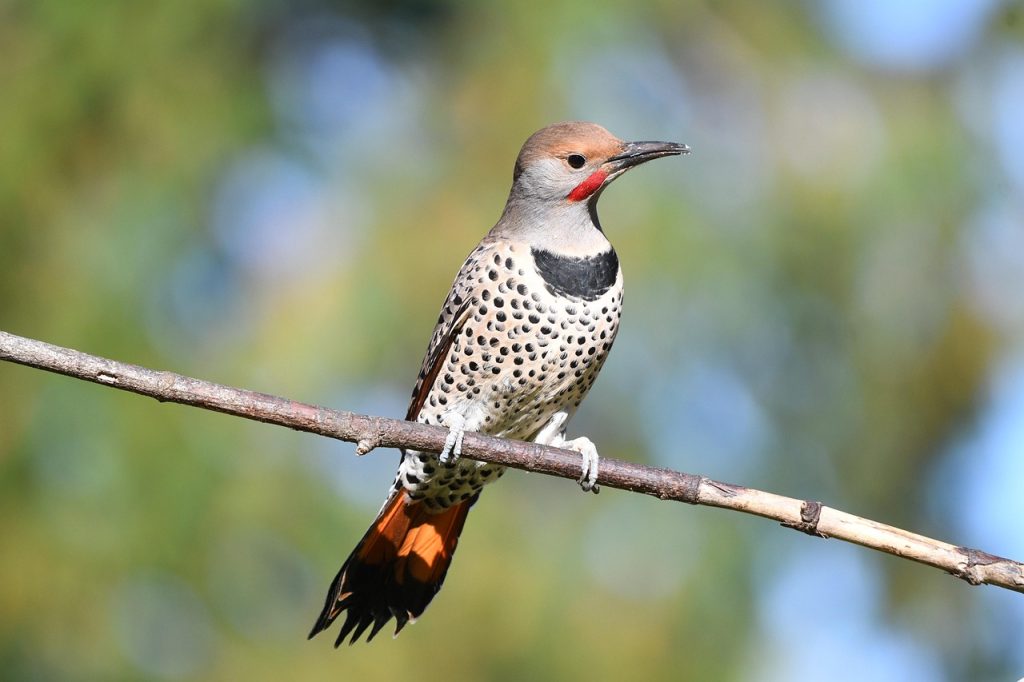
Northern Flickers get missed because they break the usual rule that woodpeckers stick to trunks. They spend long stretches on the ground, probing for ants along lawns, paths, and leaf litter, where their brown, spotted bodies can read like a large songbird.
Biologists confirm the switch-hitter behavior: ground feeding followed by drumming on a trunk or an older limb. In flight, a white rump and bright underwings flash, with yellow in some regions and red in others. Rectangular excavations on dead branches, plus a bold black chest crescent, often finish the identification when the bird stays distant. Calls carry across open yards.
Pileated Woodpecker
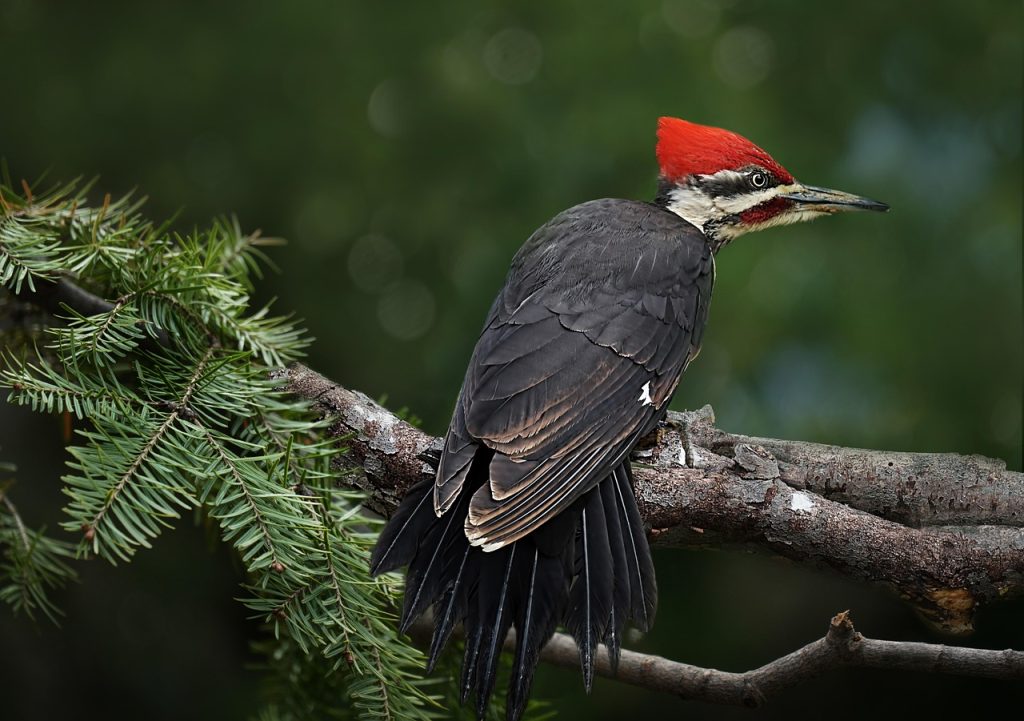
Pileated Woodpeckers seem impossible to miss, yet quick, backlit views can turn them into a crow-shaped silhouette. The bird often moves through the mid-canopy, pauses behind a trunk, and leaves only a hint of the red crest before it slips away.
Biologists trust the evidence it leaves behind: large, rectangular holes and broad chips scattered at the base of mature trees. Its drumming is loud and carries far, and the bird favors older woods with softer, decaying sections of trunk. In some areas it will take large suet blocks, but it is most consistent where standing snags and big trees are left intact and disturbance stays low.
Yellow-bellied Sapsucker
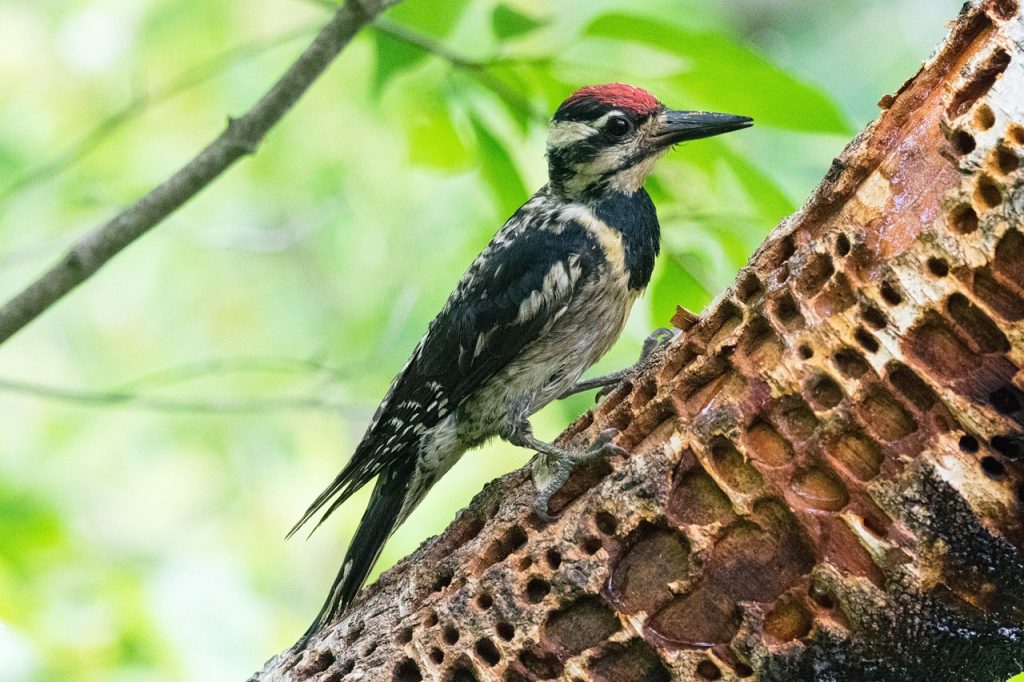
Yellow-bellied Sapsuckers are often noticed only after a tree shows neat rows of small holes, and the bird itself goes unseen. The pattern can be mistaken for random damage, but the spacing is usually too orderly, especially on maples and birches.
Biologists watch for the routine: the bird drills sap wells, returns to sip, and snaps up insects drawn to the flow. The visit can be brief, so the clearest confirmation is repeated checks of the same band of holes over days. Those sap lines can also attract other wildlife, including hummingbirds, which sometimes brings extra movement to the same trunk and helps reveal the sapsucker.
Red-headed Woodpecker
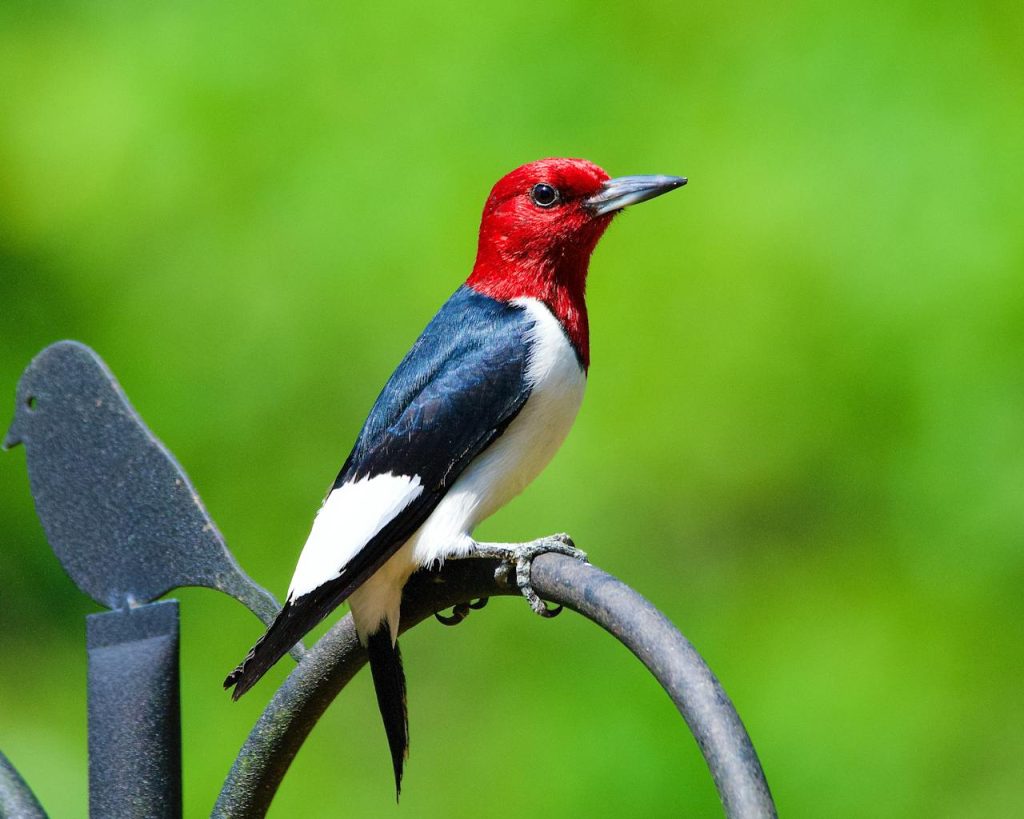
Red-headed Woodpeckers get misidentified because many species wear a red patch, but few carry a fully red head. In shade the bird can read darker and get dismissed as a jay or a flicker moving fast through open trees.
Biologists look for clean blocks of color: a crimson head, white body, and black wings that pop even at distance. It favors open woodland and scattered dead trees, often using posts or exposed limbs as watch points. Food storage is a strong clue, since it may wedge acorns, nuts, or peanuts into bark crevices and return to the same spot repeatedly. Because it can be less common, one longer perch view helps lock the ID.
Golden-fronted Woodpecker
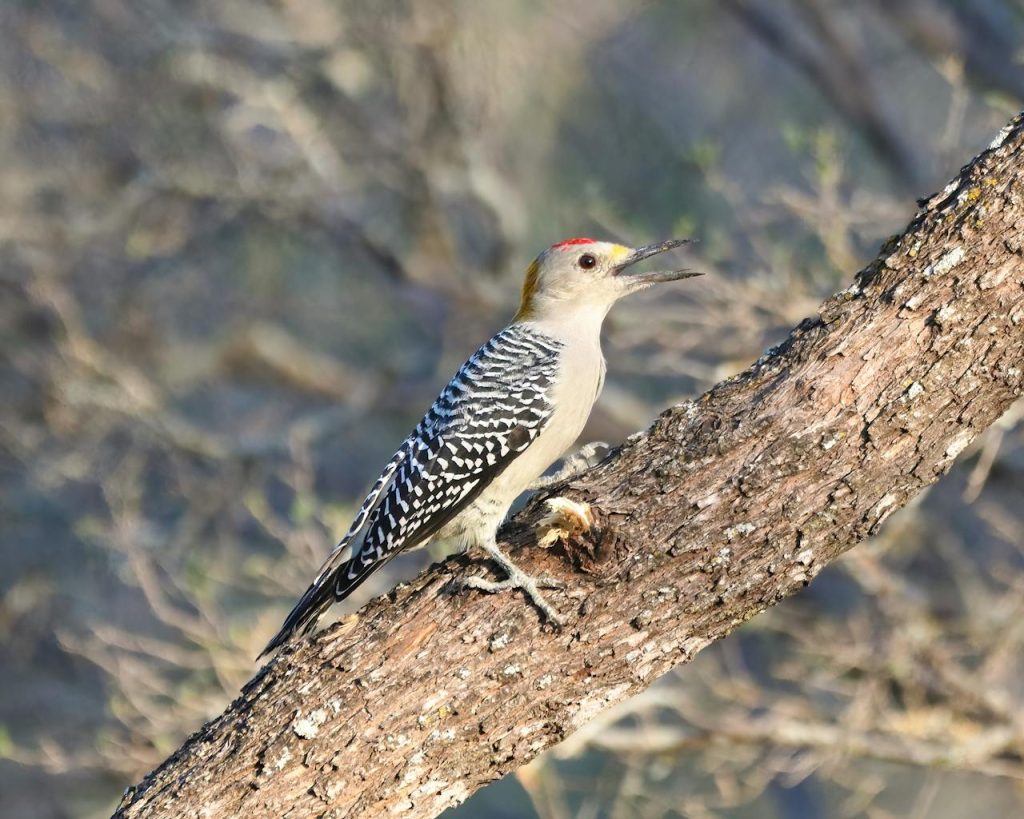
Golden-fronted Woodpeckers get missed because their warm face tones can wash out in flat light, leaving a plain woodpecker shape. In Texas and nearby areas, quick feeder visits can still lead to a mistaken Red-bellied call.
Biologists watch for orange-yellow on the nape and forecrown, plus a comfort with brushy edges and open woodland. It mixes insects with fruit and nuts, so it may show up near fruiting trees or take peanuts and seed cakes on sturdy feeders. More than one look helps, since the gold can fade at dawn, but the bird’s steady climb and local range usually settle the ID. A still perch makes the gold obvious.
Lewis’s Woodpecker
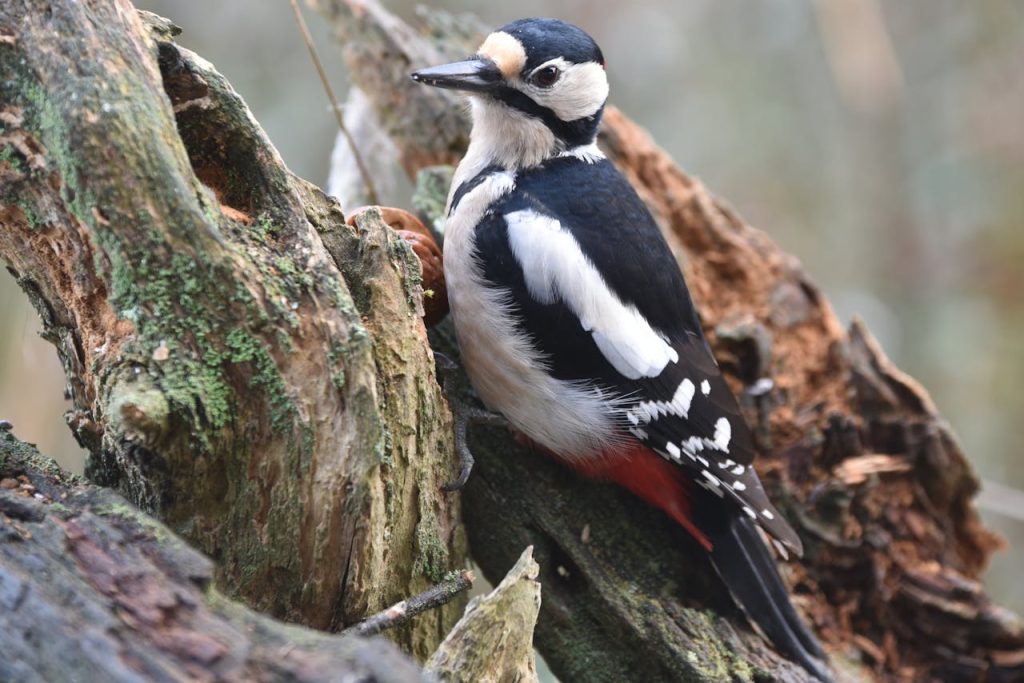
Lewis’s Woodpeckers get missed because they do not behave like the classic bark-drilling woodpecker. In open pine woodland of the western U.S., they often perch out in the open, then sweep into the air to catch insects like a flycatcher.
Biologists confirm the pattern by watching repeated aerial sallies from the same snag or exposed limb, followed by a smooth return. This style can make the bird look more like a dark passerine at first, especially at distance and in smoky light. Snag-rich edges matter more than tidy lawns, and sightings often rise during warmer spells when flying insects are active, even if feeders stay quiet.
Acorn Woodpecker
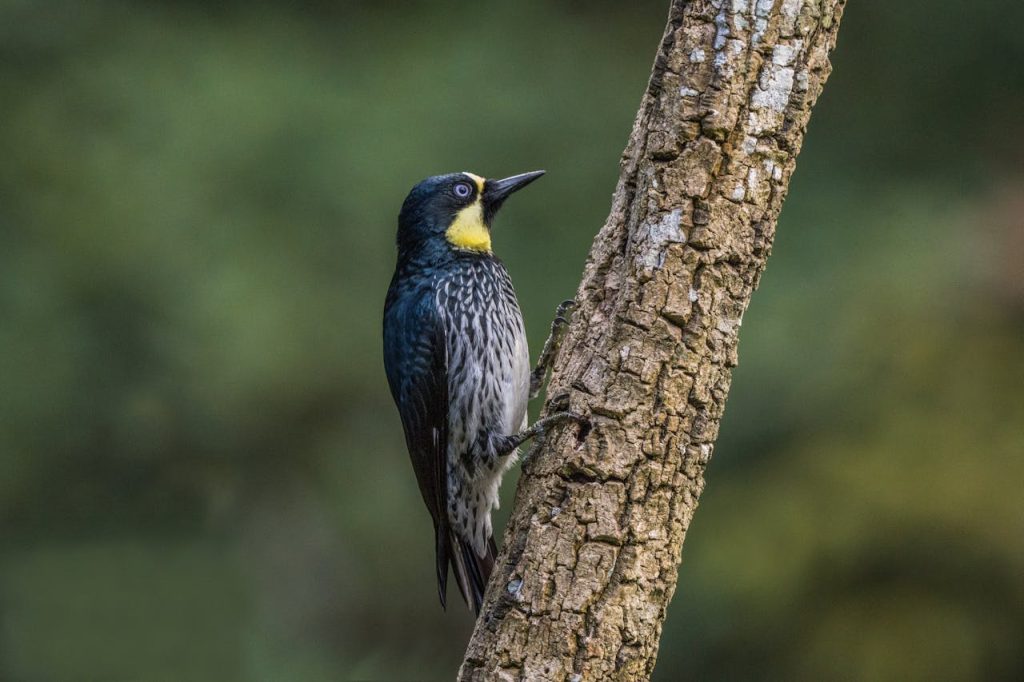
Acorn Woodpeckers can be missed until their work becomes impossible to ignore. The clearest sign is a granary tree, where the birds drill many storage holes and pack them with acorns, turning one trunk into a busy pantry.
Biologists note that the behavior matters as much as plumage, because groups may guard and restock the same tree for long periods. Oak habitat is the anchor, so the species tracks areas with strong oak presence and older trees with usable bark. Feeder visits vary, but the repeated returns to one storage site, plus quick social chatter and coordinated movement, separate it from look-alike woodpeckers.
Seen clearly, these birds stop feeling like background noise and start reading like neighbors with distinct roles. A heavier drumbeat, a line of sap wells, or a fresh pile of chips can say more than a quick flash of red. When older trunks, berry shrubs, and a few standing snags stay in place, the same trees tell a richer story from season to season.