

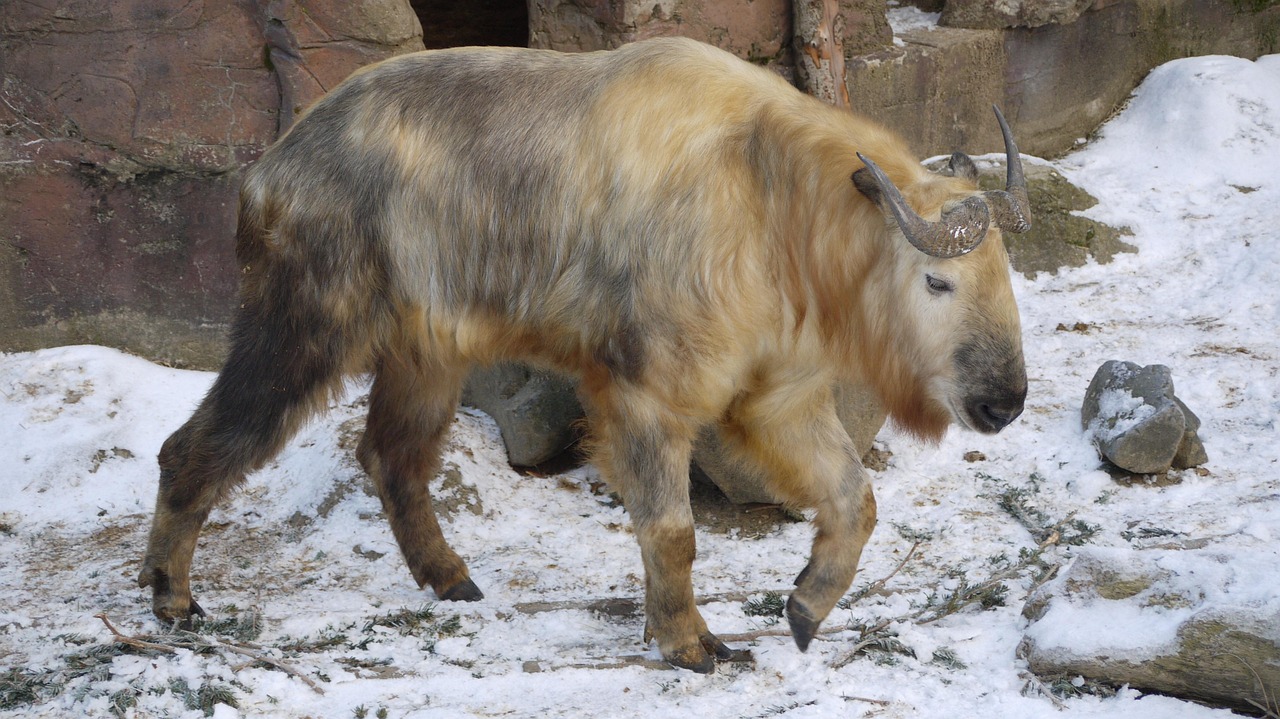
High in the eastern Himalayas and the forested ranges of Bhutan, India, and China, the takin often gets judged by its strange outline. It carries a moose-like nose, horned shoulders, and a shaggy coat that reads like a stitched-together myth.
Wildlife researchers keep returning to the same point: looks mislead. Takins sit in the goat-and-sheep branch called Caprinae, and the species is listed as Vulnerable as habitat shifts. Across four regional forms, most herds stay between about 2,500 and 4,500 m, shadowing water and seasonal forage, where a road cut or a warmer winter can change the whole valley. Silhouette is the easy part.
A Face That Tricks the Brain
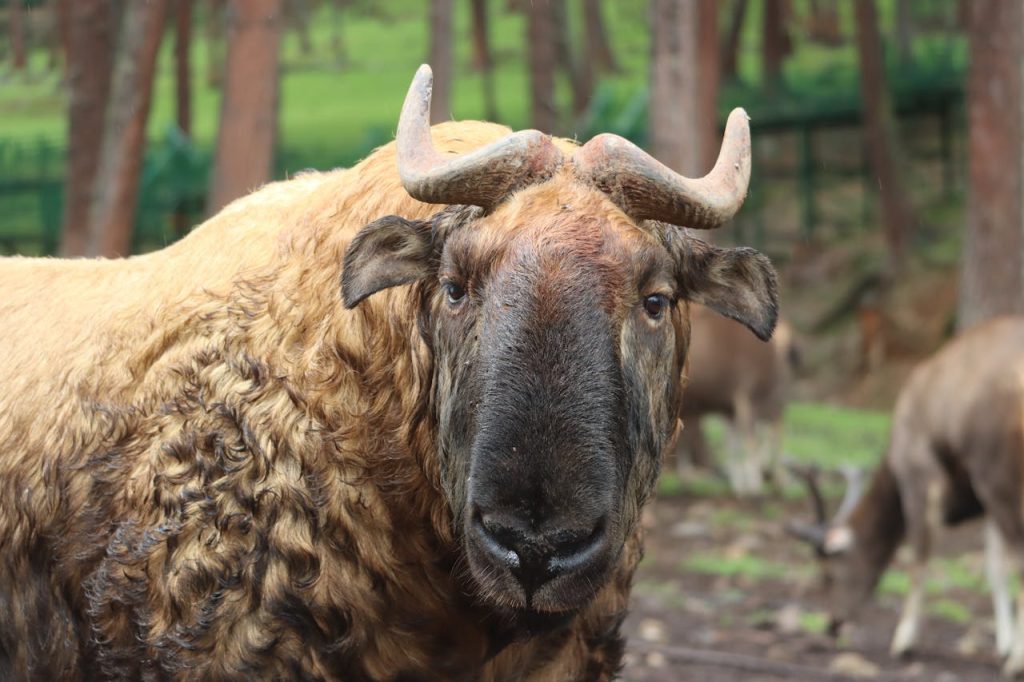
From a distance, the takin looks borrowed from other animals: a bulbous, moose-like nose, heavy shoulders, and horns that sit like a crown. The mind tries to solve it by pattern matching, and the result is usually the wrong label.
Up close, the details pull it back into focus. Broad, cloven hooves and a steady, goatlike stance suit steep trails and slick rock. Coats range from pale gold to deep reddish-brown, and adult males can carry a darker mane down the back. The species is Bhutan’s national animal, and its muskox-like build is widely treated as convergent evolution, not close kin. Biologists start with the basics. In Bhutan, that odd look even shaped folklore.
Goat-Antelope Is a Clue, Not a Verdict
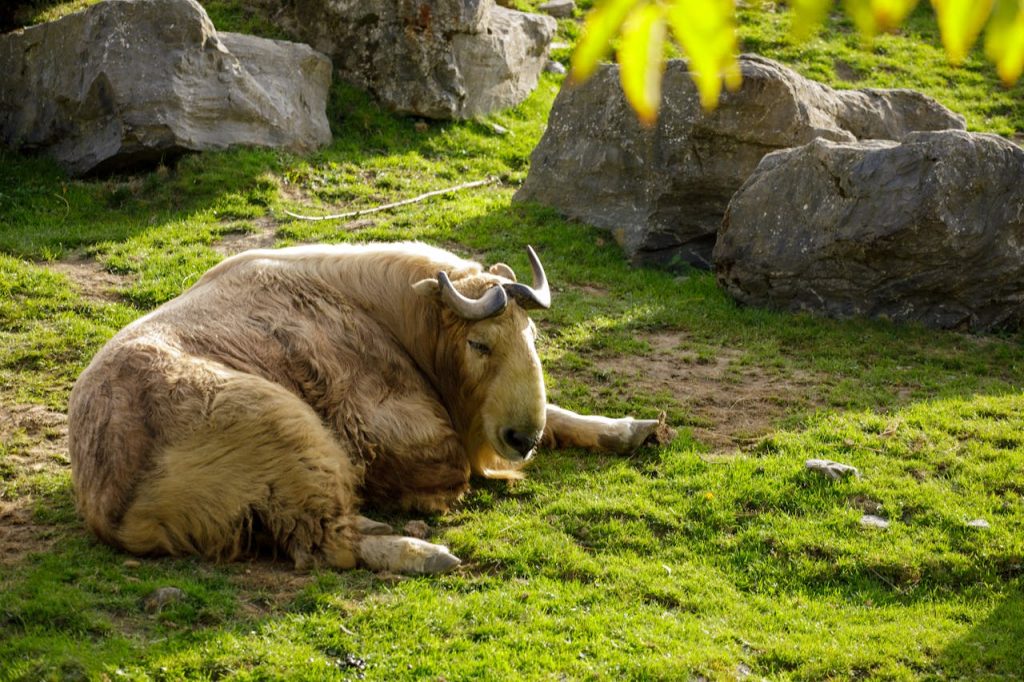
The takin gets called a goat-antelope for a reason. The Tibetan term taqing literally means goat-antelope, a practical attempt to name an animal that carries mixed signals. Hooves and climbing fit a goat; the arched nose can read antelope-like.
Genetics pulls the story in a sharper direction. Mitochondrial work has repeatedly pointed to a closer relationship with Ovis, the sheep genus, than its silhouette suggests. That does not erase the goatlike behavior, but it changes the framing: the takin is not a mashup at all, just a Caprinae specialist shaped by harsh terrain. Older guides paired it with muskox; DNA broke that habit. The sheep link also helps explain its sparring style.
Four Regional Forms Anchor the Range
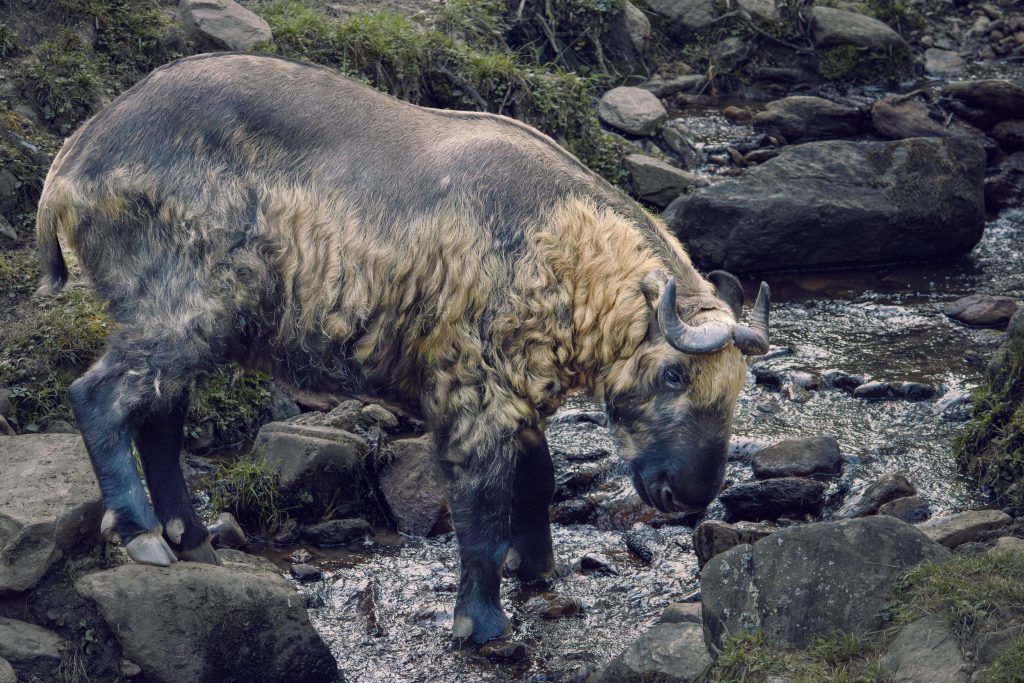
Across the eastern Himalayas into China, the takin breaks into four recognized subspecies that map to real mountain blocks. Bhutan takins live in Bhutan and nearby northeastern India; Mishmi takins hold parts of Arunachal Pradesh and northern Myanmar.
Farther east, Tibetan or Sichuan takins are tied to China’s high ranges, while the golden takin centers on the Qinling Mountains of Shaanxi. Wildlife researchers stress how small the workable band can be: many herds use steep valleys and alpine zones from roughly 1,000 to 4,500 m, often concentrating around 2,500 to 4,500 m with dependable water. Fragmentation hits fast there. Corridors matter more than borders.
Cold, Fog, and Rain Shaped the Body
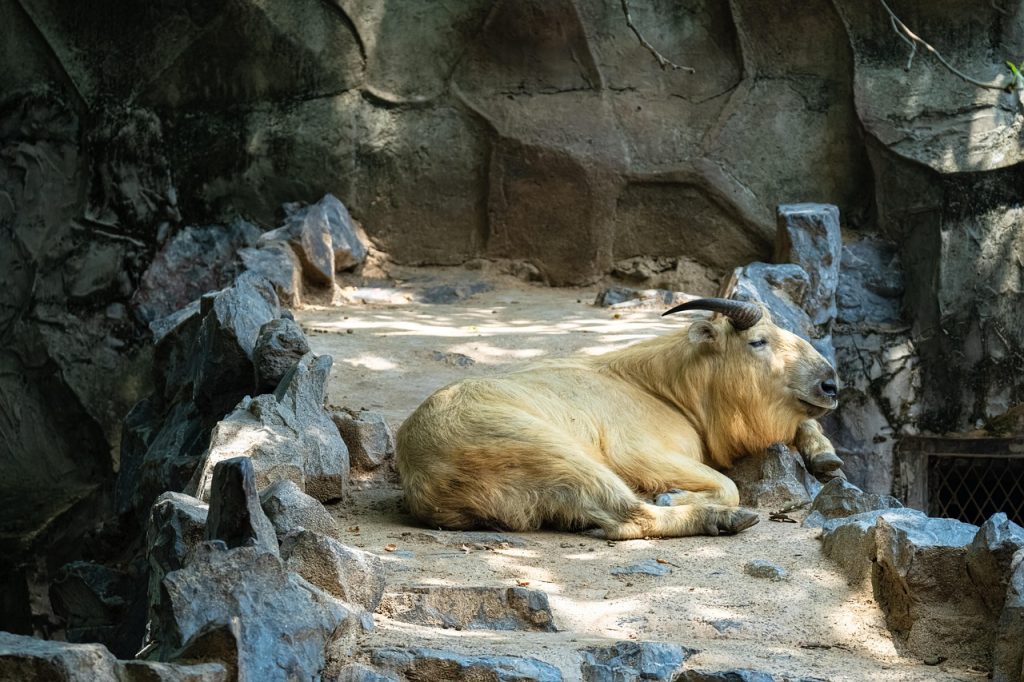
Mountain weather is less about snow-globe beauty and more about soaked fur, thin air, and cold that lingers. Takins meet it with a thick, shaggy coat, broad hooves, and heavy muscle that keeps traction on steep, slick ground.
Field notes often mention a slightly oily coat that helps repel moisture, and the oversized nose is thought to help condition cold air before it reaches the lungs. Those traits are not decoration; they are survival economics at 3,000 m, where a wet day can sap energy faster than hunger. That is why herds move with the weather, not the calendar. Seasonal movement often runs uphill in summer and down in winter.
Feeding Is a Full-Body Skill
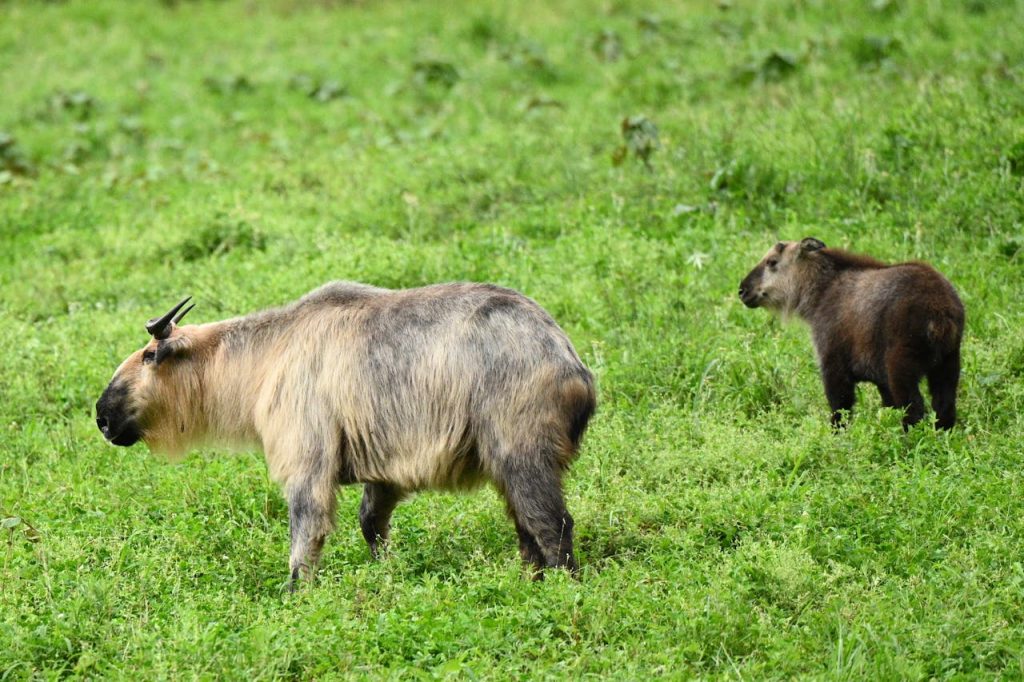
Takins eat what the mountain offers, and that menu changes fast. In greener months it is leaves, shrubs, grass, bamboo, and forbs; in winter it can shift to buds and tender twigs when slopes thin out. The animal is a ruminant, built to process tough plant matter over long days.
One detail that surprises even seasoned hikers is the reach. Takins can rise onto their back legs, brace the front feet on a trunk, and pull down higher browse with calm efficiency. Some have been observed leaning hard enough to bend small saplings toward the ground, a reminder that feeding style is shaped by height and mass as much as appetite.
Size Explains the Confidence
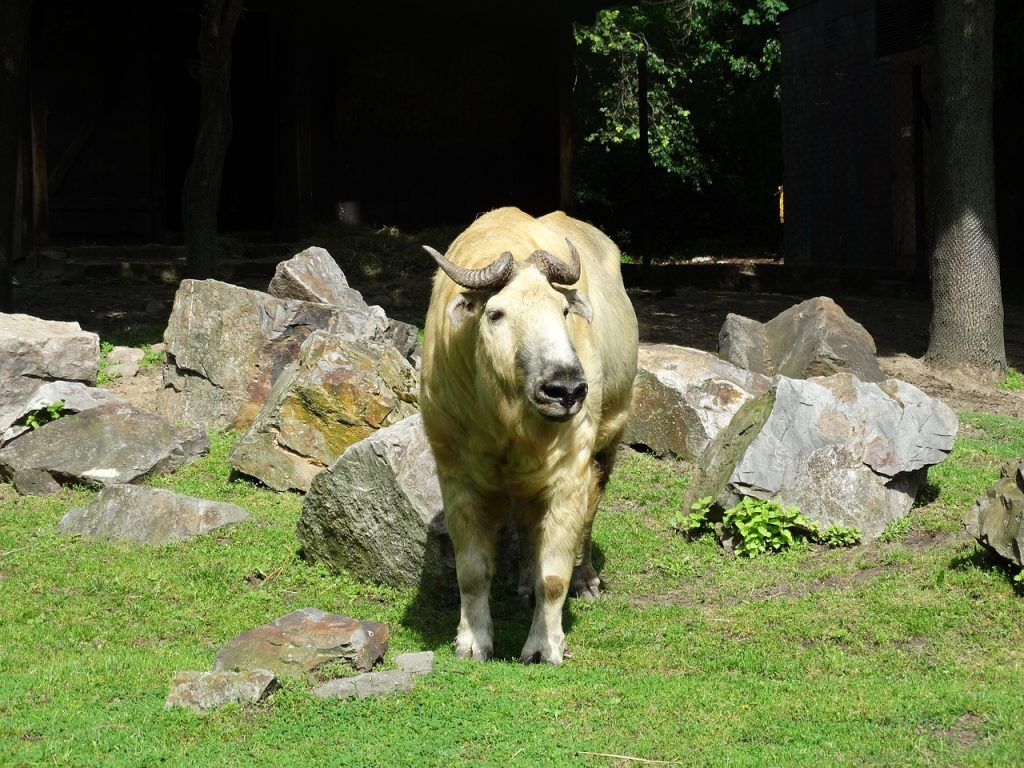
The takin is not a small mountain grazer scaled up by rumor. Adults commonly stand about 3.3 to 4.5 ft at the shoulder and can stretch beyond 7 ft in length, a compact mass built for climbing. Females average a bit over 600 lb, while males often approach 800 lb.
That size changes the social math. Narrow trails become one-way lanes, and even a calm herd can feel imposing when it steps out of fog. Wildlife biologists note that bulk is paired with agility on steep slopes, where broad hooves and dewclaws help hold purchase. The body is built to stay upright where mistakes cost energy. The tail stays short, about 3 to 5 in.
Few Predators, Plenty of Pressure on Calves
Adult takins are simply too large for most predators to gamble on, and that reduces direct predation in many places. Older accounts often cite the South China tiger as a major threat, but there have been no confirmed wild sightings since the 1970s, so that pressure has changed.
Risk concentrates on calves. Snow leopards and bears may target young animals, and large raptors have been reported carrying off small calves. Pack hunters such as gray wolves and dholes can also test herd edges, looking for separation or weakness. Herd spacing matters most where visibility collapses along timber breaks and steep folds. In bad weather. Adult risk stays low.
Herd Rules and Mating Season Tension
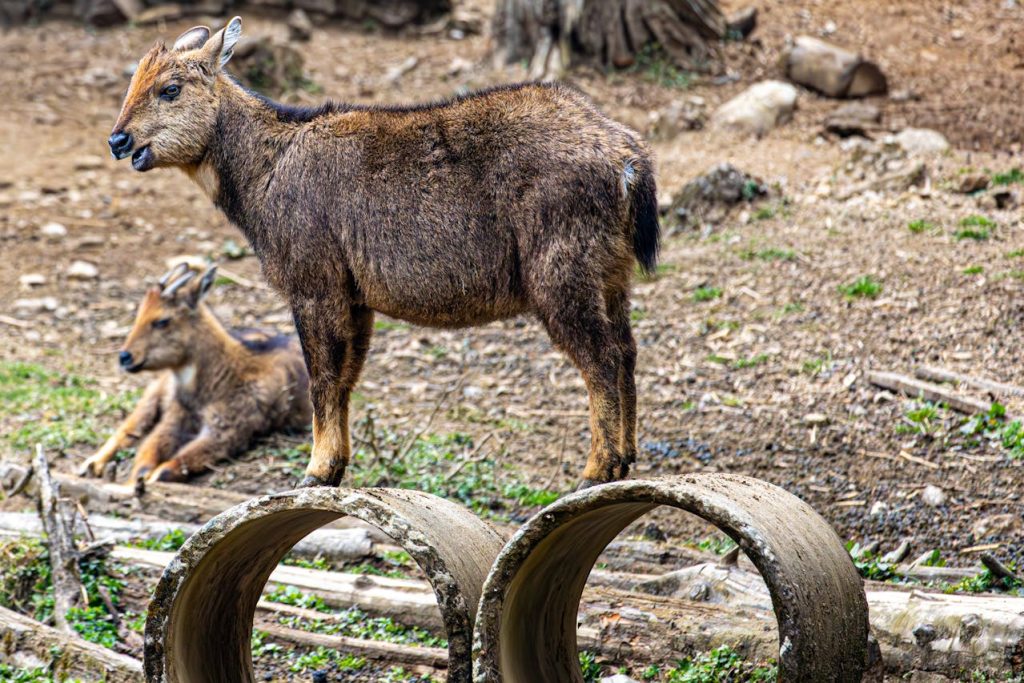
Takins are social, often forming herds that expand in summer range and tighten into smaller groups as terrain and food demand it. Even when the mood looks calm, the group moves with coordination, especially near water and salty plants.
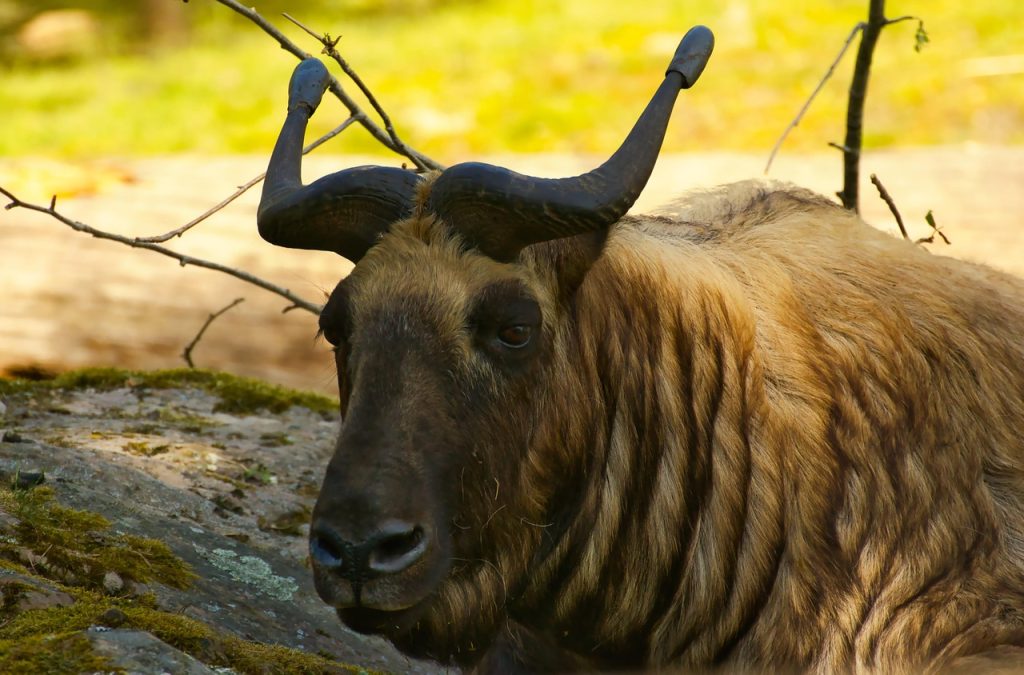
Mating season brings a different tone. Males spar by butting heads and pushing for position, using thick horns built for impact rather than display. After mating, gestation is commonly reported around 210 to 240 days, and births usually produce a single calf. The calf nurses for months and often stays close to the mother for about a year, learning routes, feeding spots, and the herd’s signals.
Why Encounters Feel Tense
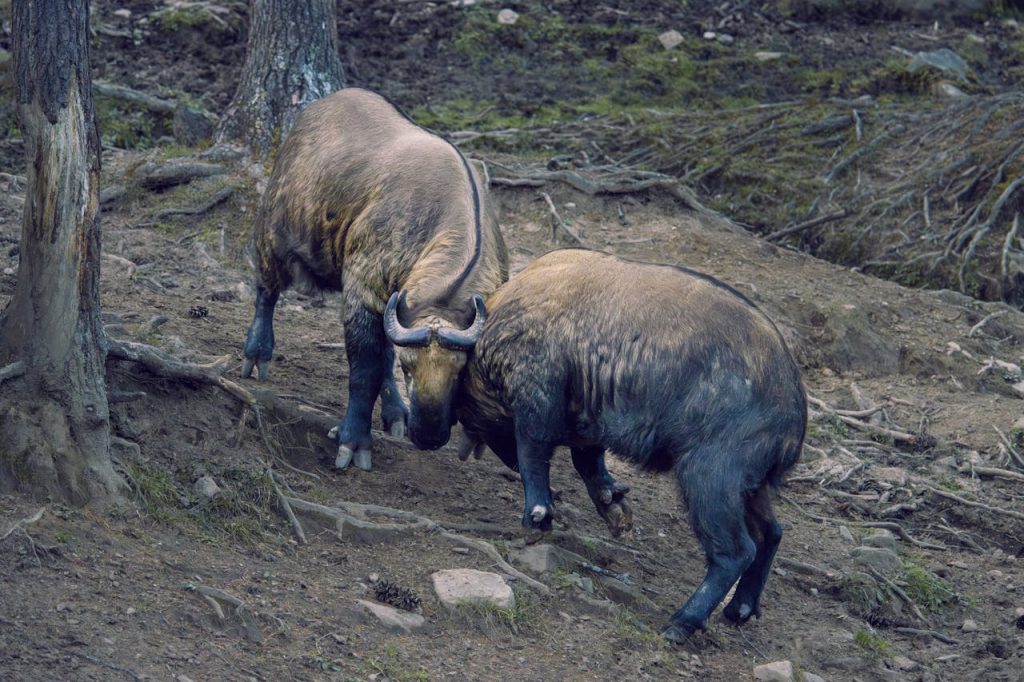
Wildlife staff often describe takins as wary around people, and that wariness has history behind it. In parts of the range, the species was hunted for meat, and even where hunting is now restricted, behavior can lag behind policy. A large animal that expects pressure keeps distance.
That distance is not aggression; it is boundary setting. When space is squeezed on a trail or near water, an adult may rush a few steps to reclaim room, then stop once the signal lands. Field guidance stays simple: move slowly, keep voices low, and avoid crowding. Most encounters end quietly when the herd can keep moving. Sudden motion raises stress. Space is the real calming tool.
Vulnerable Status Has Clear Drivers
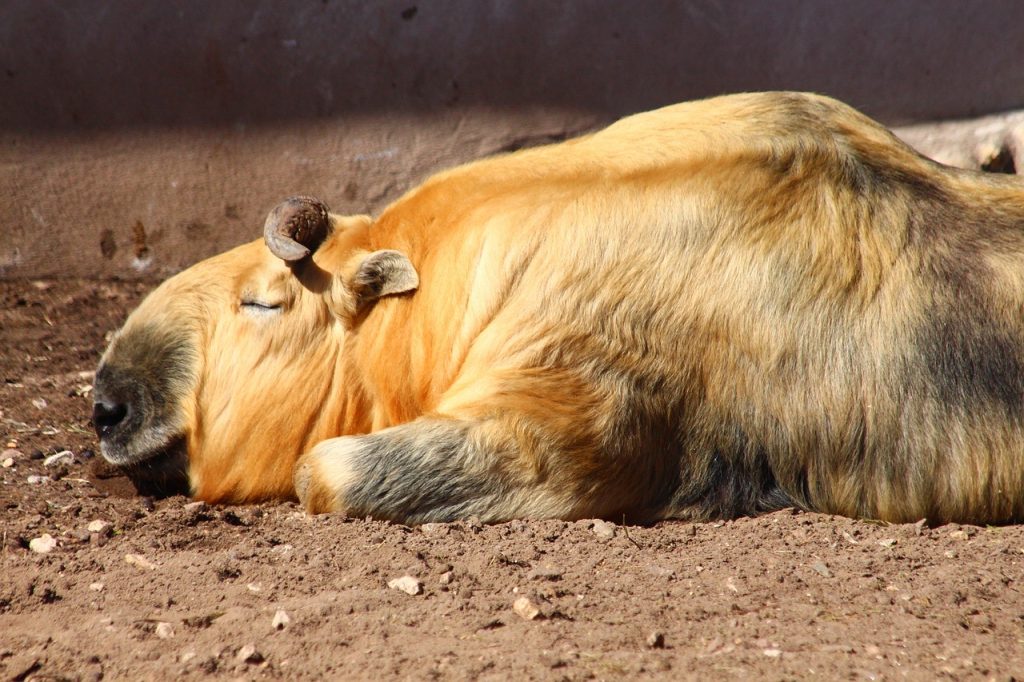
Conservation assessments list the takin as Vulnerable, with numbers described as decreasing. Estimates often land around 7,000 to 12,000 animals in the wild, yet that total can blur sharp losses in specific valleys. Remote terrain helps, but it is not a shield.
The takin’s real story is not that it looks strange, but that it survives in places where the margin is thin. Life at altitude depends on connected valleys, predictable seasons, and room to feed and raise calves without constant disturbance.